The peacock mehndi design is no longer just a bridal staple; it has evolved into the most versatile motif of 2026, appearing on festival hands, engagement parties, and everyday chic.
What’s driving this surge? A perfect collision of modern minimalism, bold fusion aesthetics, and a renewed appetite for nature inspired art. Here are the seven styles setting the standard this year.
Minimalist Micro Peacocks
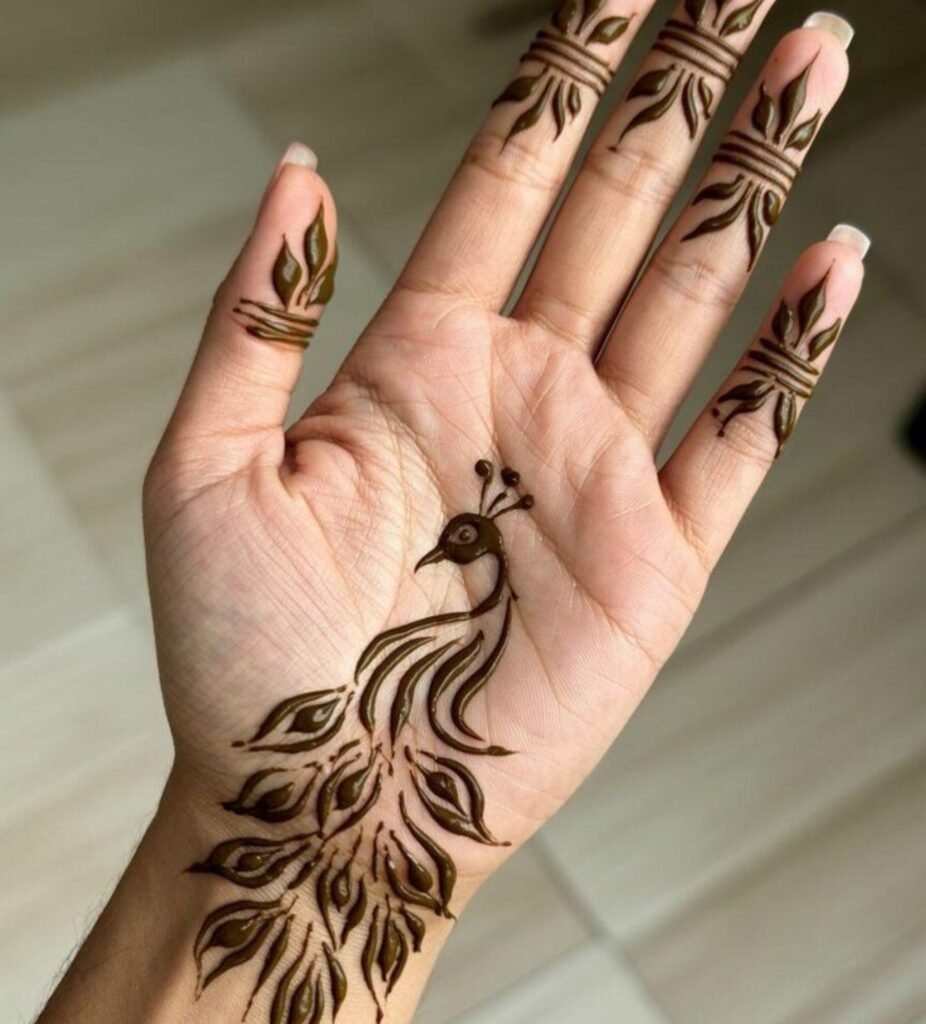
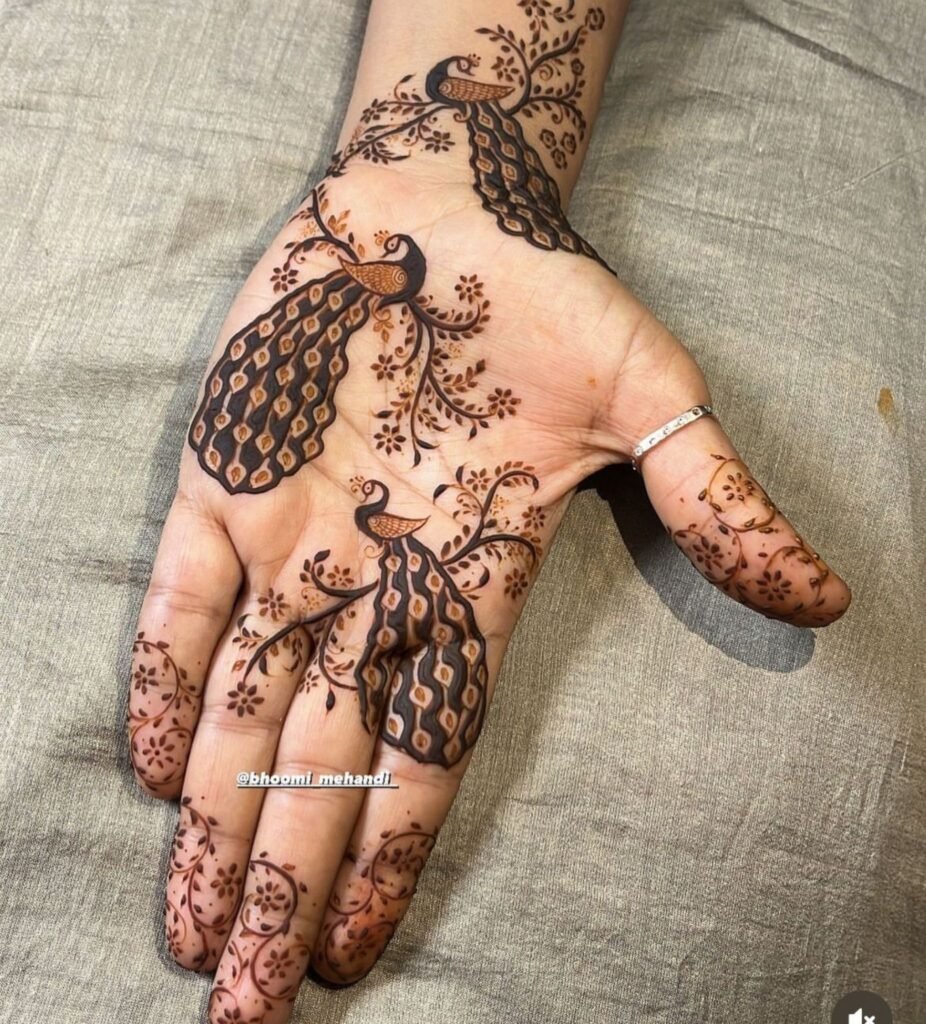
The “less is more” philosophy has fully arrived in henna. Micro peacock designs feature a single, delicately outlined peacock head just 2–3 cm across placed on the middle finger or inner wrist. The tail feathers are suggested with three or four slim curved lines rather than fully filled plumage, leaving the skin to breathe.
- Single feather placement between knuckles for a ringed effect
- Dot work shading around the eye of the feather only
- Clean outlines with zero fill pure line art precision
2026 Trend Note: Pair two micropeacocks facing each other on opposite wrists for a symmetrical “mirror look” one of the biggest requests at South Asian weddings this season.
Royal Bridal Mor Work
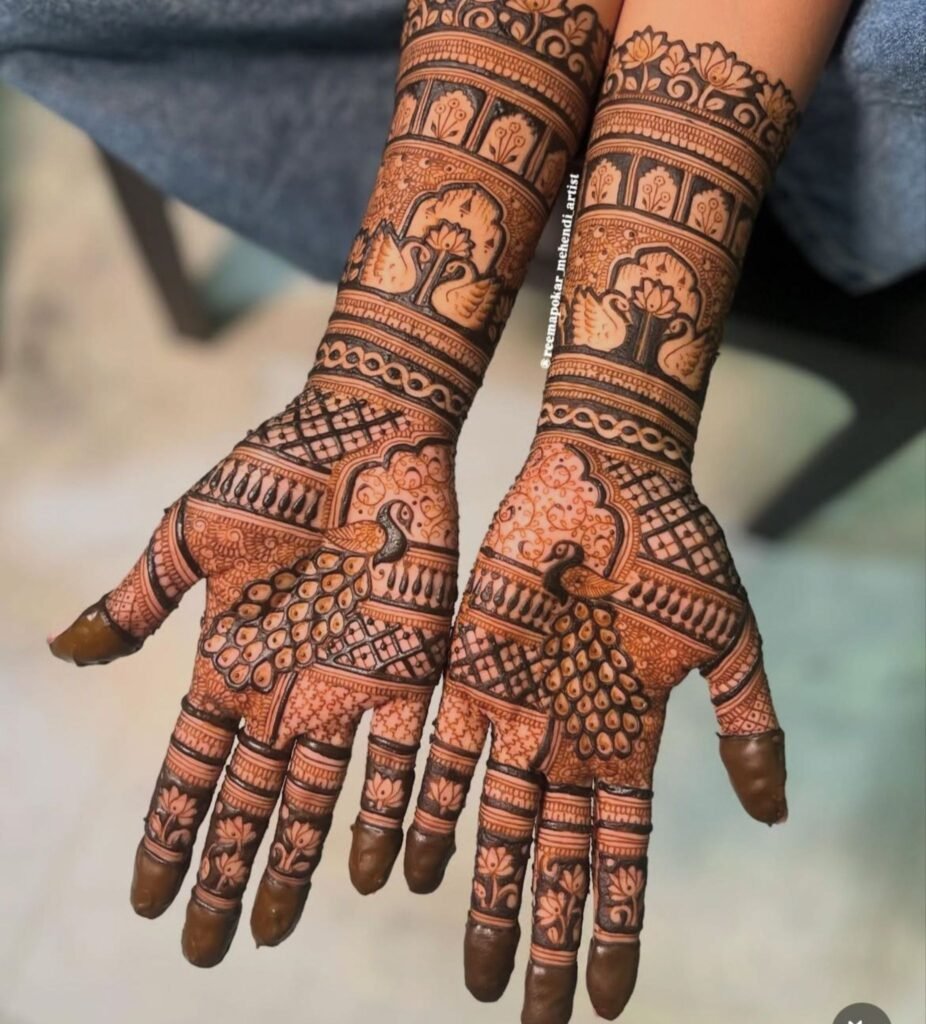
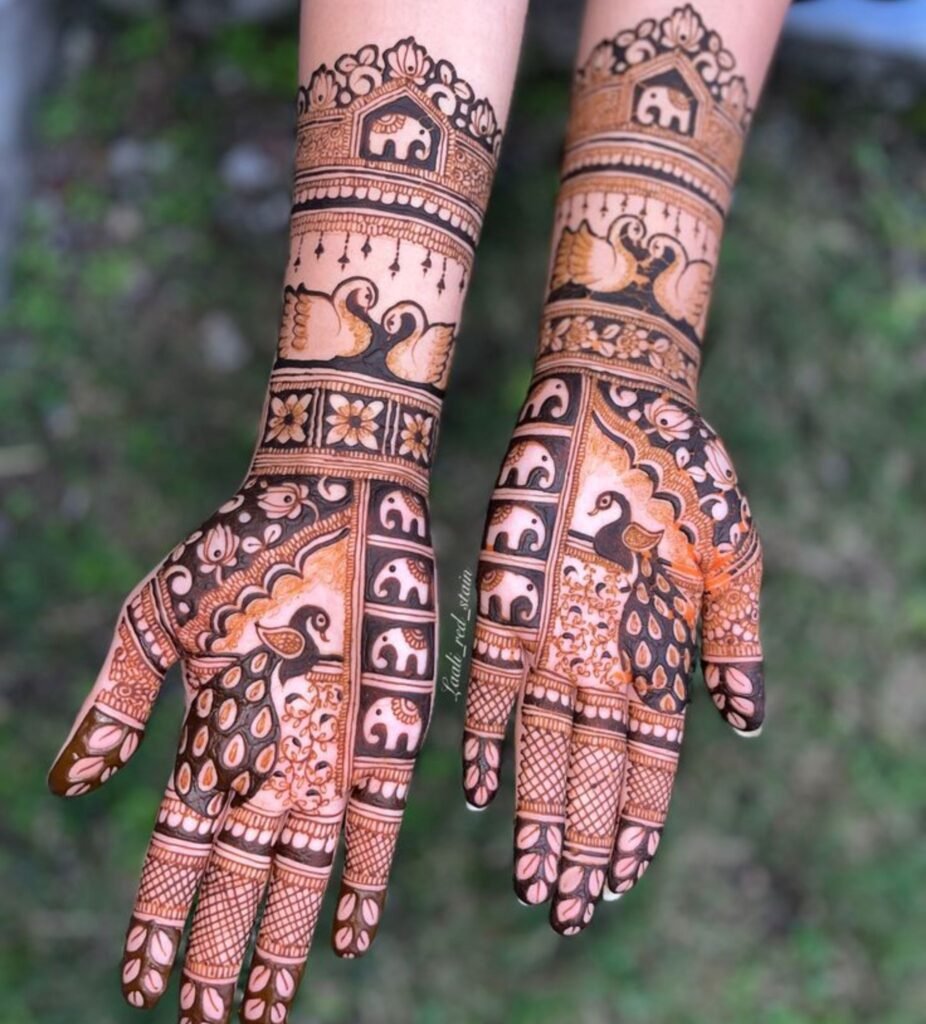
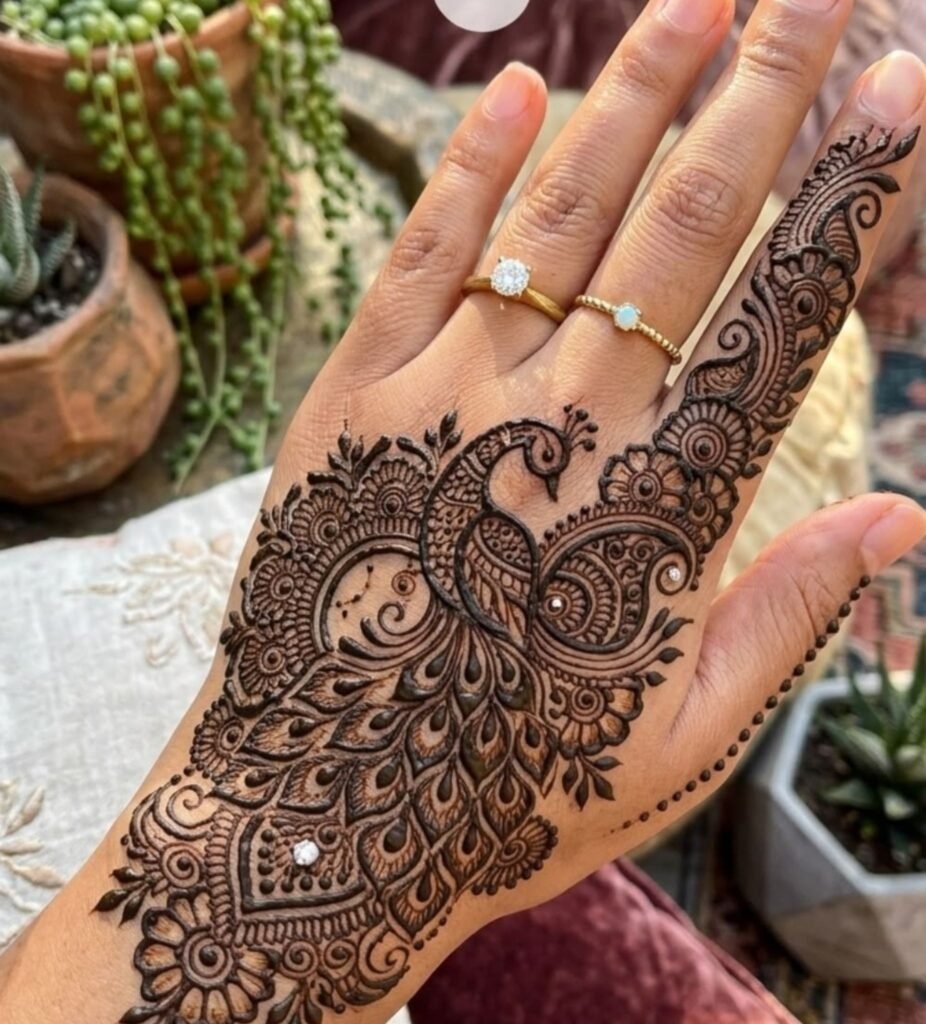
At the opposite end of the spectrum sits the bridal Mor Mehndi, an opulent full hand composition that commands every centimeter of the palm. This 2026 iteration introduces 3D shading techniques where the peacock body is built up in layers: deep base lines, mid tone cross hatching, and fine dot highlights that create an almost sculptural depth.
What a full bridal Mor layout includes:
- Central motif: A large standing peacock on the back of the hand, tail fanning across all four fingers
- Wrist cuff: Interlocking peacock necks forming a collar like band
- Palm fill: Paisley within paisley patterns radiating from a peacock eye centerpiece
- Finger detailing: Individual feather tips on each fingertip, all connected by vine work
Arabic Peacock Fusion
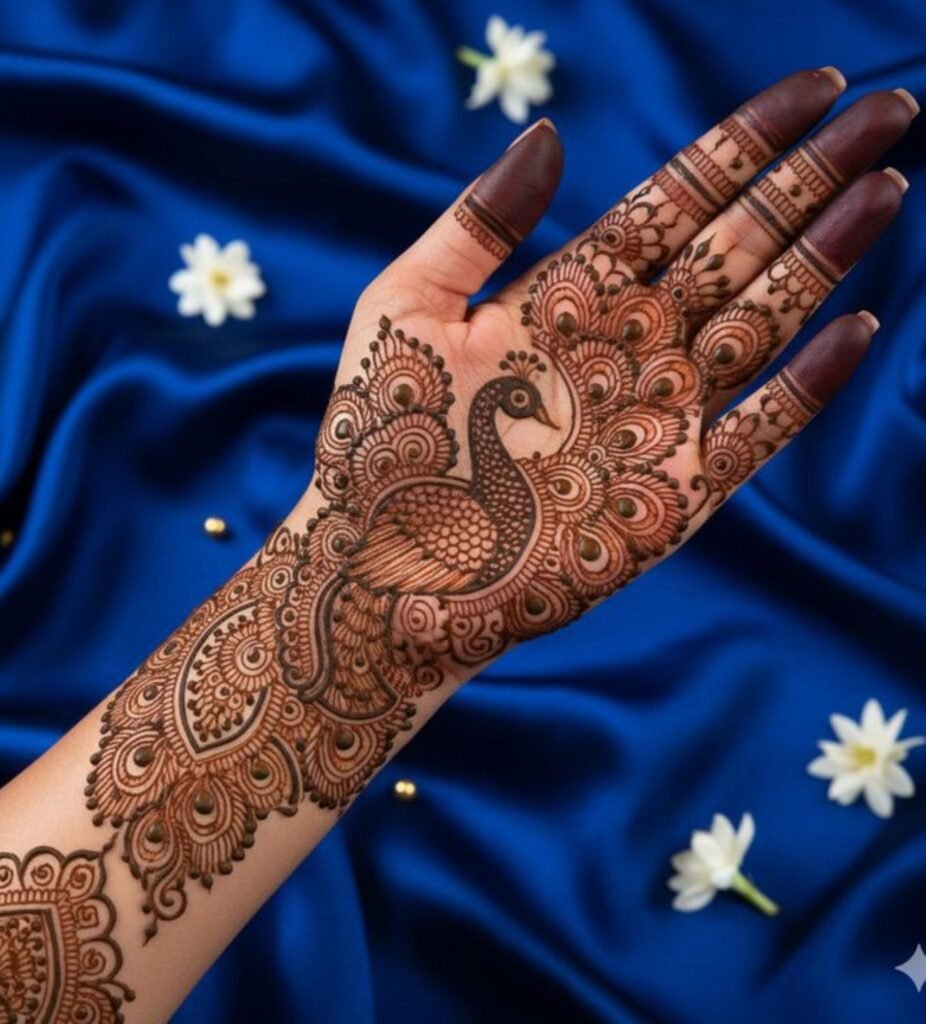
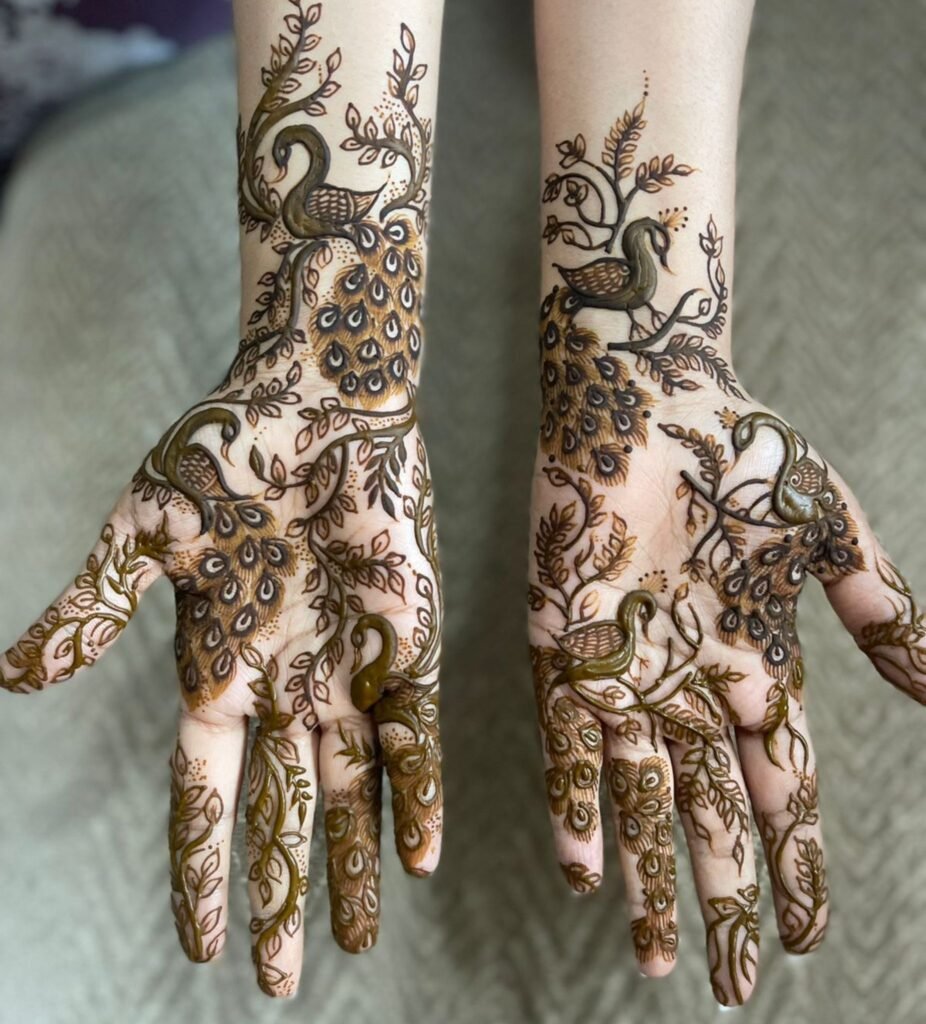
The Arabic peacock fusion style merges the flowing, vine dominant language of Arabic henna with the iconic peacock silhouette. Peacock Mehndi Design, Rather than filling the bird’s body, artists trace just its dramatic outline a bold, confident stroke and let sweeping arabesques of leaves and floral vines grow organically from its tail.
- Thick outer lines with deliberately sparse interior fill
- Cascading vine tendrils that trail from tail feathers down to the wrist
- Bold teardrop “mango” shapes arranged to mimic spread plumage
This style works beautifully on one hand only, letting the bare skin of the other hand contrast a modern bridal statement that photographs exceptionally well in natural light.
Negative Space Aesthetics
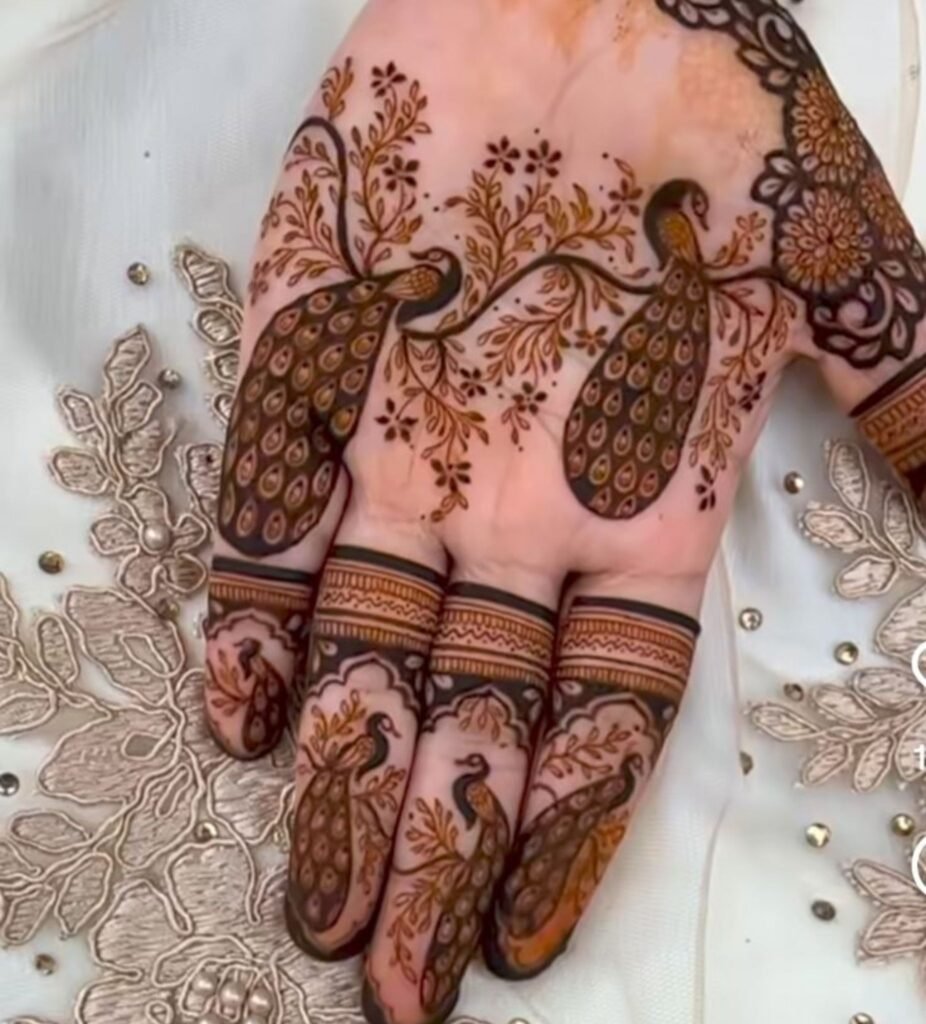
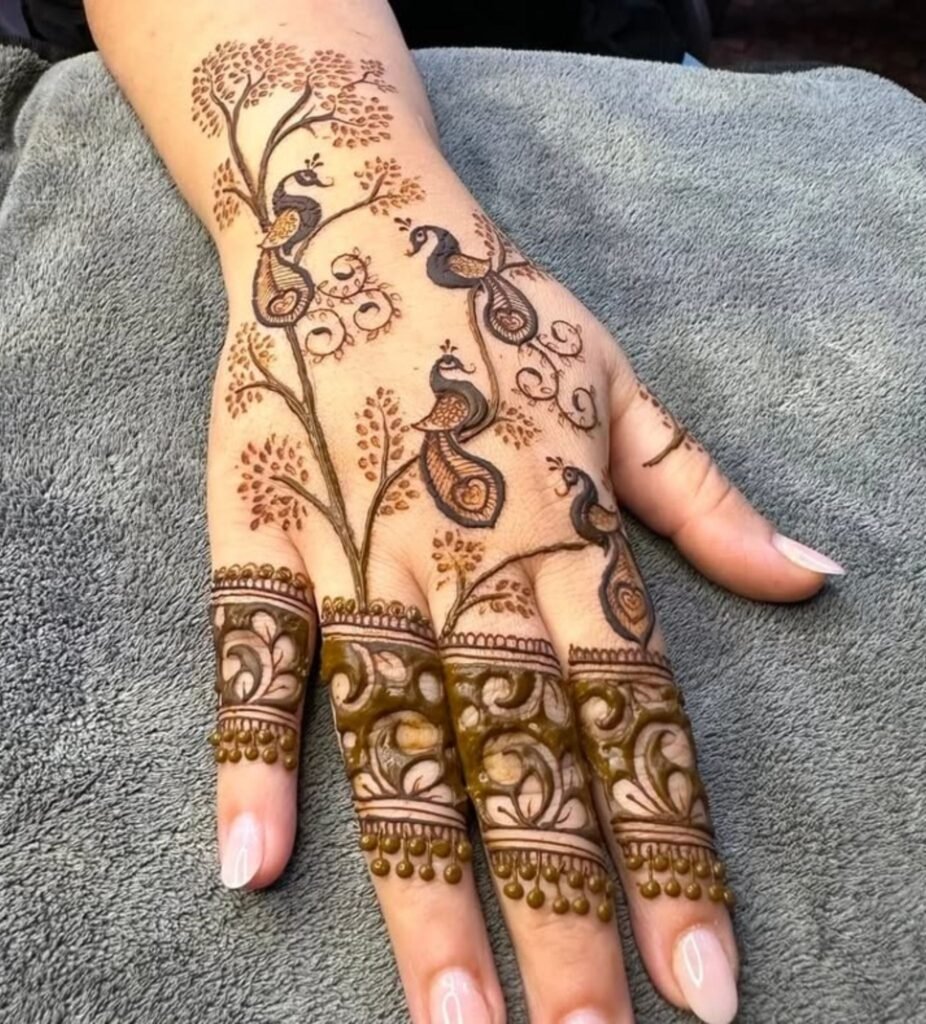
Perhaps the most avant garde 2026 henna trend, negative space peacock mehndi flips the traditional approach entirely. The peacock’s shape is created not by filling it in, but by heavily filling the space around it leaving the skin blank in the exact outline of feathers, bodies, and tail arcs.
Imagine a dark henna canvas on the back of the hand, with the peacock’s silhouette glowing through in bare skin tones the bird appears in your natural skin color against a richly adorned background.
- Works best on medium to fair skin tones where the contrast is dramatic
- Geometric fillings crosshatch, chevron, tiny triangles pack the background
- Effective even as a small wrist design: a 4cm negative space peacock feather looks striking
Jewelry Style Peacocks
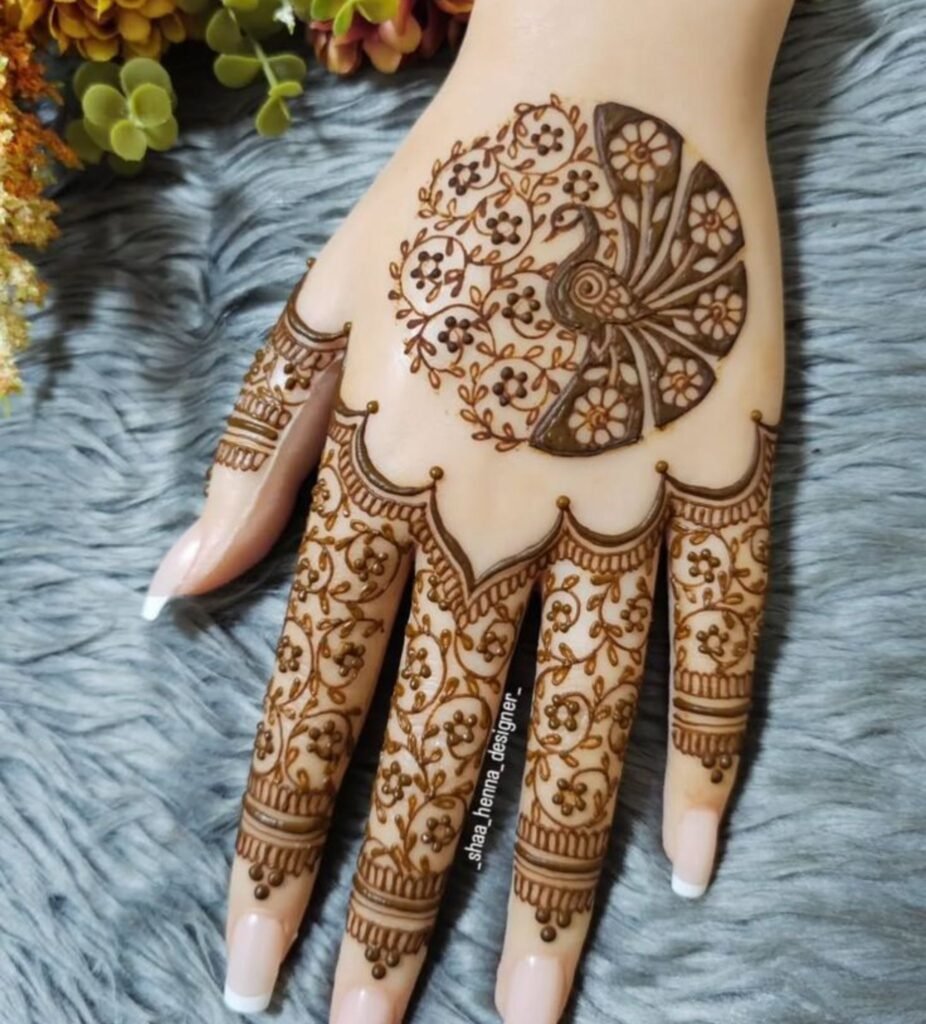
The jewelry mehndi trend has been growing for years, but 2026 is the year the peacock fully claimed it. Henna artists now design entire peacock bracelet compositions: a peacock motif suspended at the center of the wrist like a pendant, with delicate chain-like henna links wrapping around to the inner wrist.
Popular jewelry peacock combinations:
- Peacock ring: A small peacock head on the ring finger with tail feathers extending down to the knuckle
- Bangle design: Alternating peacock profiles and floral medallions forming a complete wrist band
- Haath phool style: Central palm peacock connected by henna “chains” to individual finger rings
Gold effect henna using jagua mixed pastes deepens the jewelry illusion for evening events and receptions.
Expert Tips for Dark Stain
The design is only as good as its stain. In 2026, organic and chemical free henna cones are dominating, which means aftercare matters more than ever.
- Leave paste on for 6–8 hours minimum organic henna releases its dye slowly. Overnight application yields the darkest results.
- Seal with lemon sugar solution dab gently once the paste is nearly dry to prevent cracking and lock in moisture.
- Avoiding water for 12 hours after scraping off water is the single biggest stain killer on the first day.
- Apply warm mustard oil or coconut oil after the paste drops naturally it deepens the oxidation process.
- Stay warm: Body heat accelerates dye transfer. Wrap hands in plastic cling wrap after application and sleep with light gloves on.
Always verify your henna is 100% natural with no PPD (p-phenylenediamine). Black or “instant stain” henna products often contain skin damaging additives that can cause burns and scarring, particularly on sensitive areas like fingers.
Conclusion
Whether you’re drawn to the whisper light micro motifs or the bold royal Mor work of a full bridal set, 2026’s peacock mehndi design landscape has a style built exactly for you. Pick one, practice it, and make it yours.
Tried one of these designs? Share your photos with #MehndiChic2026 and tag us your art might be featured on our homepage.