Not all mehndi is fancy and that distinction matters. Traditional heavy mehndi fills every inch of the hand with dense motifs: solid florals, intricate paisleys, and stacked borders with little breathing room. Fancy mehndi design operates on a completely different visual logic.
Three technical elements define the fancy aesthetic:
- Negative space as design: Uncoated skin isn’t absent, it’s part of the pattern. Fancy henna patterns use open areas deliberately to create contrast and make motifs pop.
- Bold, clean outlines: Instead of fully filled shapes, outlines are drawn with precision and left hollow or lightly shaded. This demands sharper cone work and a steadier hand.
- Jewelry inspired geometry: Chains, bangles, finger rings, and pendant shapes replace organic florals as the dominant motif language. The henna mimics ornamental accessories.
The Rise of Jewelry Style Fancy Mehndi
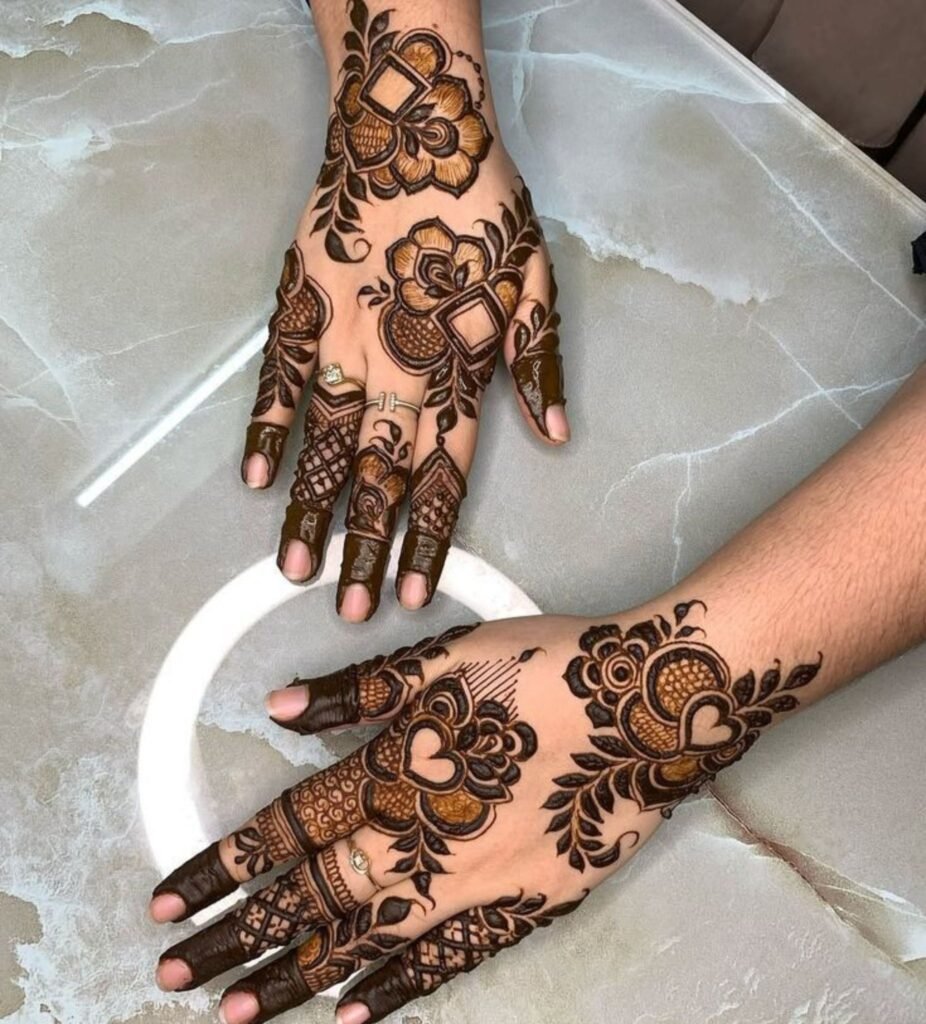
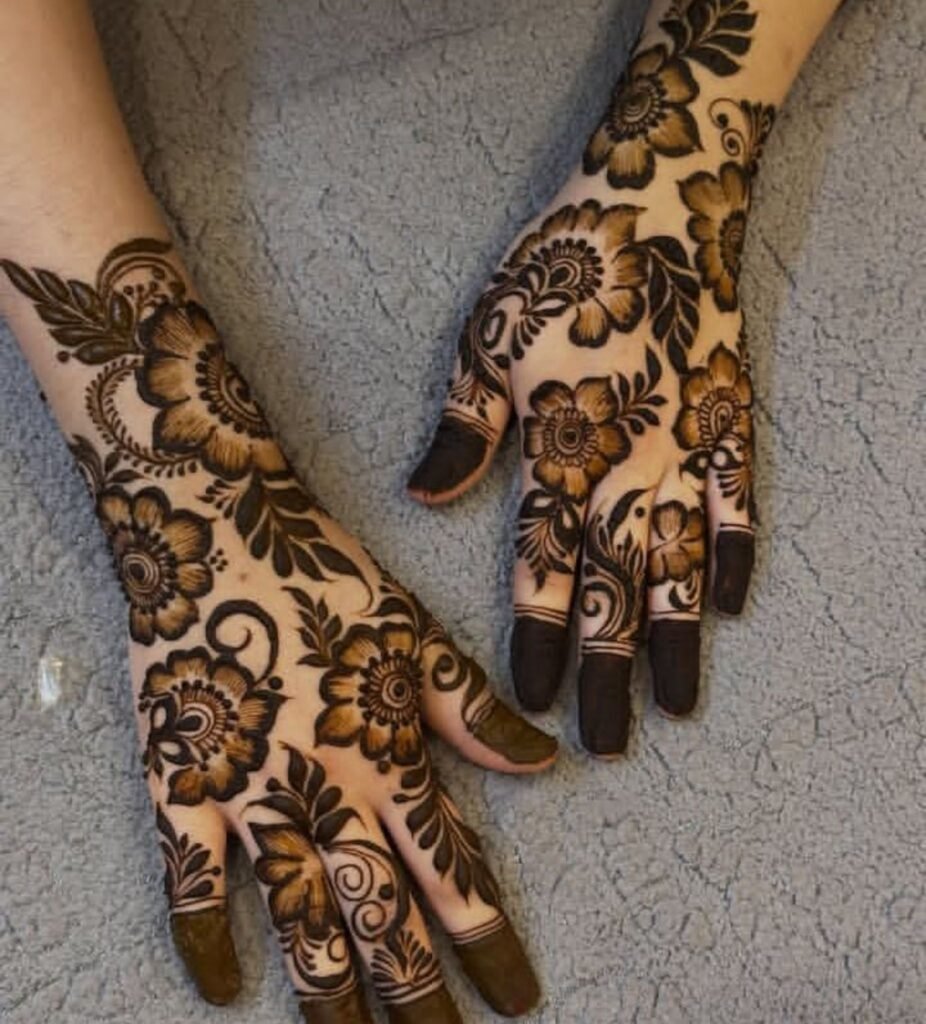
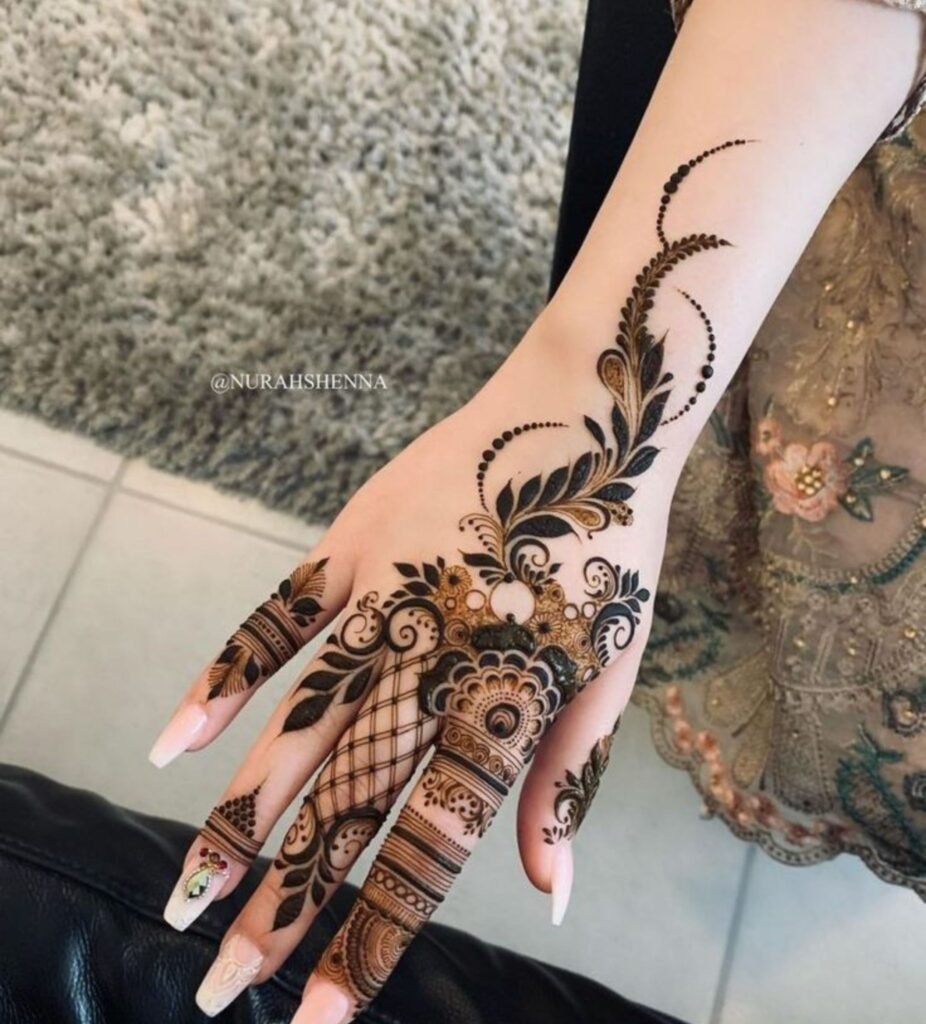
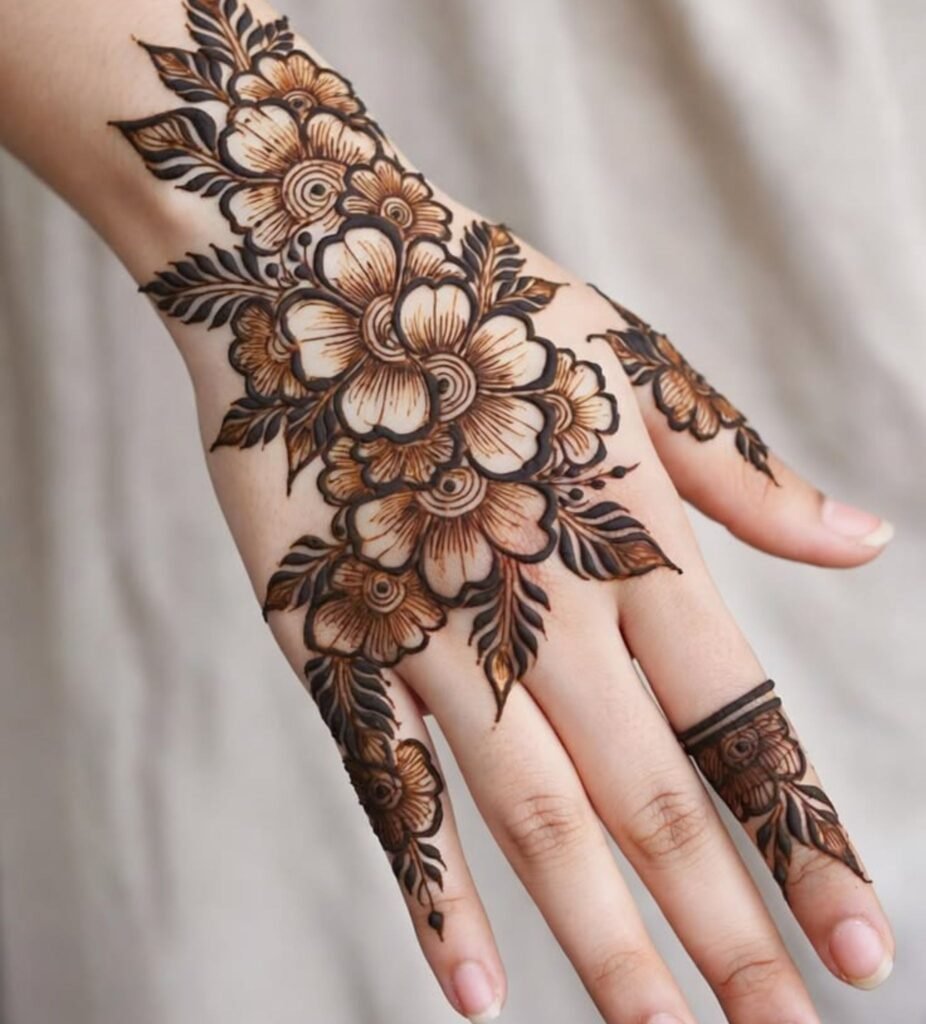
If there’s one category defining modern Fancy mehndi design heading into 2026, it’s jewelry style henna. These designs don’t just complement your accessories, they replace them or extend them visually.
Ring Style Designs
Thin, geometric bands drawn around individual fingers replicate the look of stacked rings. Popular formats include twisted rope patterns, solitaire inspired diamond shapes centered on the middle finger, and chain link bands. These are especially sought after for engagement ceremonies and cocktail events.
Bracelet Style Designs
A single bold bracelet motif across the wrist with dangling pendant style extensions toward the fingers is one of the fastest-growing requests across South Asian and Western clients alike. Think delicate chains, floral drops, and chevron edging.
Haath Phool (Hand Flower)
The Haath Phool structure, a central ring connected by chains to a wrist cuff, is experiencing a significant revival for 2026 bridal and festive wear. Rendered in henna, it becomes a full hand statement that works equally well for traditional lehengas and contemporary sarees. The trending variation adds micro dot detailing along the chain lines for added depth.
Fancy Mehndi Designs for Back Hand
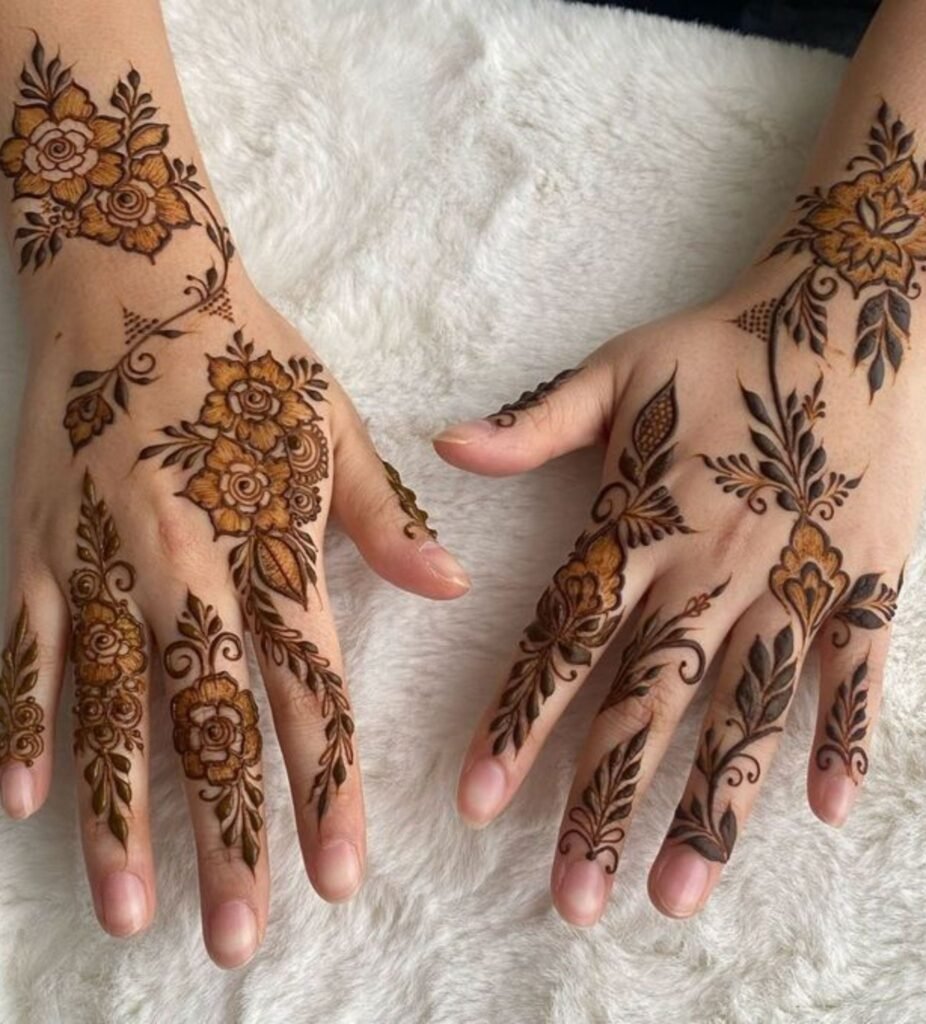
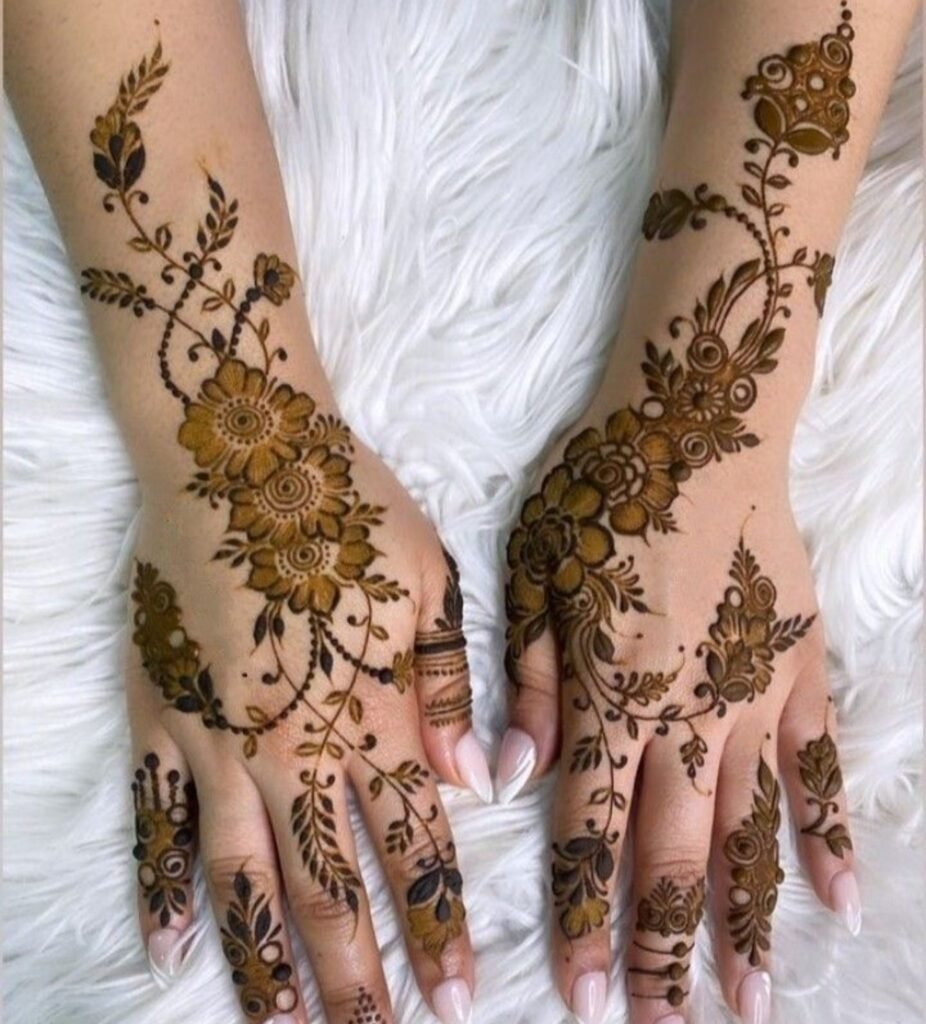
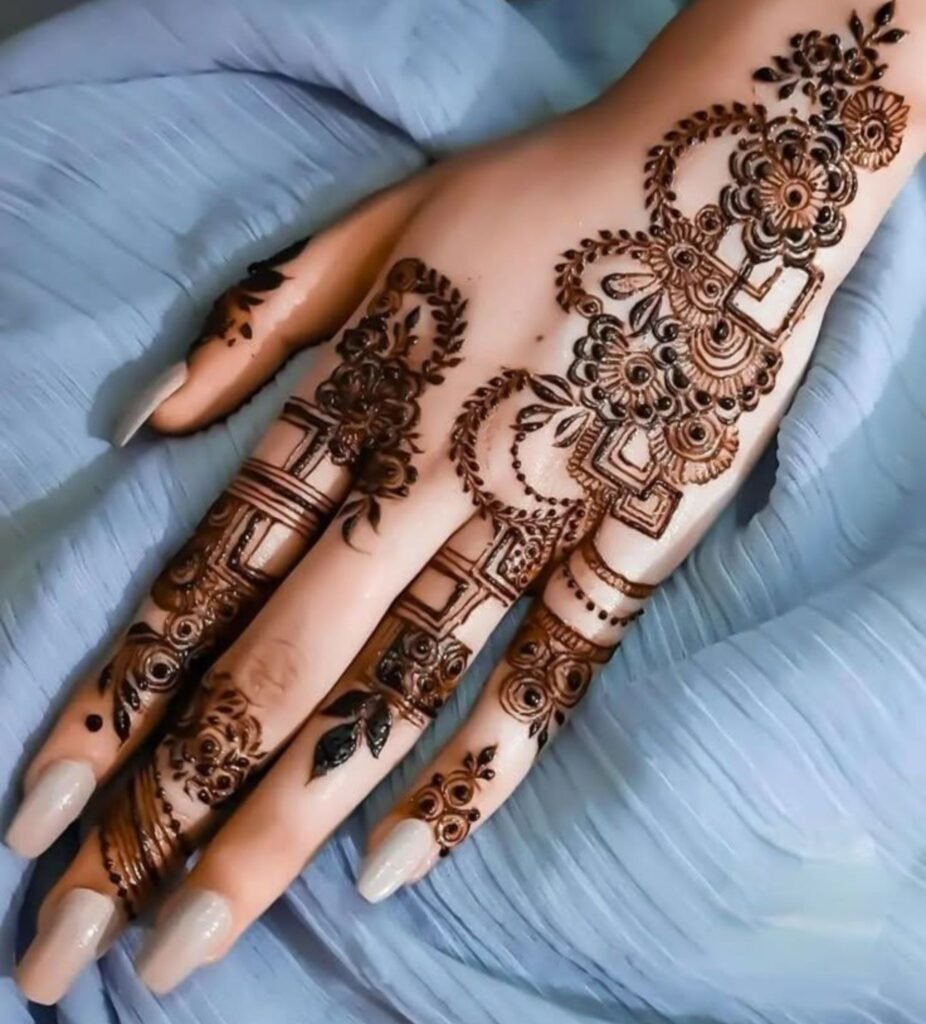
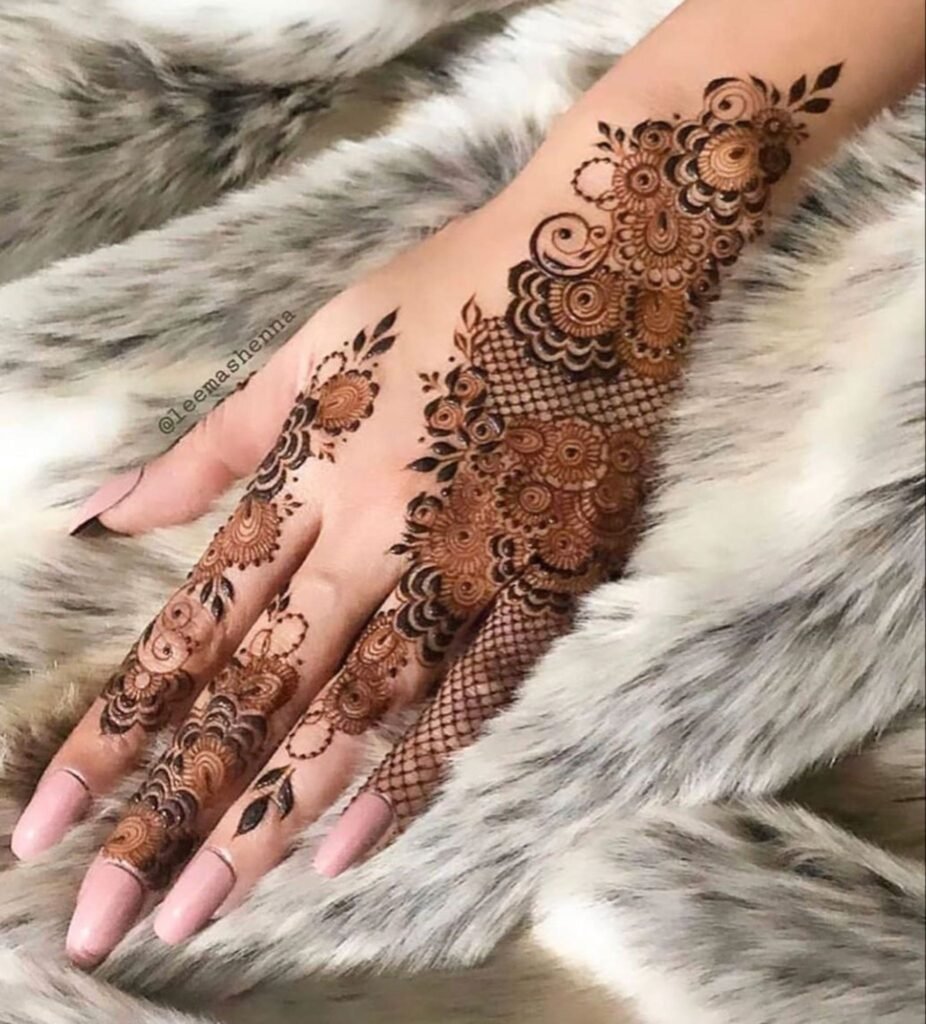
The dorsal side of the hand is the most visible surface during gestures, photography, and prayer. The back hand fancy mehndi design should deliver impact without crowding the fingers.
Symmetry as the Foundation
Bilateral symmetry is non-negotiable in high end back hand work. A central motif, typically a mandala, elongated oval, or pendant shape sits at the center of the hand, with matching extensions flowing outward toward each side. Breaking symmetry even slightly reads as an error on the back hand.
Finger Detailing
For back hand fancy patterns, finger detailing should be minimal and intentional:
- Single line geometric bands on the middle and ring fingers only
- A small geometric accent on the index fingertip
- Thumb left clean or with a half ring at the base
Minimalist Chic Patterns
At parties and mehfils, minimalist fancy henna patterns, a central mandala with four radial extensions and clean finger lines are replacing heavy traditional coverage. They suit both ethnic and Western evening wear and can be applied in under 30 minutes by a skilled artist.
Front Hand Mastery Bold and Intricate
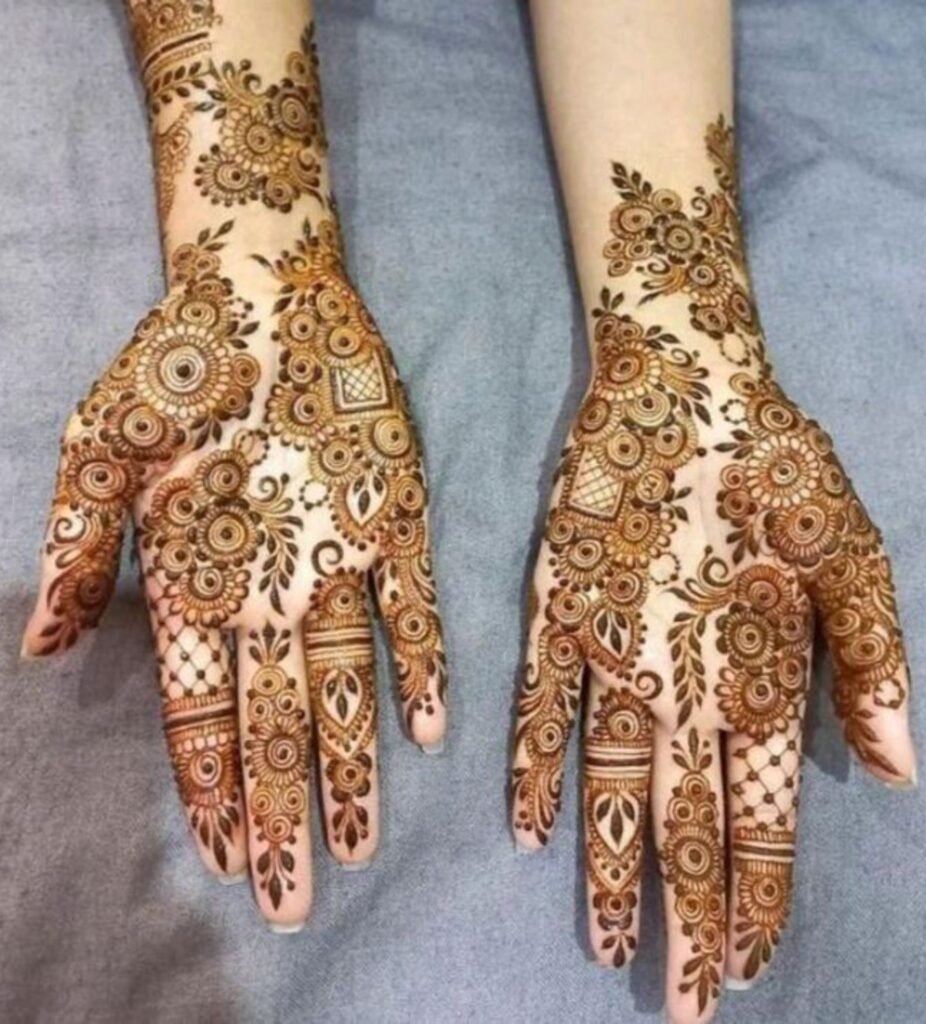
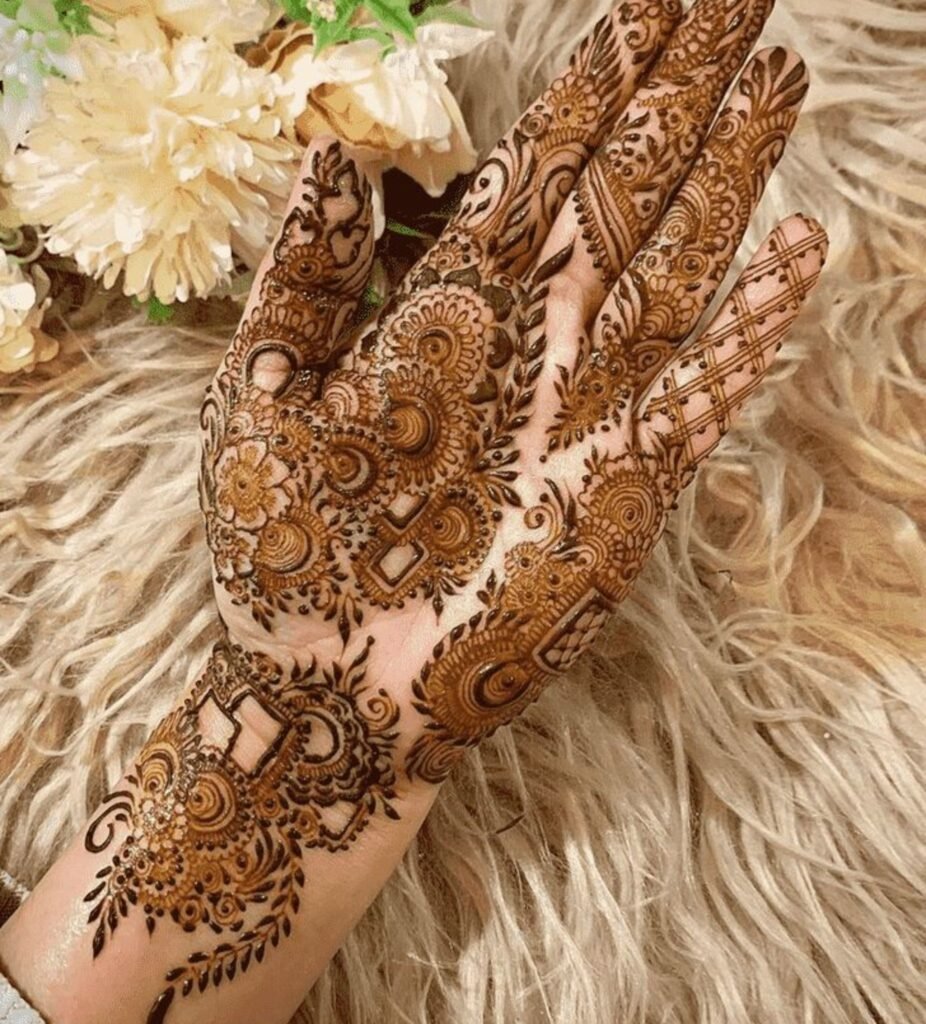
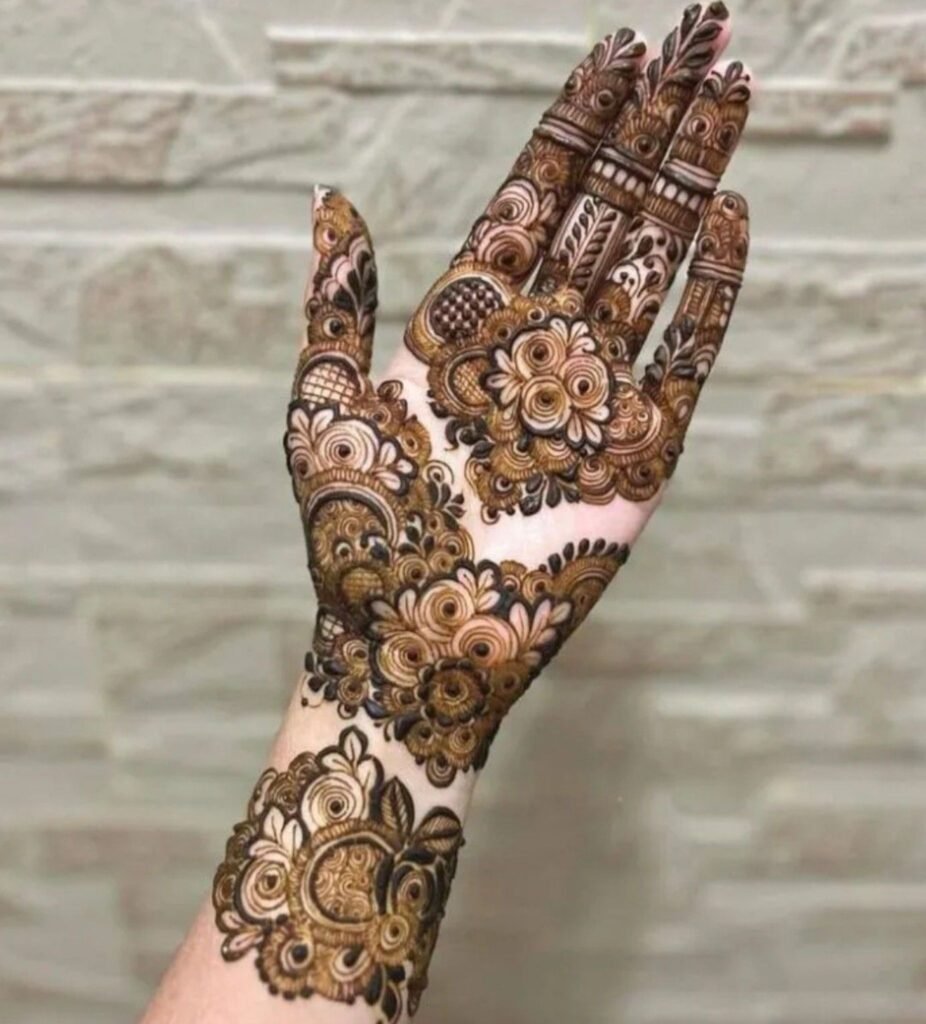
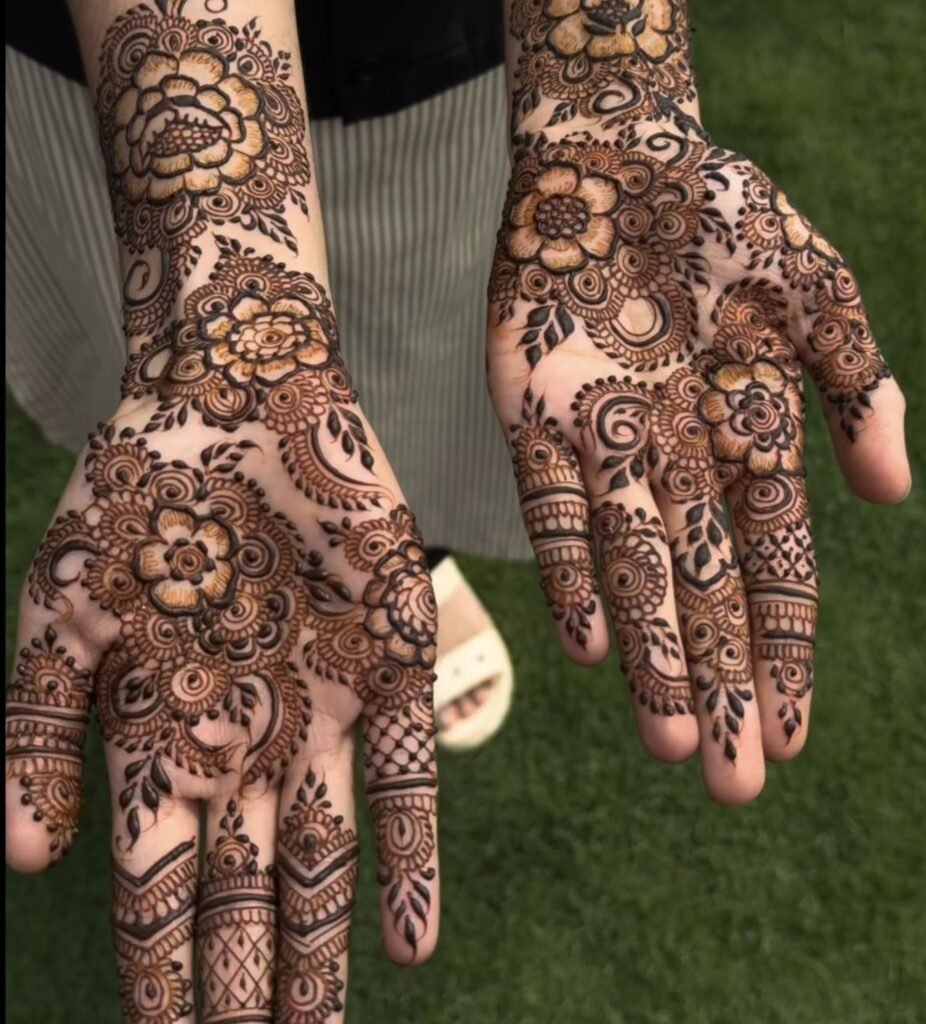
The palm side allows more creative freedom because the design doesn’t need to mirror the back. The challenge: balancing empty space with dense motifs without the result looking unfinished or patchy.
Key Motifs for 2026
- Lotus: Drawn in outline form at the center of the palm, petals layered outward. Works as an anchor for surrounding geometric fills.
- Peacock: A stylized single peacock with geometric tail feathers placed on the upper palm below the fingers. The tail lines double as structural grid elements.
- Geometric grids: Hexagonal and diamond grid fills inside bordered sections give modern fancy mehndi its graphic design quality. These replace freeform filling with precision structure.
The Space to Detail Ratio
A reliable rule for front-hand fancy work: 40% covered, 60% open skin. If a palm design exceeds this ratio, it shifts from fancy into traditional territory. Use the open areas around the wrist and lower palm as visual breathing room not as space that still needs to be filled.
How to Style Your Fancy Mehndi with Outfits
With Traditional Wear
For lehengas and anarkalis in deep jewel tones (emerald, burgundy, royal blue), choose Haath Phool or bracelet style fancy henna; the structured jewelry look complements heavy embroidery without competing with it. Avoid dense palm coverage with heavily embellished outfits.
With Western Wear
Strapless gowns and jumpsuits pair best with minimalist back-hand patterns or single bracelet designs. Keep fingers clean or with only thin ring bands. The goal is statement not costume the henna should read as intentional accessorizing.
Quick Rule
Match henna density inversely with outfit embellishment: heavy outfit → minimal henna; simpler outfit → bolder fancy pattern.
The Future of Henna Art at MehndiChic
The fancy mehndi design movement isn’t a passing phase; it’s a fundamental shift in how henna is positioned: as wearable art, not just a ceremonial requirement. Jewelry style structures, precise negative space, and geometric mastery are setting the standard for 2026 and beyond. Whether you’re prepping for a bridal night, Eid, or a festive event, these patterns deliver maximum elegance with disciplined restraint.
Explore the full gallery of 2026 fancy henna patterns, bridal lookbooks, and step-by-step design breakdowns at MehndiChic.com.