Mehndi has always been more than pigment on skin, it’s a language. But in 2026, that language has gotten a serious glow. A cool mehndi design is no longer just the dense, heavily patterned bridal work of tradition. Today’s henna aesthetic borrows from tattoo culture, fine line jewelry, and architectural geometry, producing a new visual vocabulary that is as at home on a festival runway as it is at a wedding ceremony.
The global mehndi renaissance is being driven by artists and wearers who refuse to choose between honoring heritage and chasing modernity. The five defining trends below represent a fundamental shift in how we think about henna as a medium of self expression.
Minimalist Finger Tip Magic
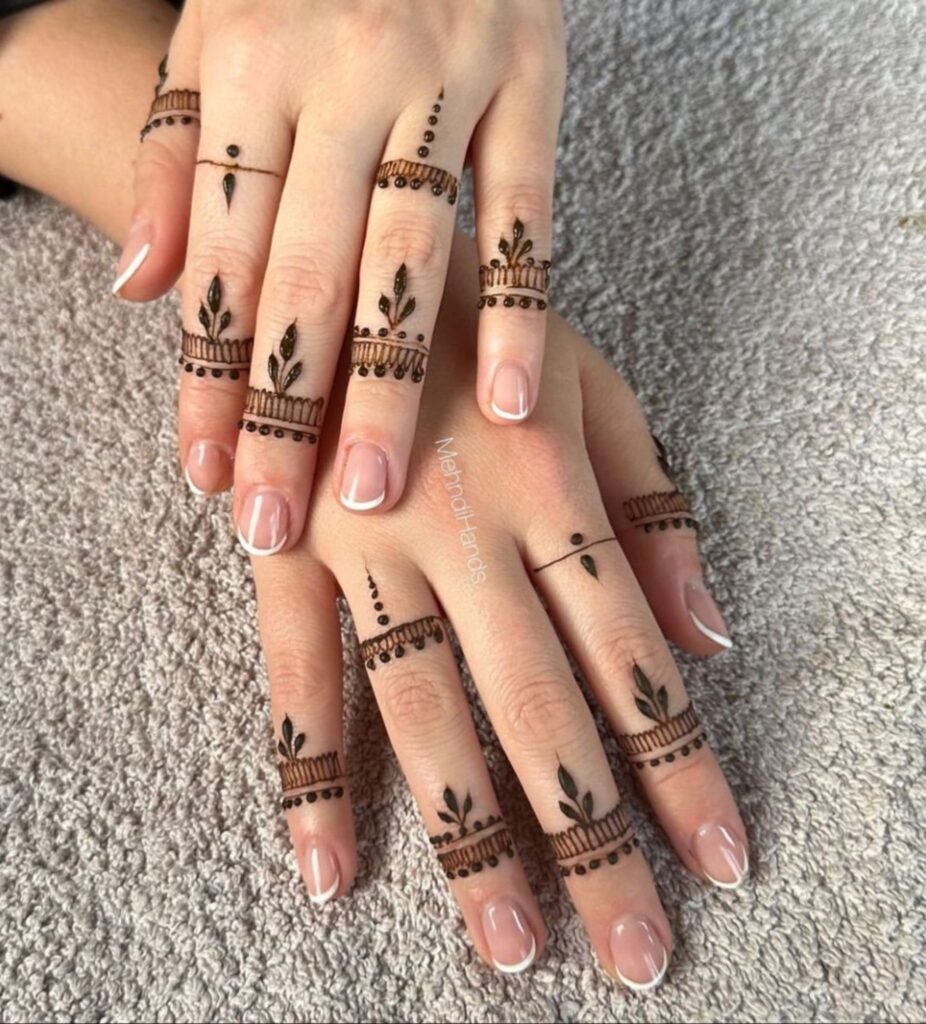
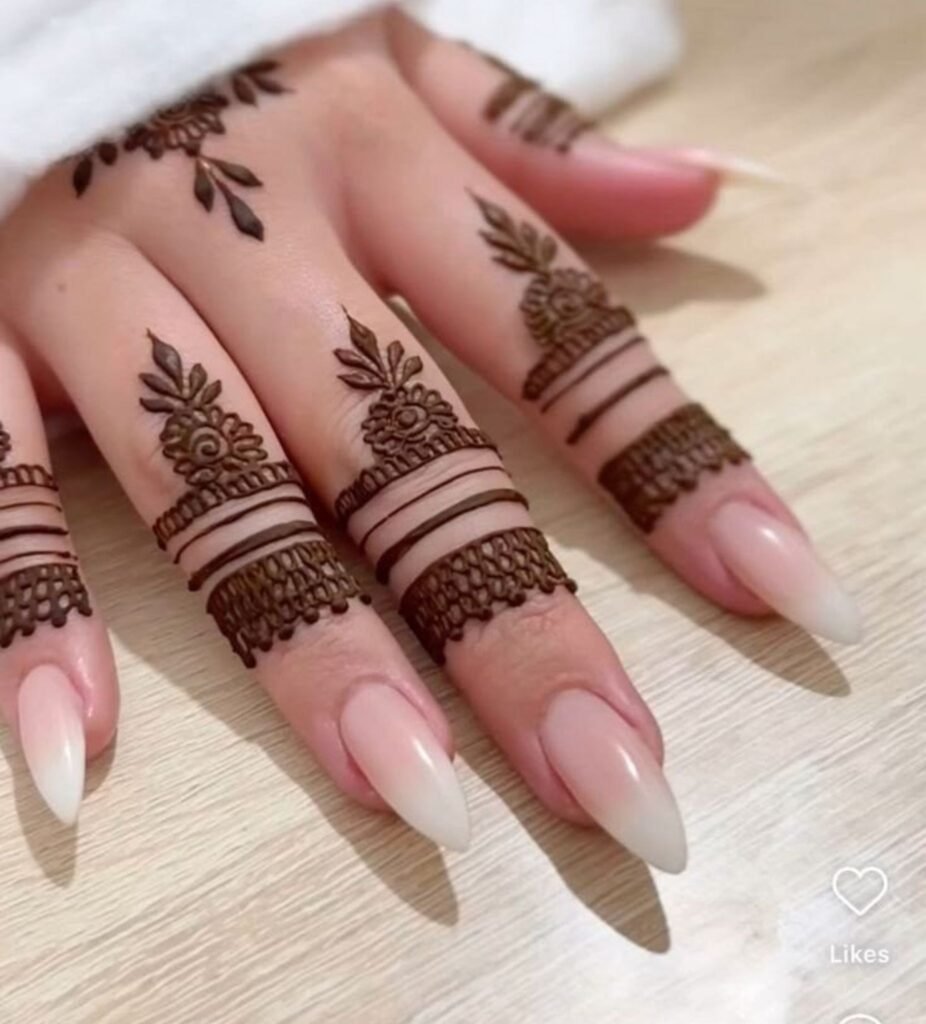
The most influential shift in contemporary mehndi is the radical pruning of design to its absolute essence. Fingertip mehndi focuses ornamentation on the top two phalanges of each finger, leaving the palm as deliberate negative space. The result reads as effortlessly modern like an editorial accessory you were born wearing.
What makes it distinctly 2026: single stroke linework inspired by Japanese sumi-e brushwork gives each finger a sculptural, almost calligraphic identity.
The genius of this style is restraint as a power move. It photographs beautifully without competing with rings, nail art, or bracelets.
Geometric Mandala Fusion
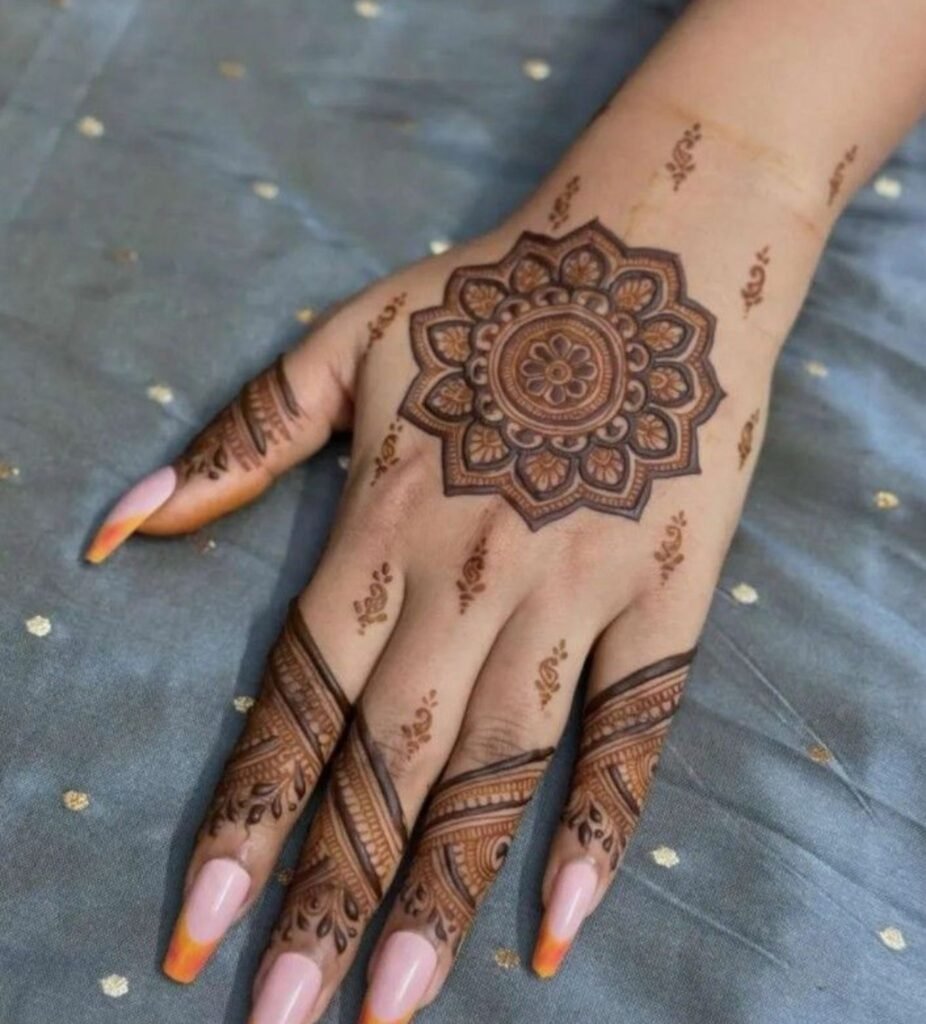
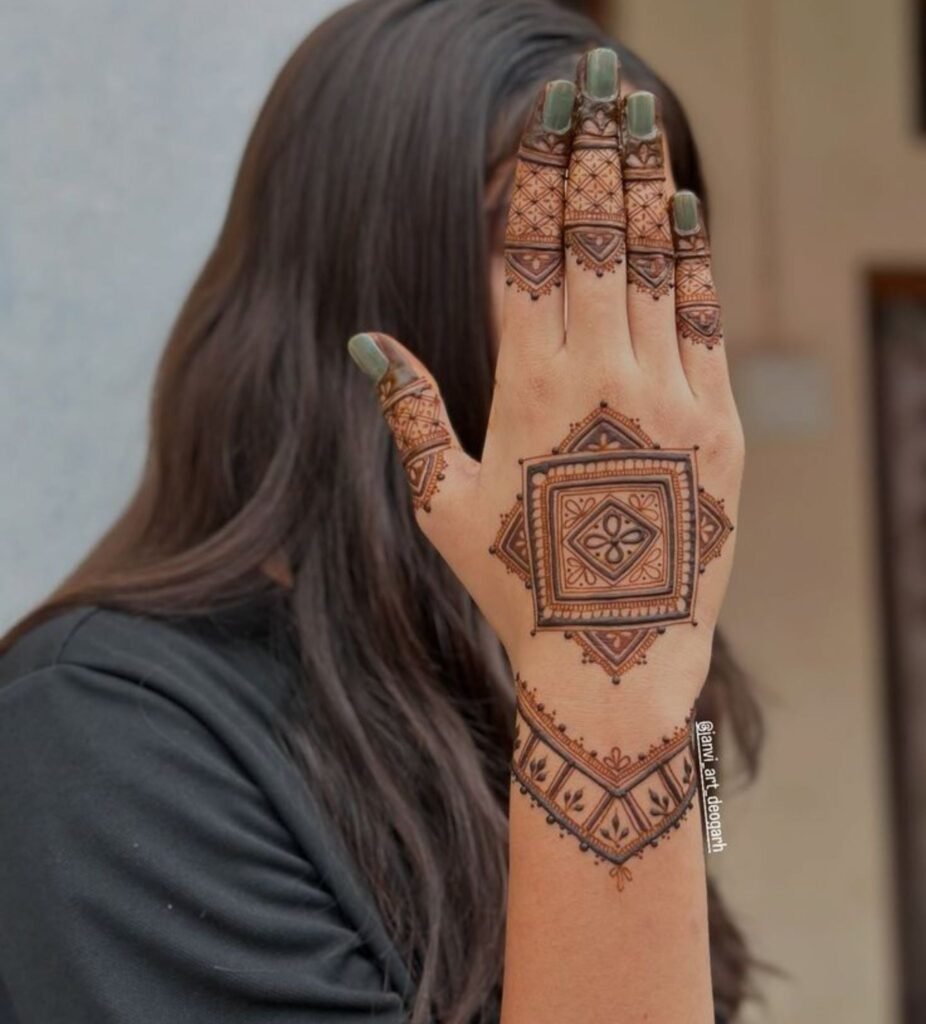
Classic mandalas are circular meditations in symmetry. Geometric mandala fusion deliberately breaks that symmetry, introducing hexagonal grids, triangulated compartments, and fractured radial lines that feel closer to sacred geometry than traditional florals.
Key elements to request: isometric triangles radiating from a central lozenge, alternating filled and unfilled segments for a high contrast graphic effect, and sharp interior angles within curved outer borders; the tension between cool mehndi design geometry and organics is where the magic lives.
The ‘Tattoo Style’ Bird & Botanical Motifs
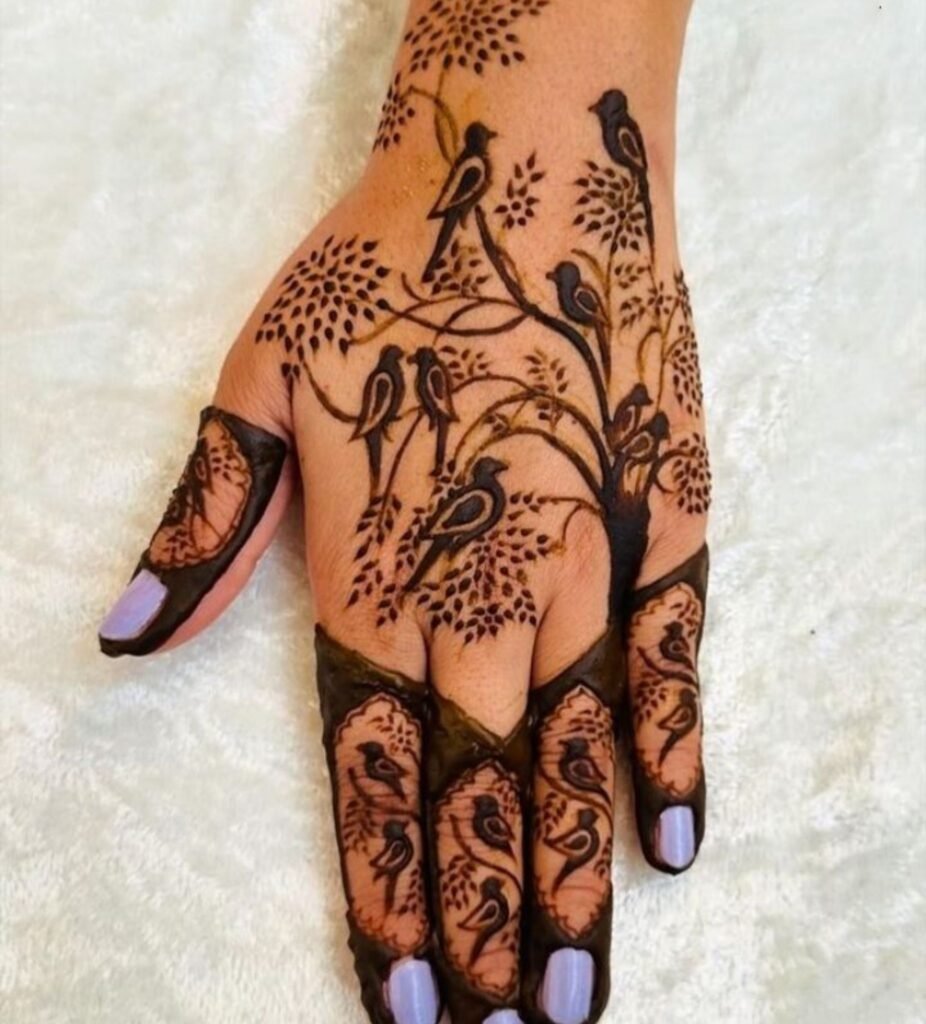
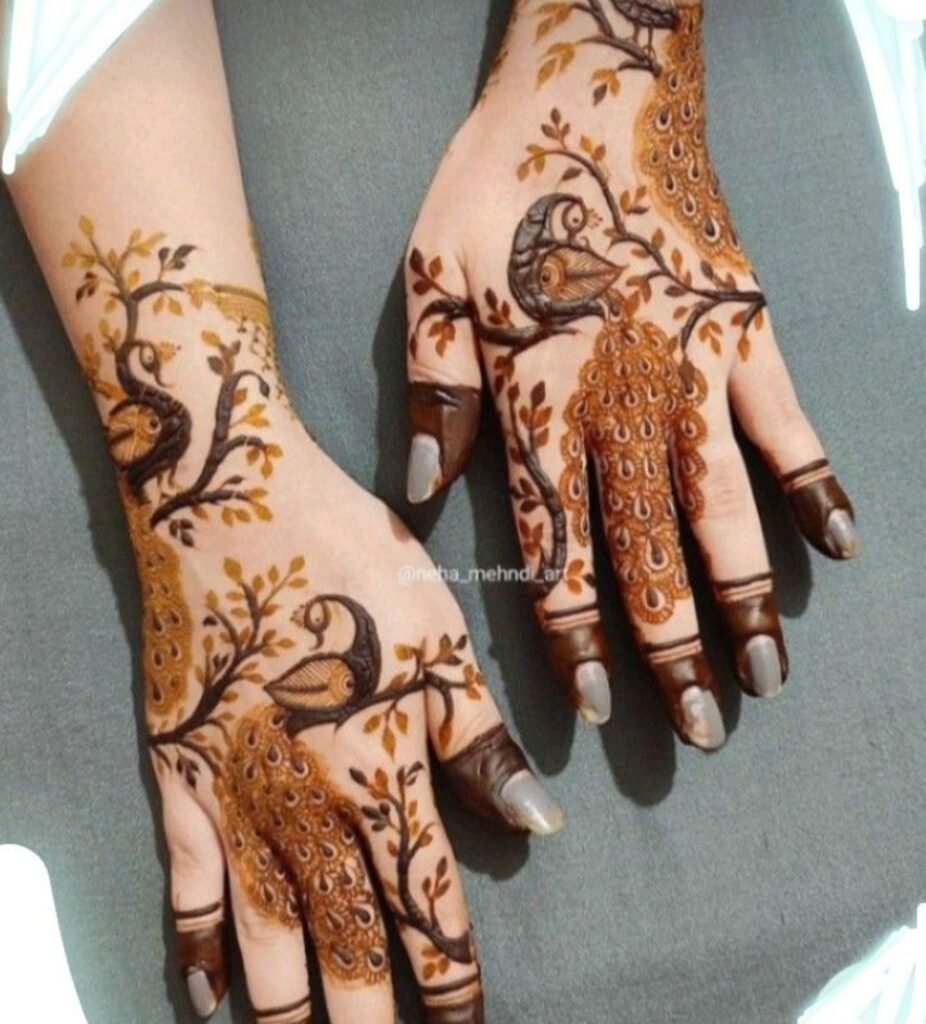
Henna and tattoo culture have been quietly flirting for years. In 2026, they’re official. Tattoo style mehndi adopts the compositional grammar of fine line tattoos: single needle detail, botanical accuracy, and narrative placement along the forearm or collarbone rather than the standard palm canvas.
Swallows in flight, trailing moonflower vines, and anatomically precise fern fronds are replacing stylized peacocks and generic paisleys. Henna’s organic warmth ranging from terracotta to near black gives botanical motifs a depth no ink black tattoo achieves on olive or deep skin tones.
Negative Space (Reverse) Mehndi Patterns
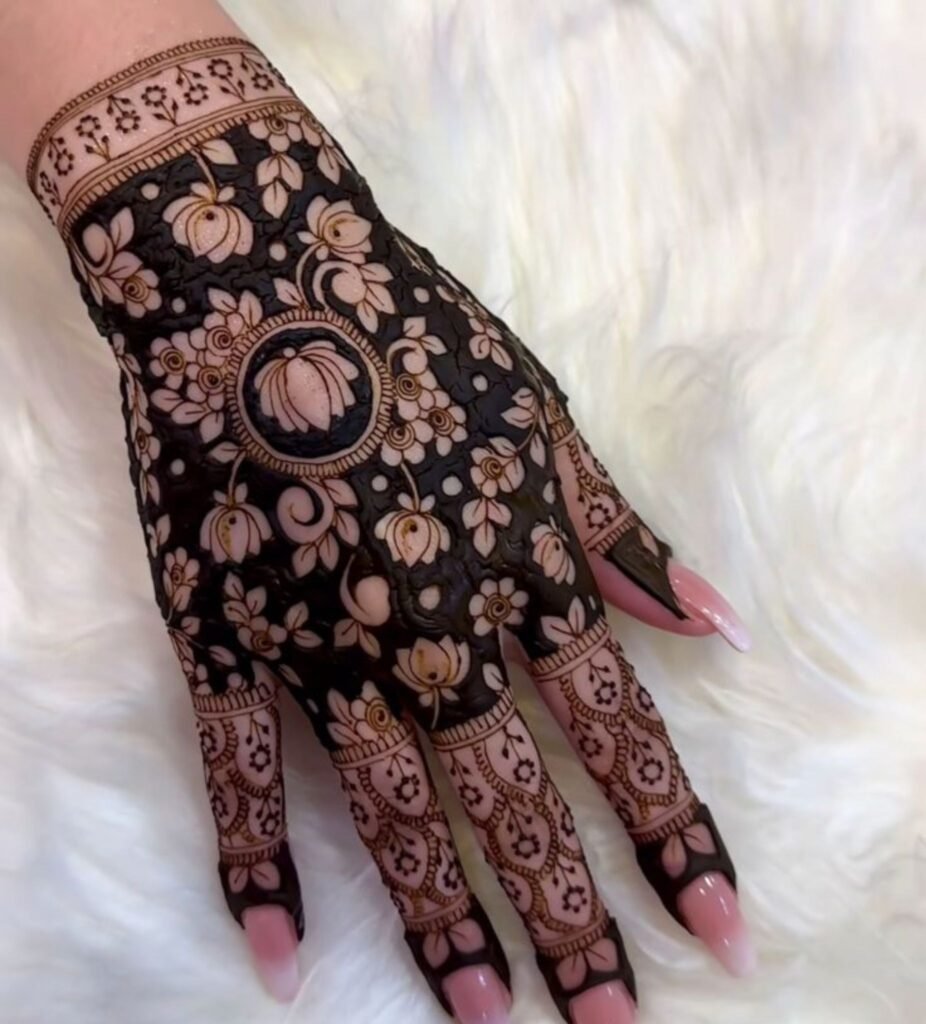
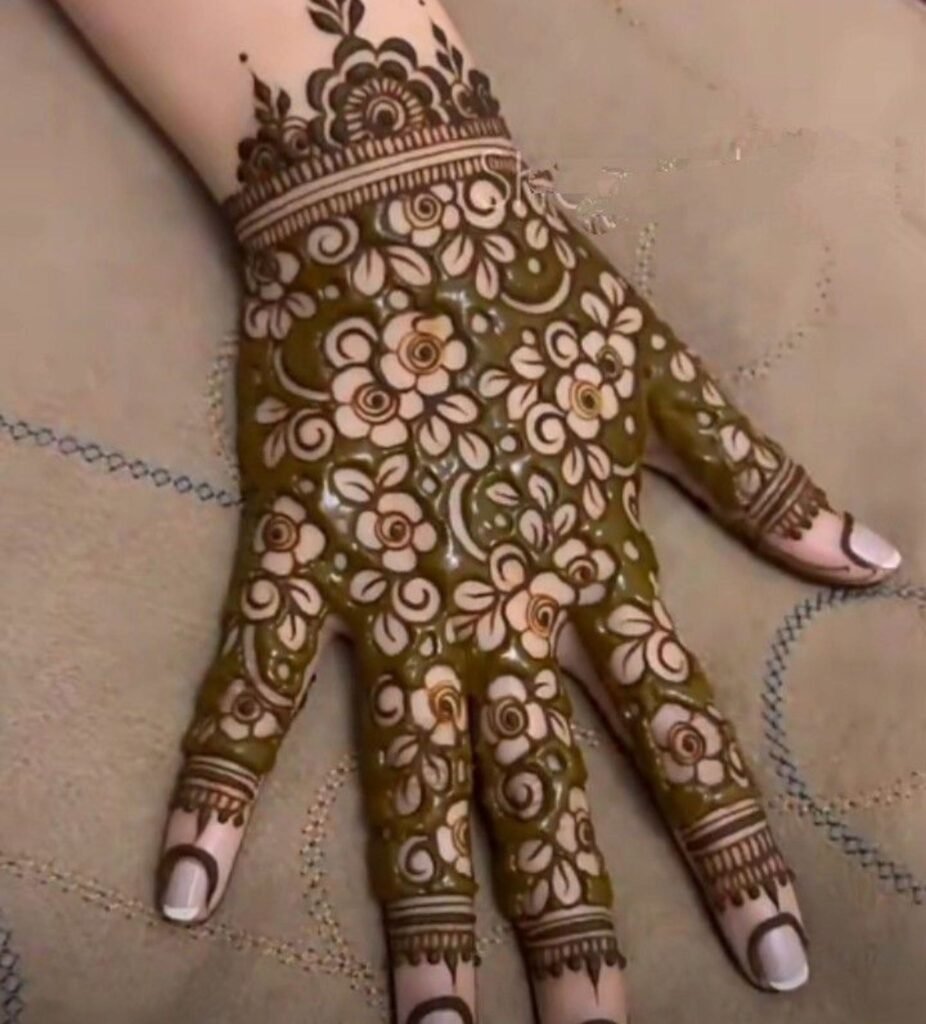
The most technically demanding trend on this list is also the most visually arresting. Negative space mehndi flips the traditional approach: instead of applying paste to create the design, the paste creates the background, and the unpainted skin forms the actual motif.
Imagine a lotus bloom whose petals are the color of your skin, framed by a dense henna field. On deeper skin tones especially, the contrast between natural pigment and darkened henna creates something genuinely striking. Motifs that work best in reverse: geometric shapes, crescent moons, five pointed stars, and simplified animal silhouettes.
Boho Chic Jewelry Style Mehndi
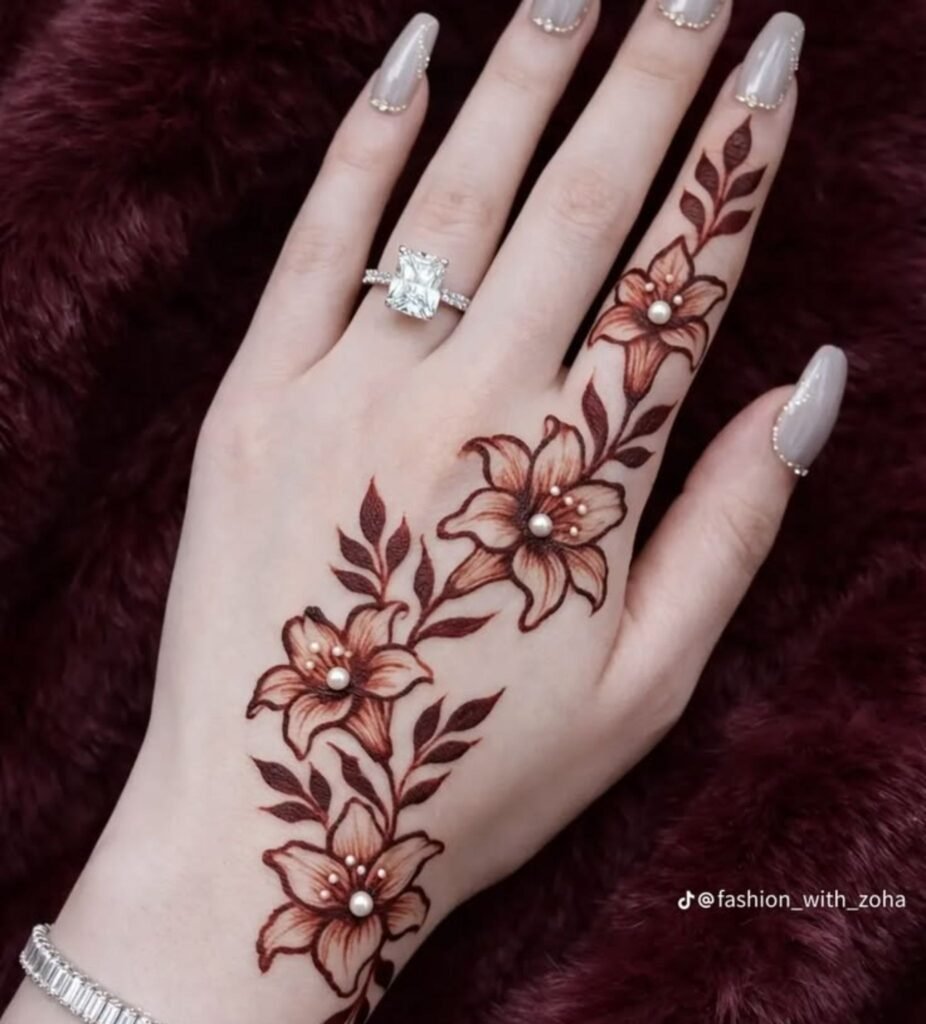
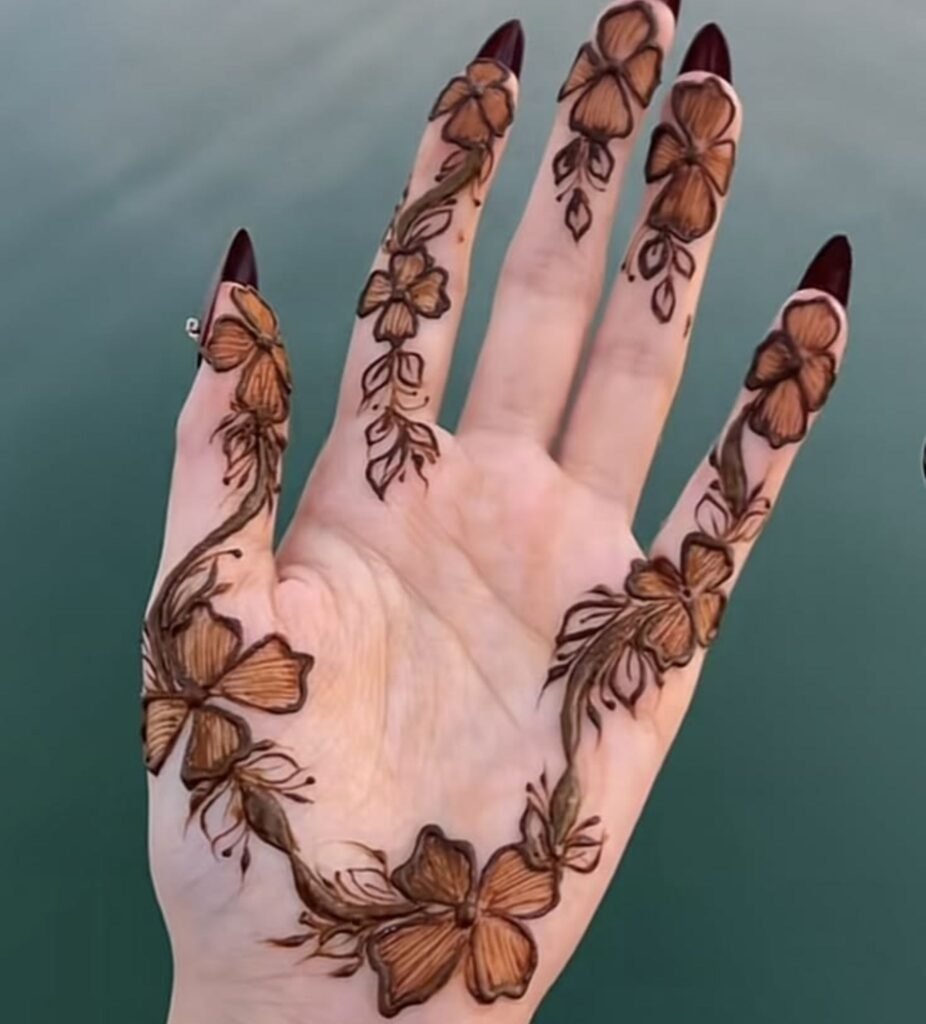
Jewelry style mehndi mimics the visual effect of layered gold adornment cuffs, rings, chains, and pendant drops drawn entirely in henna paste. The 2026 cool mehndi design interpretation is far more editorial than its predecessors, integrating boho layering logic: designs wrap around the wrist as a cuff, cascade down a single finger like a ring and chain set, and pool at the back of the hand in the shape of a hand harness.
Tiny hammered texture dots arranged along chain link lines evoke artisan gold more convincingly than smooth lines alone. Pendant motifs, crescent moons, evil eyes, tiny beetles add personal symbolism.
Making Your Modern Design Last
- Leaving the paste on for a minimum of 6–8 hours overnight always yields a deeper stain.
- Once dry, apply a light lemon-sugar sealant to prevent cracking.
- Avoid water on the design for the first 12–24 hours post removal.
- Apply natural oil (coconut, mustard, or olive) twice daily to slow exfoliation.
- Avoid chlorine, exfoliants, and direct sun exposure for the duration of wear.
Final Thought
Mehndi in 2026 is not asking for your permission to evolve it already has. From the calculated restraint of fingertip minimalism to the structural drama of negative space patterns, these trends share one philosophy: intention over excess, craft over convention.
Your skin is the most personal canvas you own. Don’t fill it with someone else’s default, fill it with something unmistakably, unapologetically you.