The vine. The creeper. The flowing, unbroken thread of pattern that travels across skin with architectural precision Bel Mehndi Design is having its definitive moment in 2026, and for very good reasons. Unlike dense, space filling patterns, the bel style is built on rhythm: a continuous stem that breathes, curves, and blooms at calculated intervals.
The 2026 mehndi aesthetic centres on three principles: intentional negative space, architectural line work, and motifs that feel curated rather than crowded. Bel Mehndi is the natural vehicle for all three.
Where Jali Meets the Vine Royal Intricate Back Hand Bel
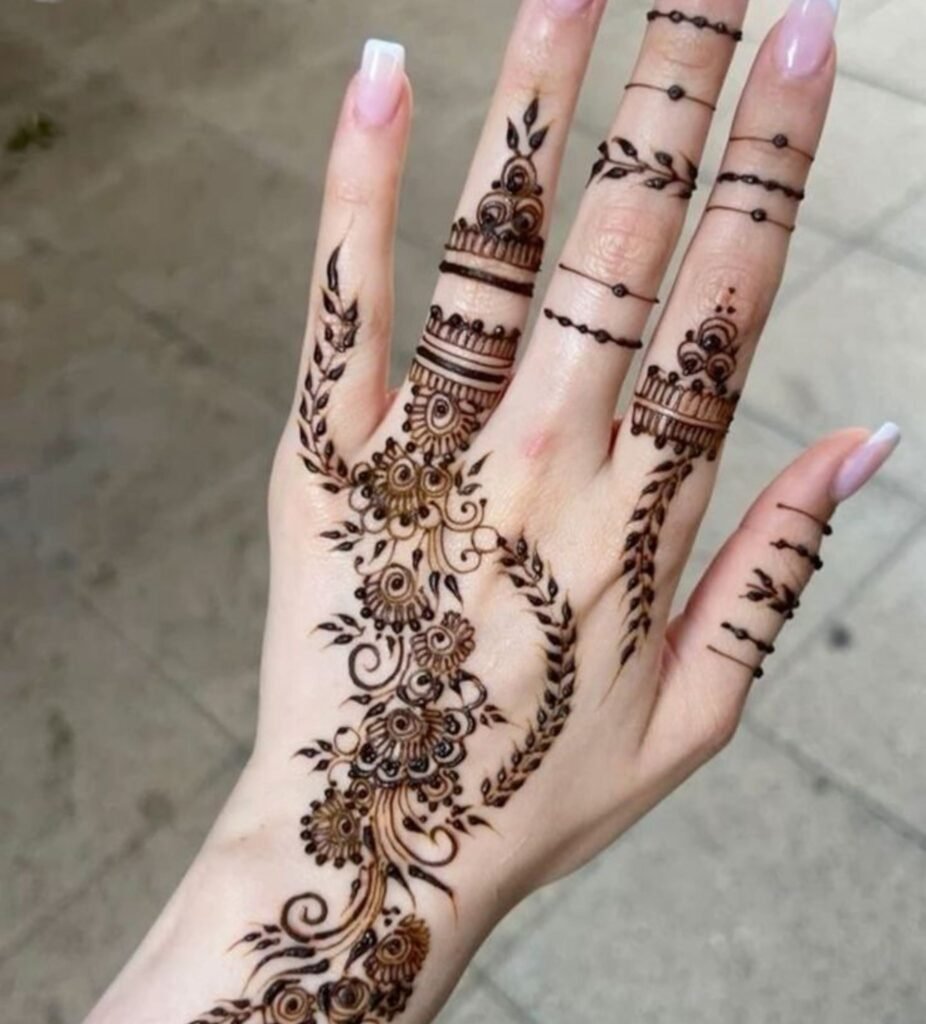
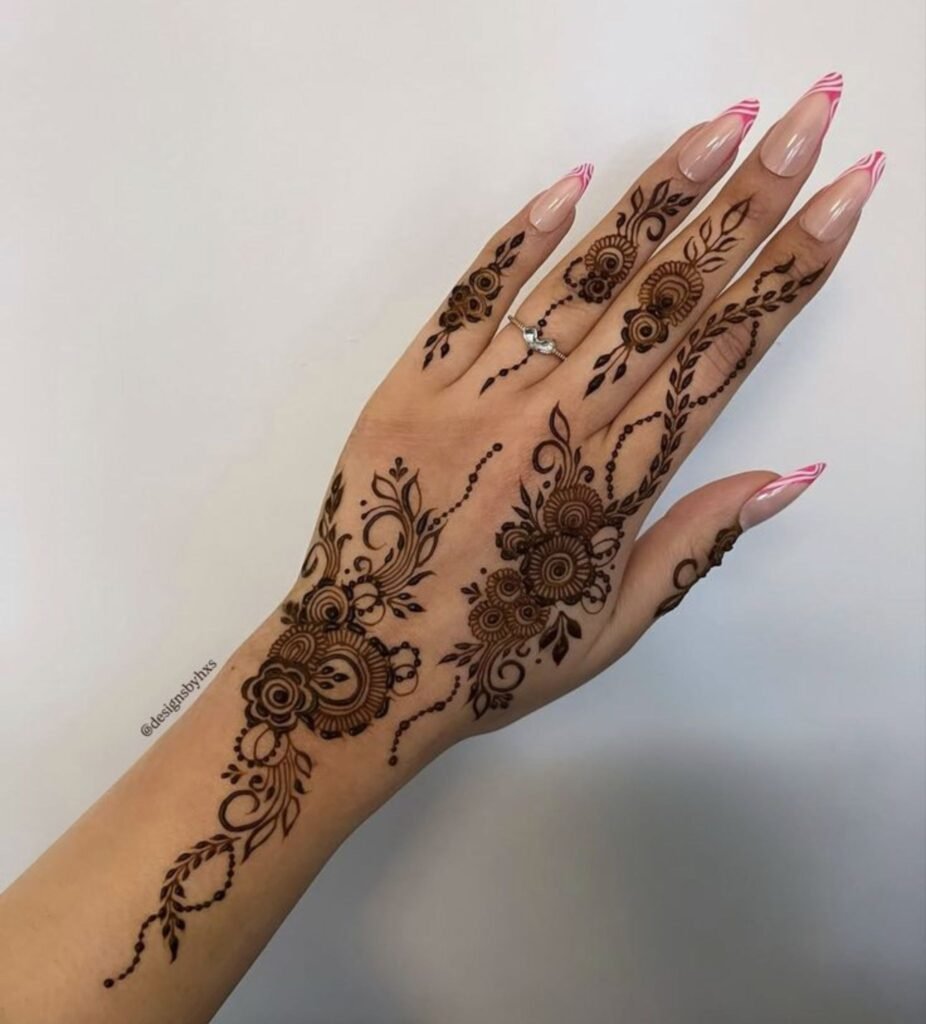
This is the statement interpretation of Bel Mehndi Design structured for the back of the hand where visible surface area is at its most generous. The composition begins at the wrist with a bold, anchored stem that travels diagonally toward the middle finger, creating a natural visual axis across the hand.
- Diagonal placement from wrist to middle fingertip creates elongation
- Bold stem outline (2–3mm) contrasts with sub-1mm Jali fill lines
- Lotus or paisley accents placed at the knuckle joints for natural emphasis
- Negative space is a design element resist the urge to fill everything
Less Is the Statement Minimalist Finger Style Bel Patterns
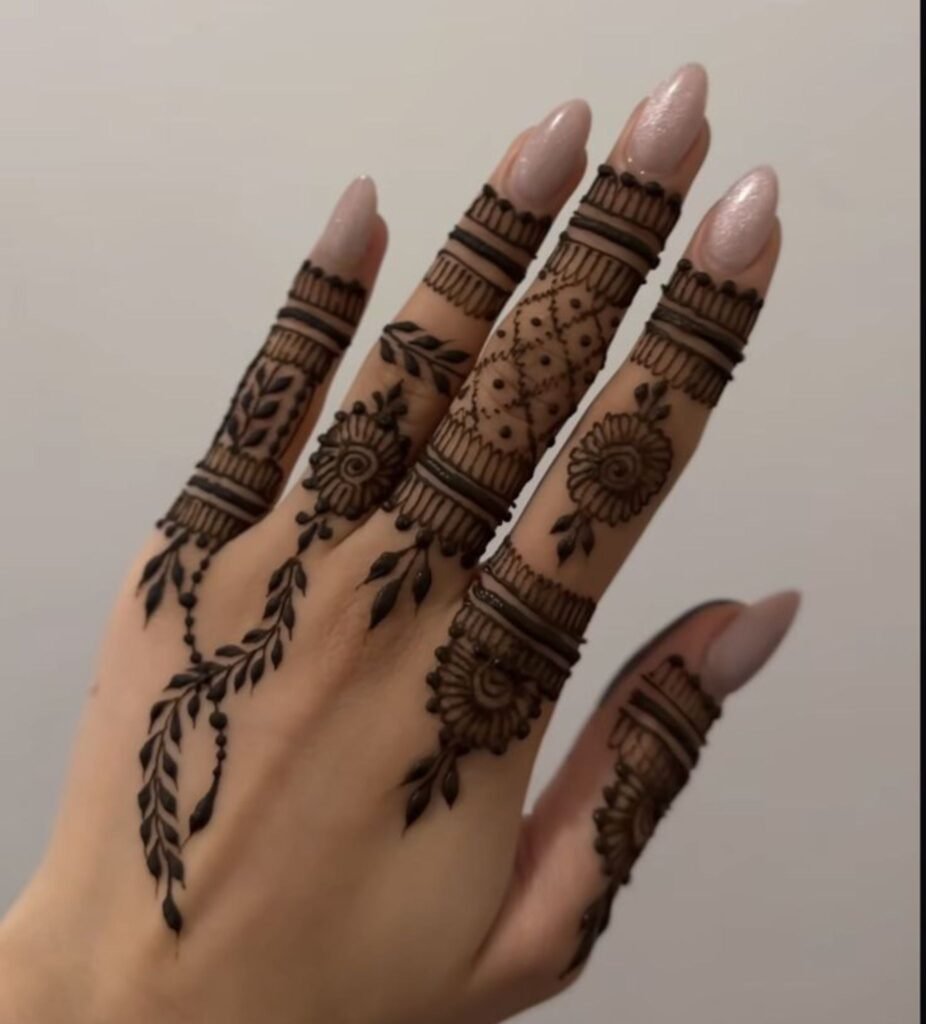
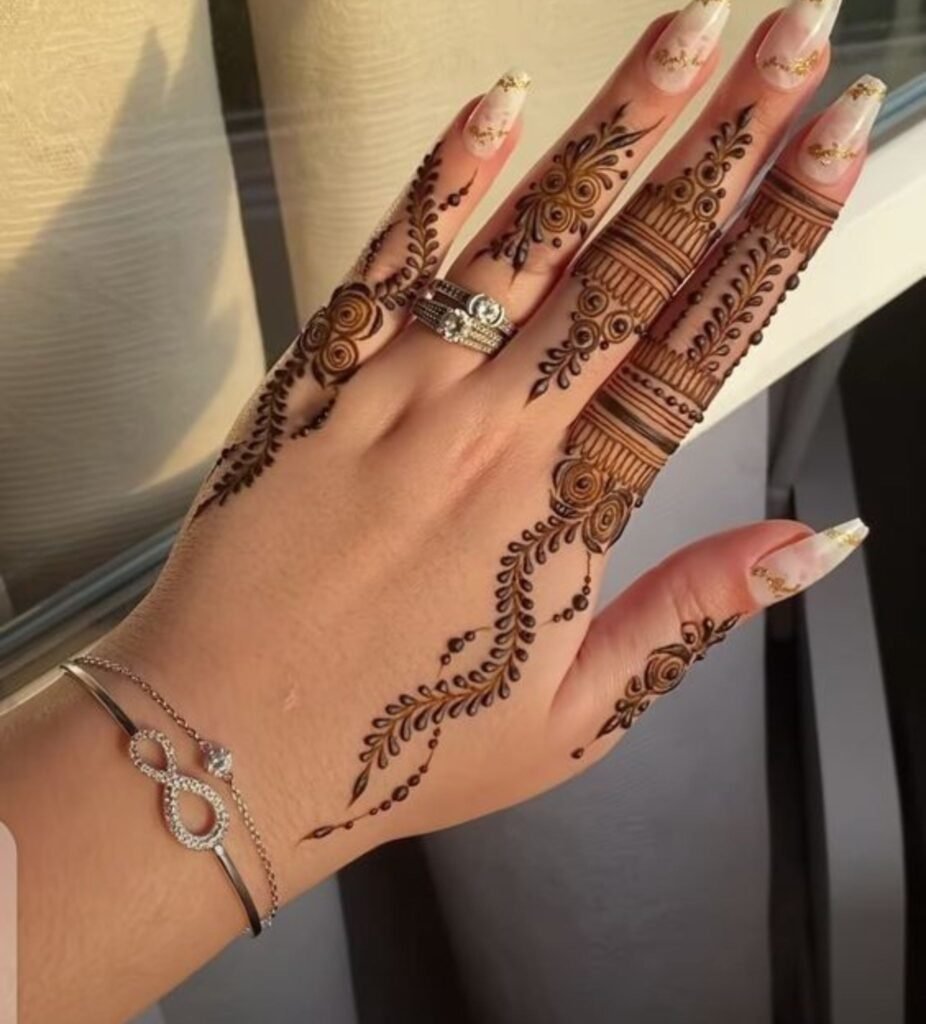
Where the royal back hand design commands, the Bel Mehndi Design style bel whispers. This interpretation keeps the palm largely bare, instead sending disconnected vine segments climbing each finger independently. A single slender stem with two or three leaf pairs per finger nothing more. The spacing between each motif is generous and deliberate, making the finger appear longer and more elegant.
- 3–4 isolated vine segments per finger, placed symmetrically
- Leaf motifs kept under 5mm never wide enough to encircle the finger
- No base or wrist anchor; the design floats freely
- Works particularly well in dark henna for maximum contrast on lighter skin tones
Two Traditions, One Hand Arabic Florals Woven into Bel
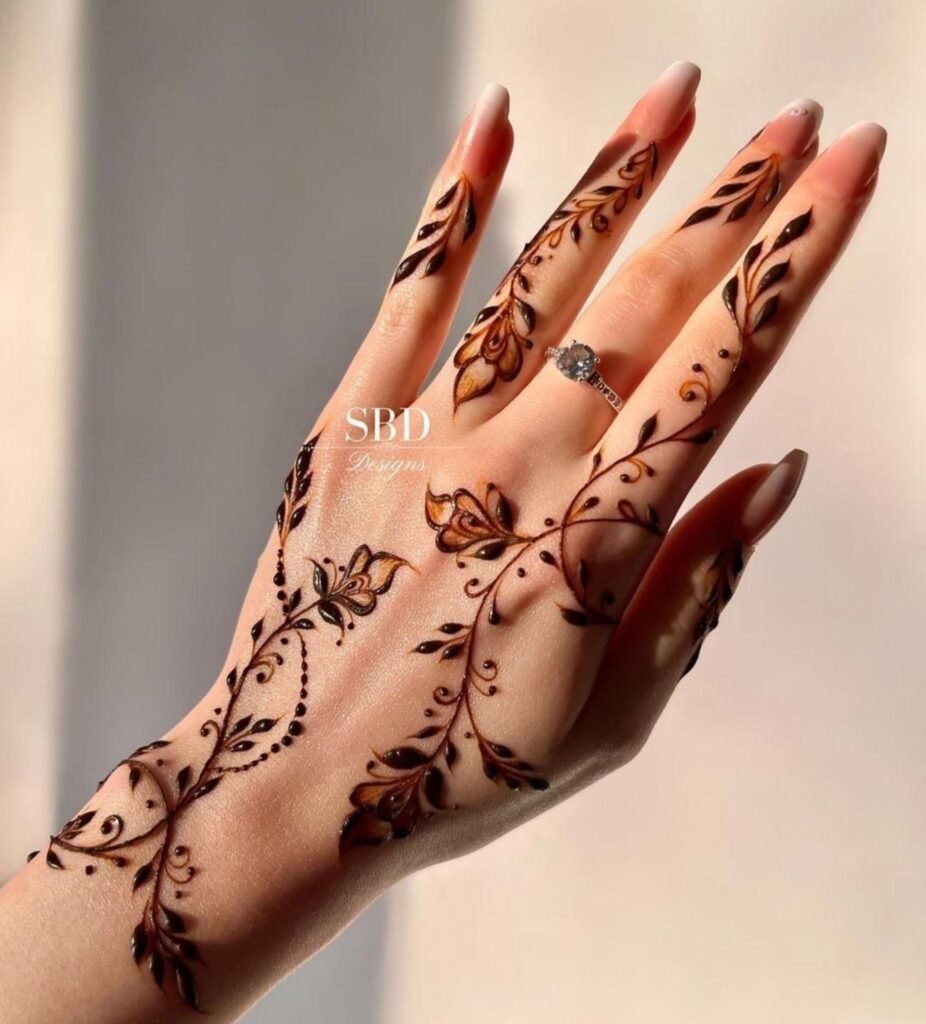
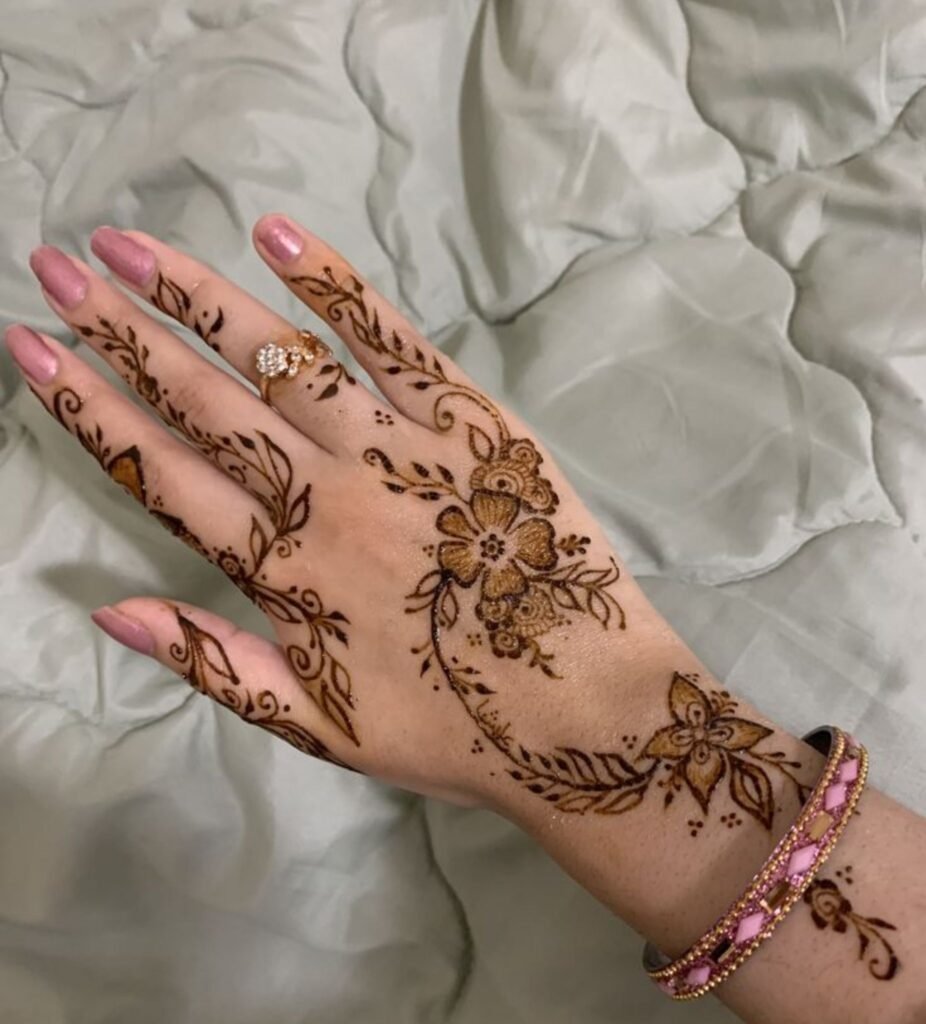
The most artistically ambitious style on this list fuses the bold floral vocabulary of Arabic mehndi with the flowing structure of the bel tradition. Large, shaded roses or open lotus flowers drawn with the dramatic negative space technique that Arabic work is known for are positioned as anchors at the wrist and near the base of the fingers. Between them, a sinuous bel stem acts as the connective tissue, linking blooms through swirling tendrils and micro leaves.
- 2–3 large floral anchors, each 3–4cm in diameter, connected by bel stems
- Watercolour shading achieved by slightly diluting paste for outer petal strokes
- Bel connector stems kept unshaded to provide visual relief from floral density
- Arabic style negative space petals create depth without additional fill work
Henna That Looks Like Gold The Jewelry Style Bel Design
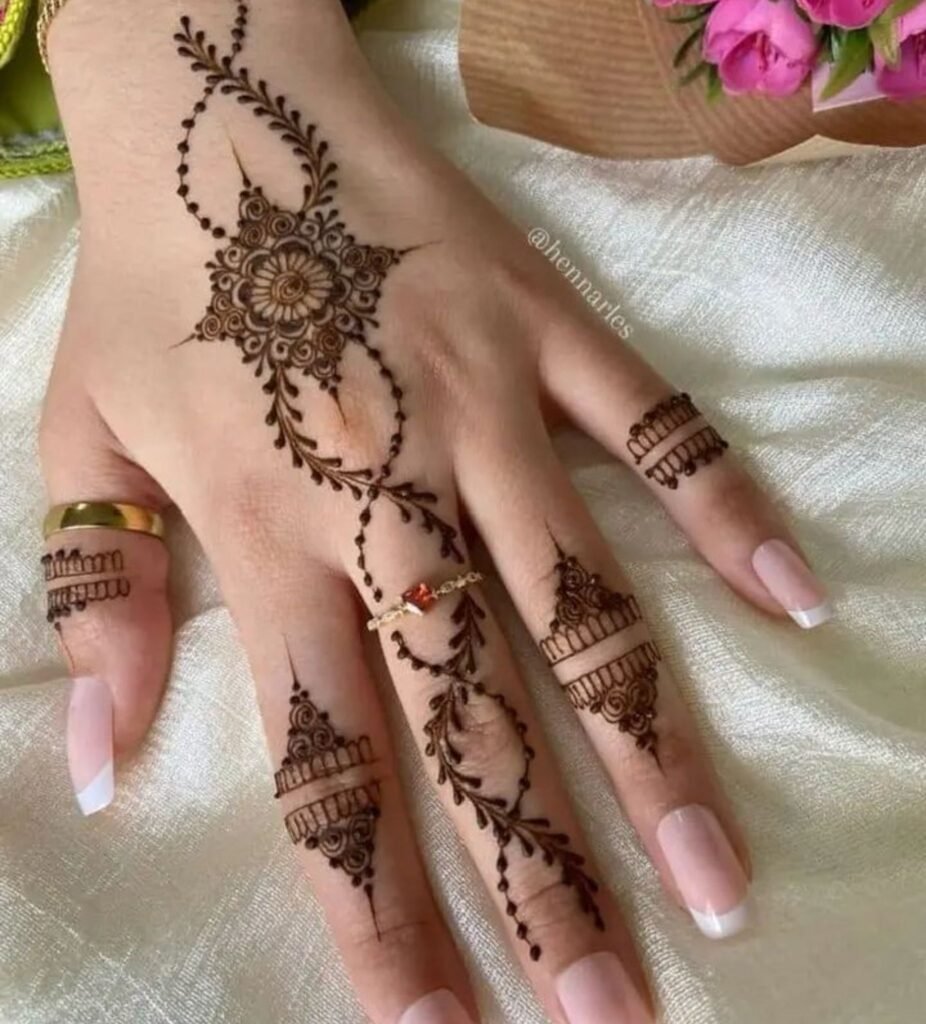
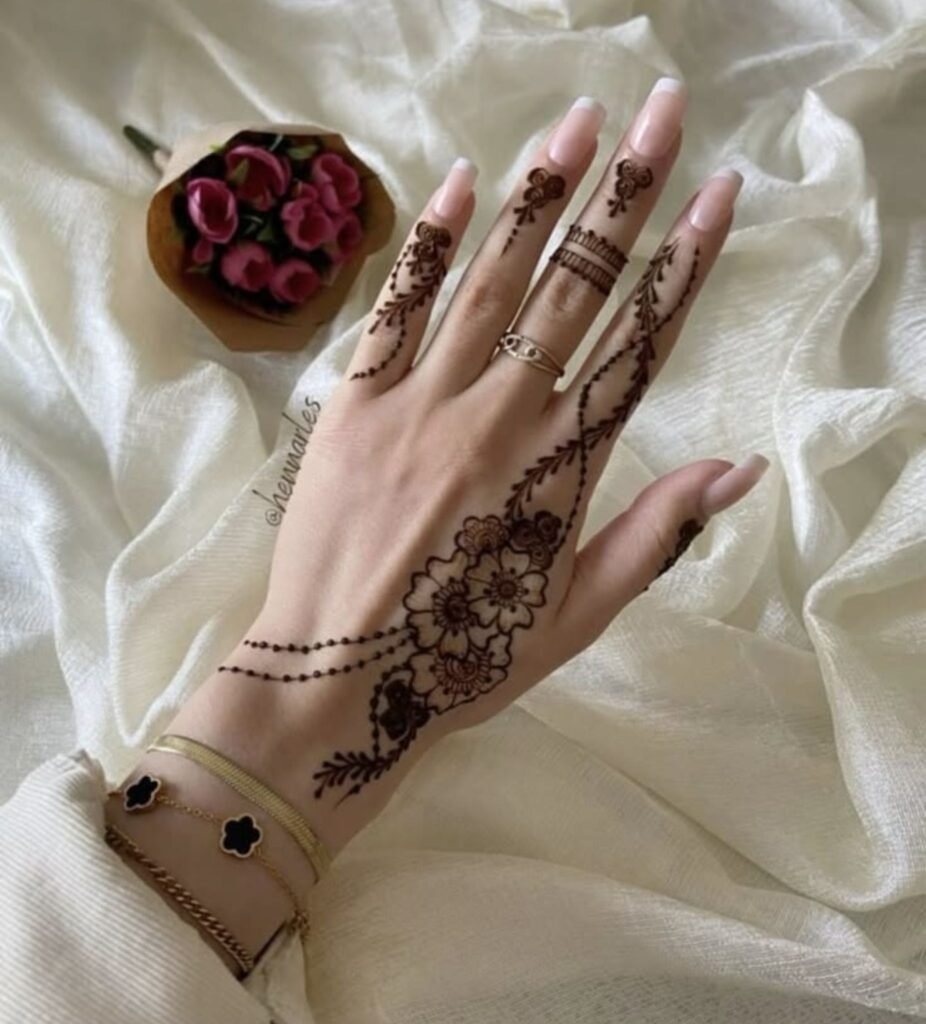
This interpretation treats the bel vine as the structural framework for a trompe-l’œil jewellery piece. The aim is to mimic the visual appearance of a Hathphool, the traditional hand harness worn by brides using only henna line work. A central chain travels from a wrist cuff motif to a ring on the middle finger, with delicate bel stems branching off to adorn the index and ring fingers.
- Central chain line from wrist to middle fingertip, kept at 1.5–2mm width
- Micro-dot bead rows along both sides of the main stem
- Branching sub vines to ring and index fingers, terminating in loop motifs
- Avoid thick lines the illusion depends entirely on fine, consistent strokes
Mirror, Mirror on the Palm Full Palm Symmetrical Bel Masterpiece
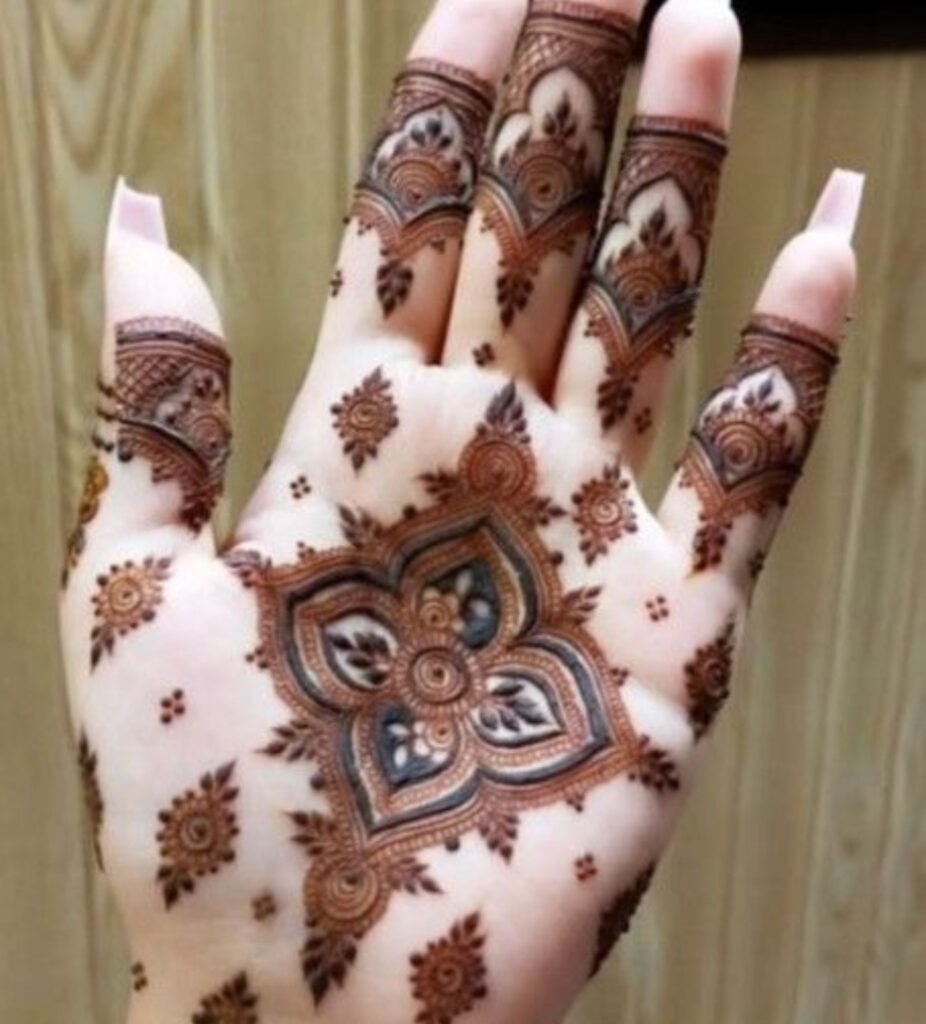
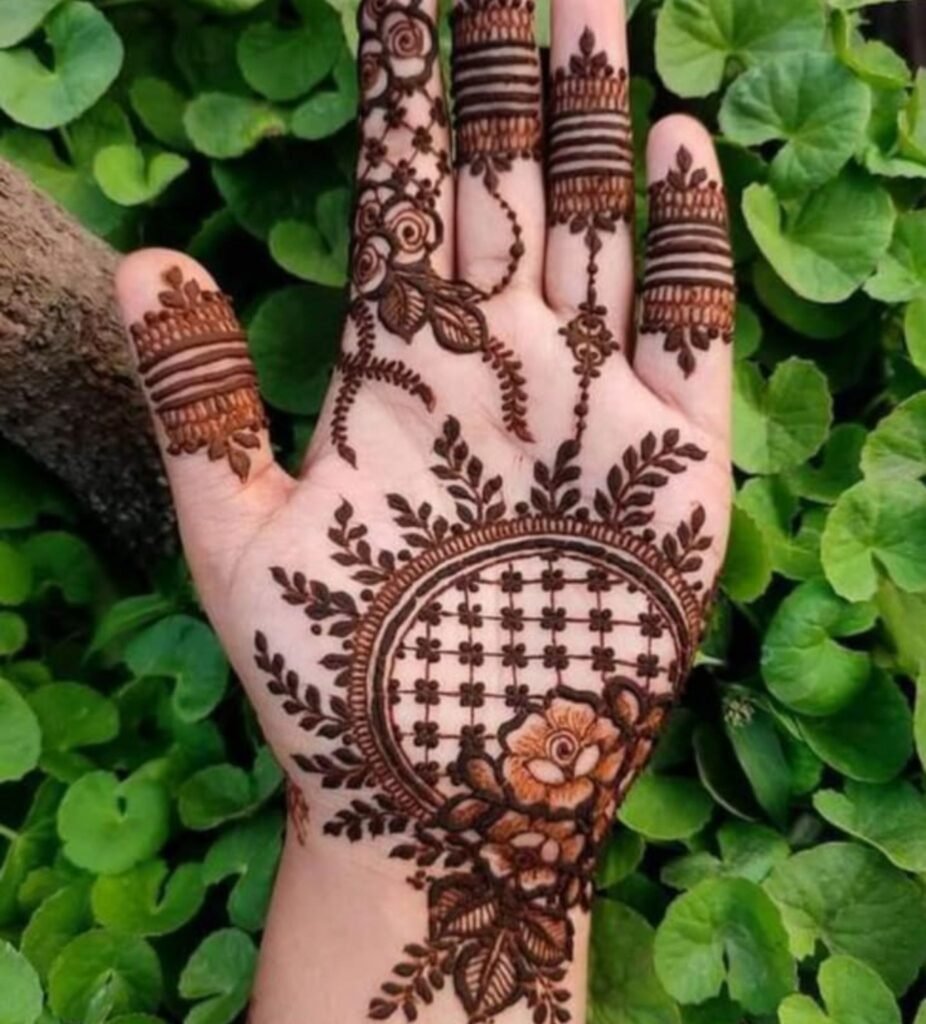
The most complete expression of Bel Mehndi Design covers the entire palm in a mirrored composition. Two primary vine stems emerge from the wrist one on the left, one on the right and curve inward toward the centre of the palm before spiralling upward to their respective fingers.
- Twin bel stems from wrist, curving symmetrically toward the centre
- Single clean mandala or geometric motif at the palm centre as focal anchor
- Matching leaf and dot detailing on both sides precise mirroring is essential
- Best executed with a fine-tip cone, 0.5–1mm opening, to maintain proportionality
The Art of the Dark Stain Expert Application & Aftercare Tips
Thick & Thin Line Precision Vary cone pressure mid stroke. Begin with light pressure for the thin entry, increase at the curve for boldness, then release for the exit. Practice on paper first. The bel’s rhythmic curves demand this control more than any other style.
Lemon-Sugar Sealant Once the paste is dry (45–60 minutes), dab a lemon sugar solution gently over the design. This moisturises the dried henna and keeps it pressed against the skin, deepening penetration and richness of stain.
Avoiding Water in the First 24 Hours Water is the enemy of a fresh stain. Keep hands dry for at least 24 hours after paste removal. Avoid washing dishes, swimming, or using sanitiser. The stain darkens to its peak over 36–48 hours post-removal.
Essential Oils for Longevity Before removing the dried paste, warm a few drops of eucalyptus or clove oil in your palm and coat the design. Oil accelerates dye release and helps the design last 2–3 weeks rather than 7–10 days.
A Final Note from MehndiChic
The five interpretations covered here represent the full range of what Bel Mehndi Design is capable of in 2026 from barely there minimalism to full palm grandeur. The vine is a forgiving structure: it accommodates different skill levels, hand shapes, and occasion types without losing its inherent elegance.
Share your results with us on Instagram using #MehndiChic, and drop a comment below telling us which of these five styles you are most excited to try. Your next favourite design might be one vine stroke away.