Scroll through any bridal or boho aesthetic board right now and you’ll notice a shift. The ultra fine, lacy Indian florals are stepping aside. What’s taking center stage? Afghani Mehndi Design is raw, geometric, unapologetically bold, and rooted in centuries of tribal artistry.
In 2026, brides, festival goers, and henna lovers are chasing something that means something. They want designs that look like wearable artifacts, not wallpaper. Afghani henna delivers exactly that heavy lines, breathing space, and the kind of patterns that look like they belong on antique silver jewelry, not a doily.
The Roots: Kuchi Tribe & The “Skin Jewelry” Concept
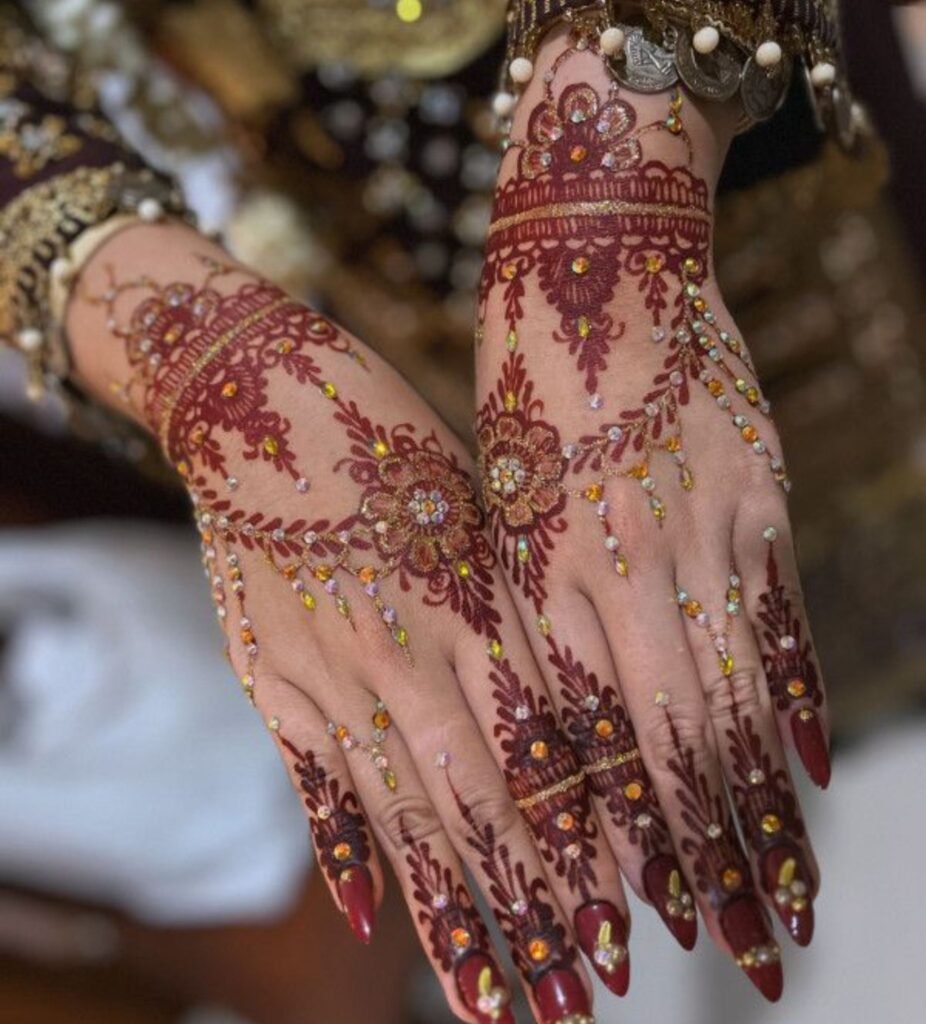
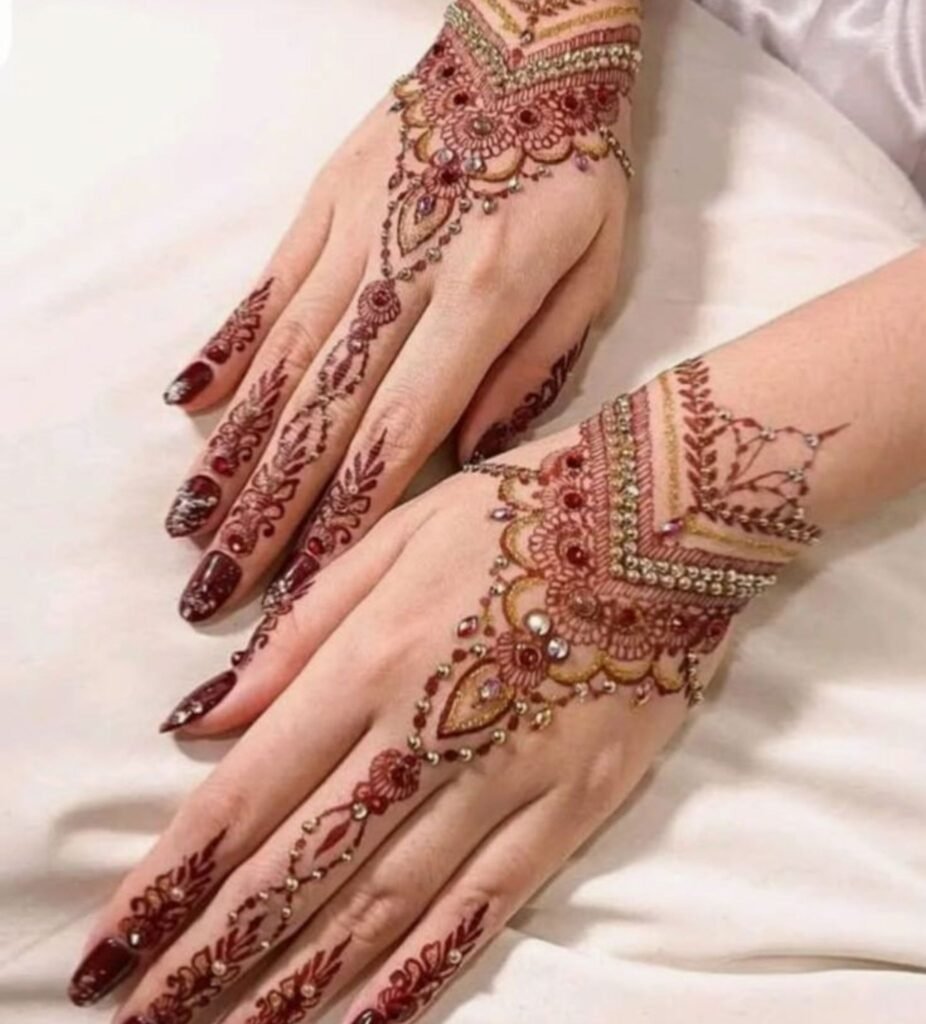
Afghani Mehndi Design traces its strongest influence to the Kuchi nomads, a tribal community known for their stunning oxidized silver jewelry, embroidered textiles, and bold aesthetic language. Their designs were never about delicacy. They were about presence.
When Kuchi jewelry motifs were translated into henna the thick borders, the angular flowers, the stacked geometric bands they created what artists now call “Skin Jewelry.” The henna doesn’t decorate the hand. It becomes an accessory. That concept is exactly what’s driving the 2026 henna trend.
Afghani Mehndi Designs Trending in 2026
1. The Kuchi Tribal Mandala
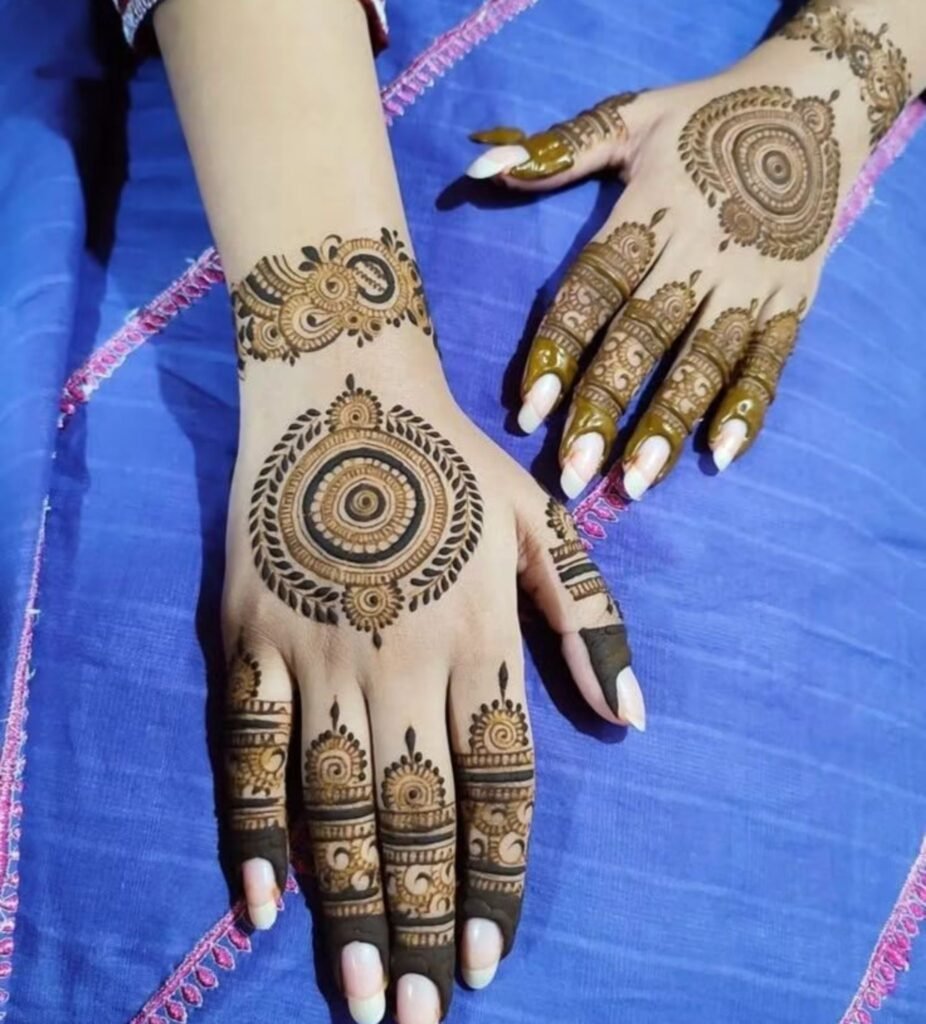
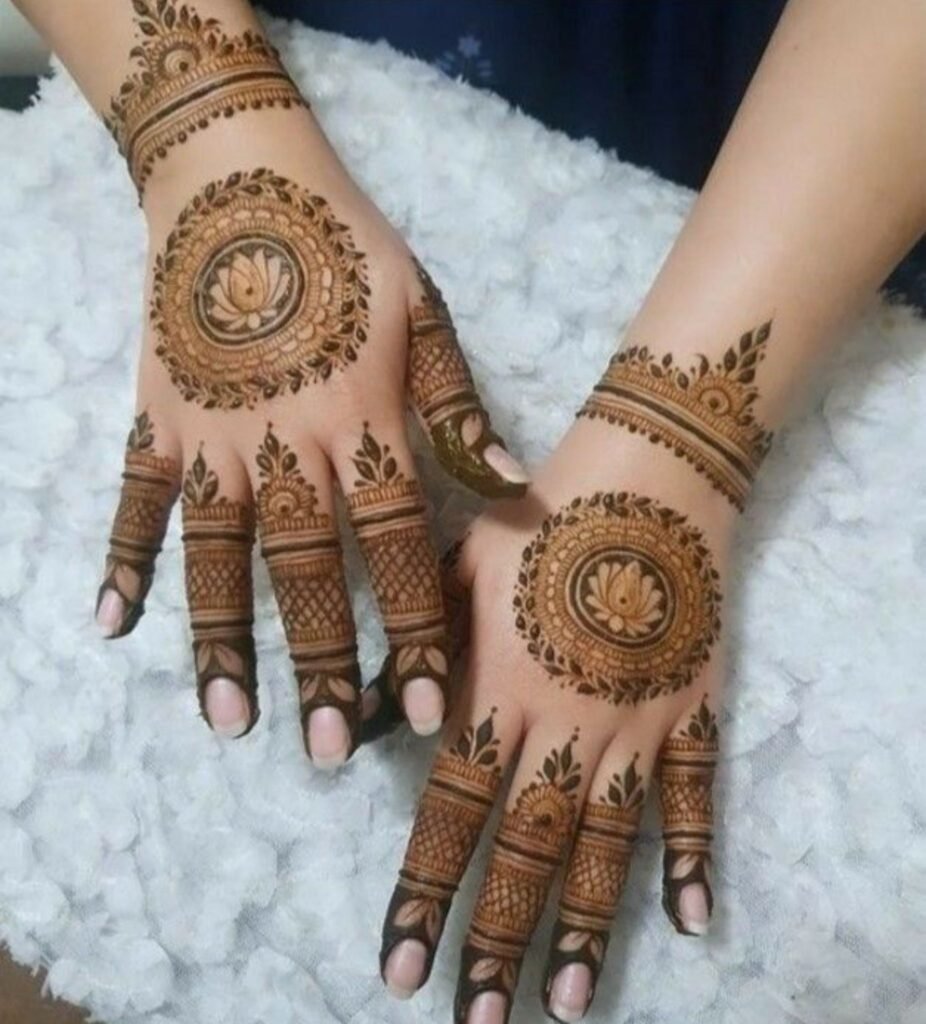
This is the centerpiece design of 2026. Placed on the palm, it’s built from concentric geometric shapes of diamonds inside squares inside octagons all inspired by the patterns etched into antique Kuchi silver pendants.
Unlike traditional Indian mandalas with their petal heavy florals, this one is angular and architectural. Think less “garden” and more “amulet.” Bold outlines, minimal inner detailing, and a strong negative space frame make it look almost stamped onto the skin.
Best for: Bridal palms, photoshoot henna, festival looks.
2. The Nomadic Cuff (Zar Style)
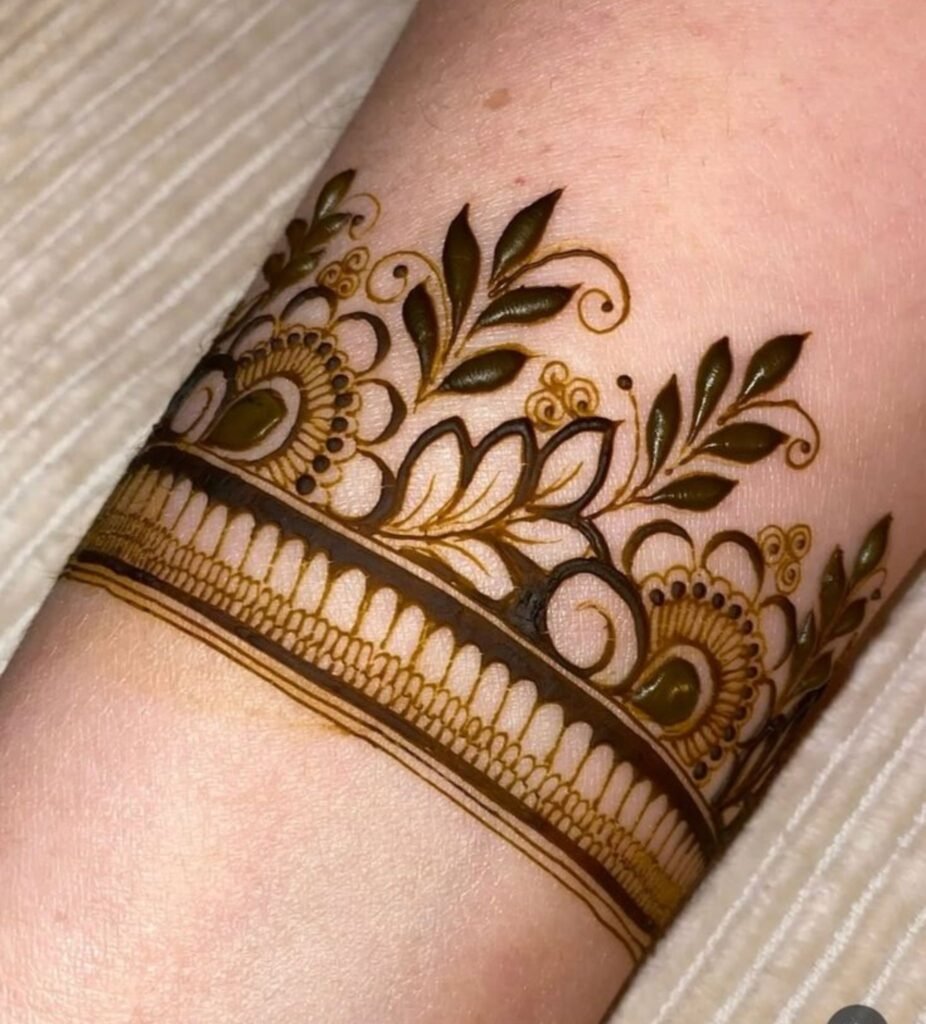
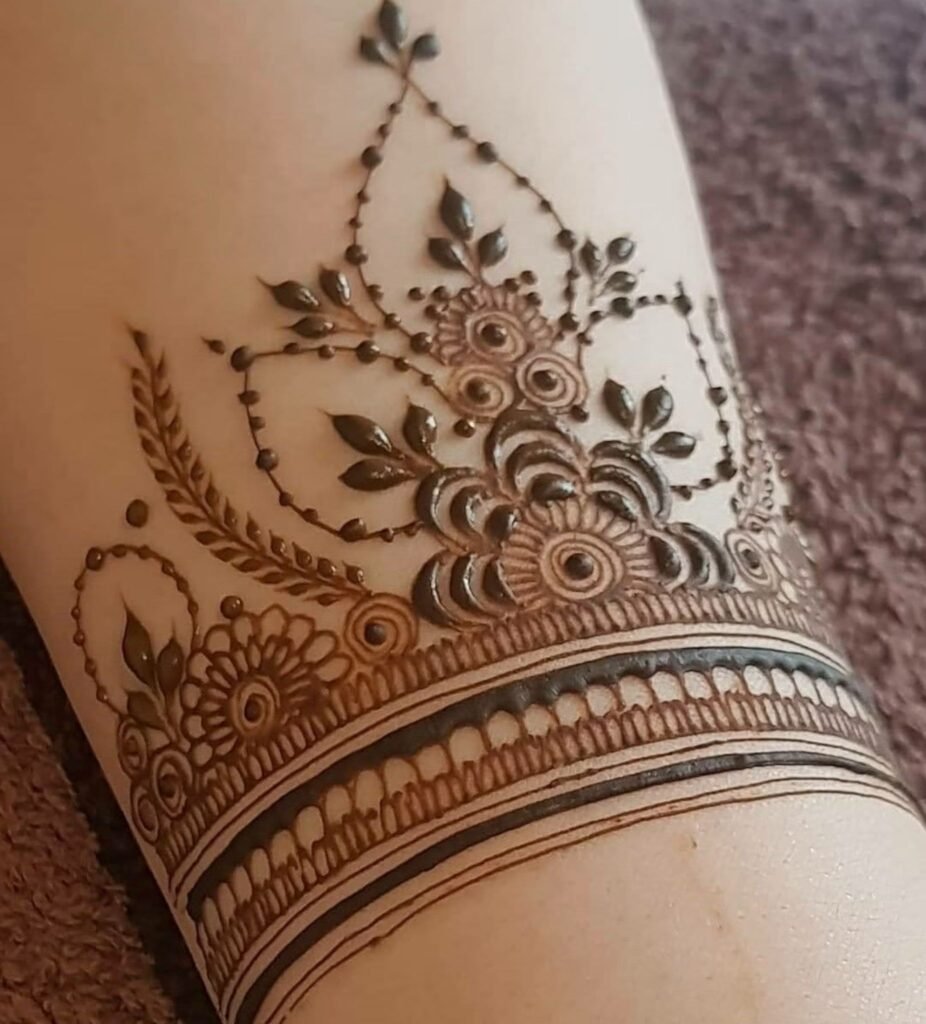
Inspired by the zar (gold/silver) stacked bracelets worn by Kuchi women, this wrist design mimics the look of a heavy cuff bracelet drawn in henna. Multiple stacked bands of geometric patterns, chevrons, triangles, chain link borders wrap around the wrist like armor.
The effect? You genuinely cannot tell at first glance whether someone is wearing jewelry or henna. That’s the goal.
Key features:
- 3–4 stacked band layers
- Mix of solid fills and open geometric shapes
- Cleaner skin above and below for maximum contrast
3. The Geometric Finger Armour
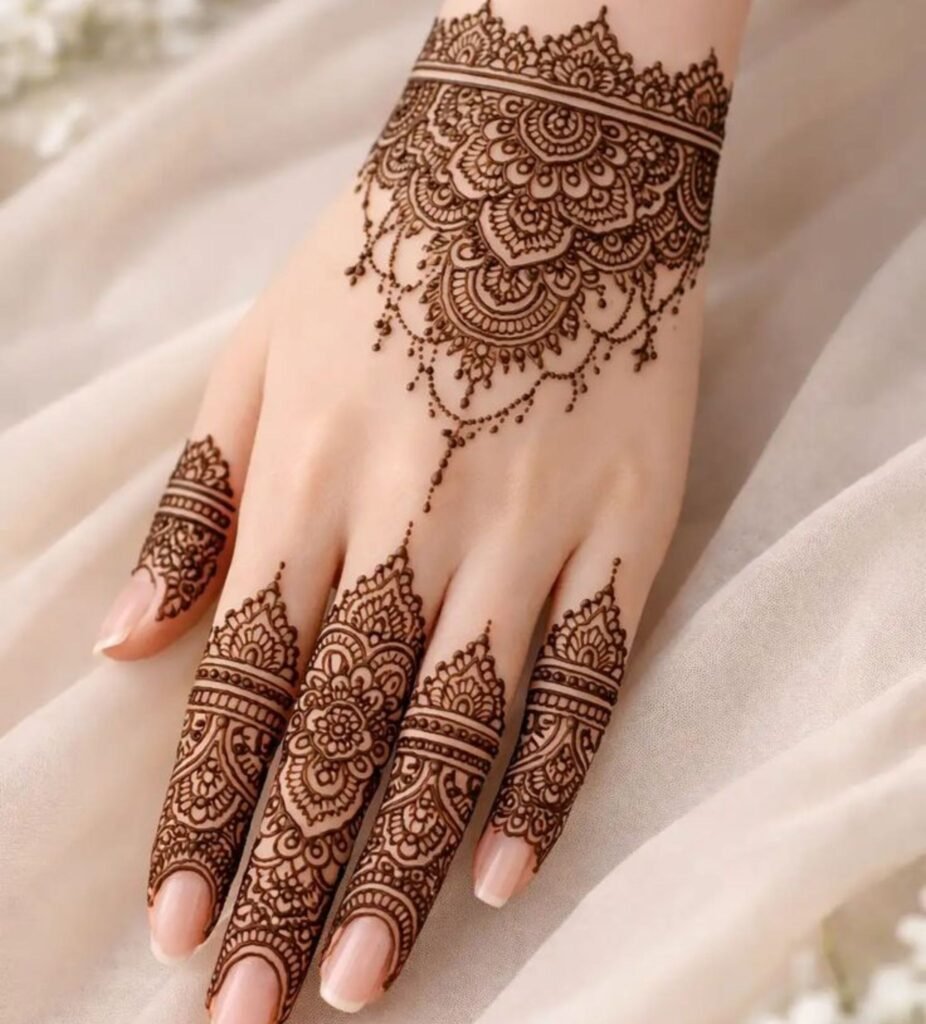
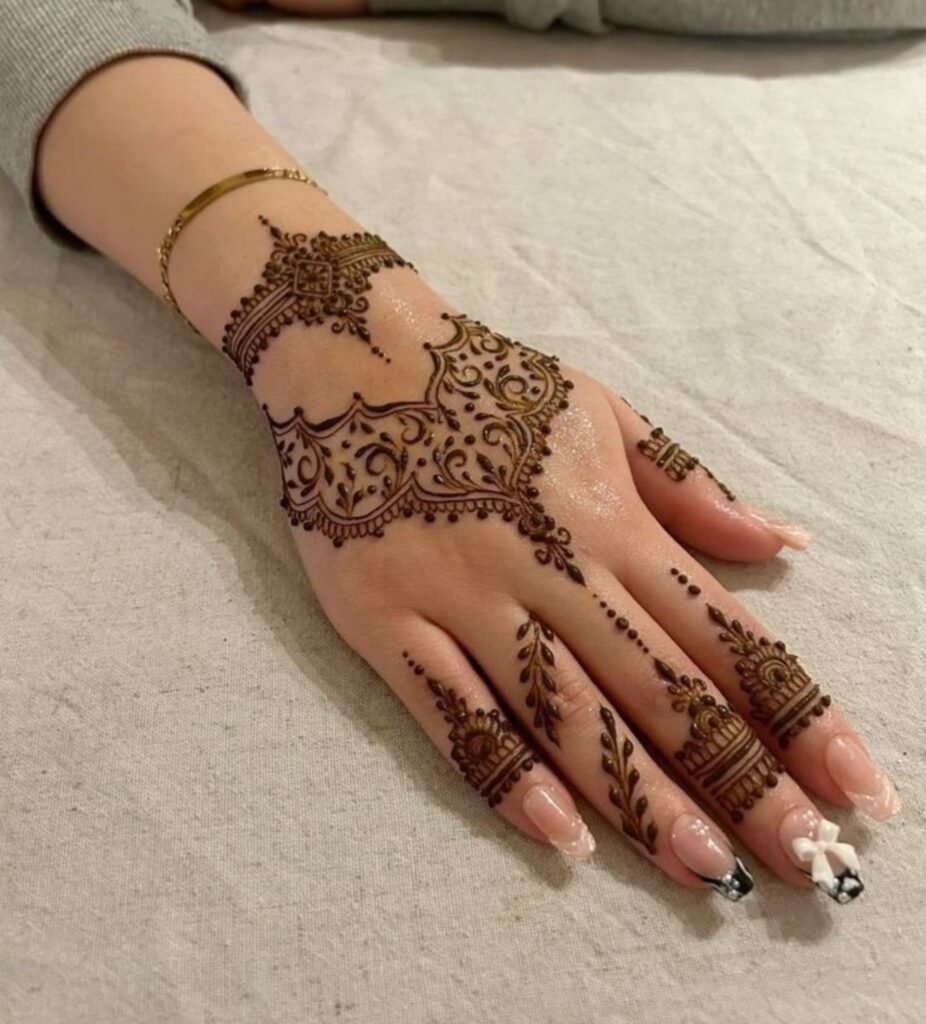
Heavy finger detailing with a deliberately minimal palm is one of the most editorial looking styles in Afghani Mehndi Design right now. Each finger gets its own geometric treatment: thick side borders, angular tip caps, diamond mid knuckle rings.
The palm stays nearly bare, which makes the fingers look even bolder. It’s the henna equivalent of wearing statement rings and nothing else.
Why it works in 2026: Social media close ups. This design was made for Reels and ring shots.
4. The Antique “Gul” (Flower) Motif
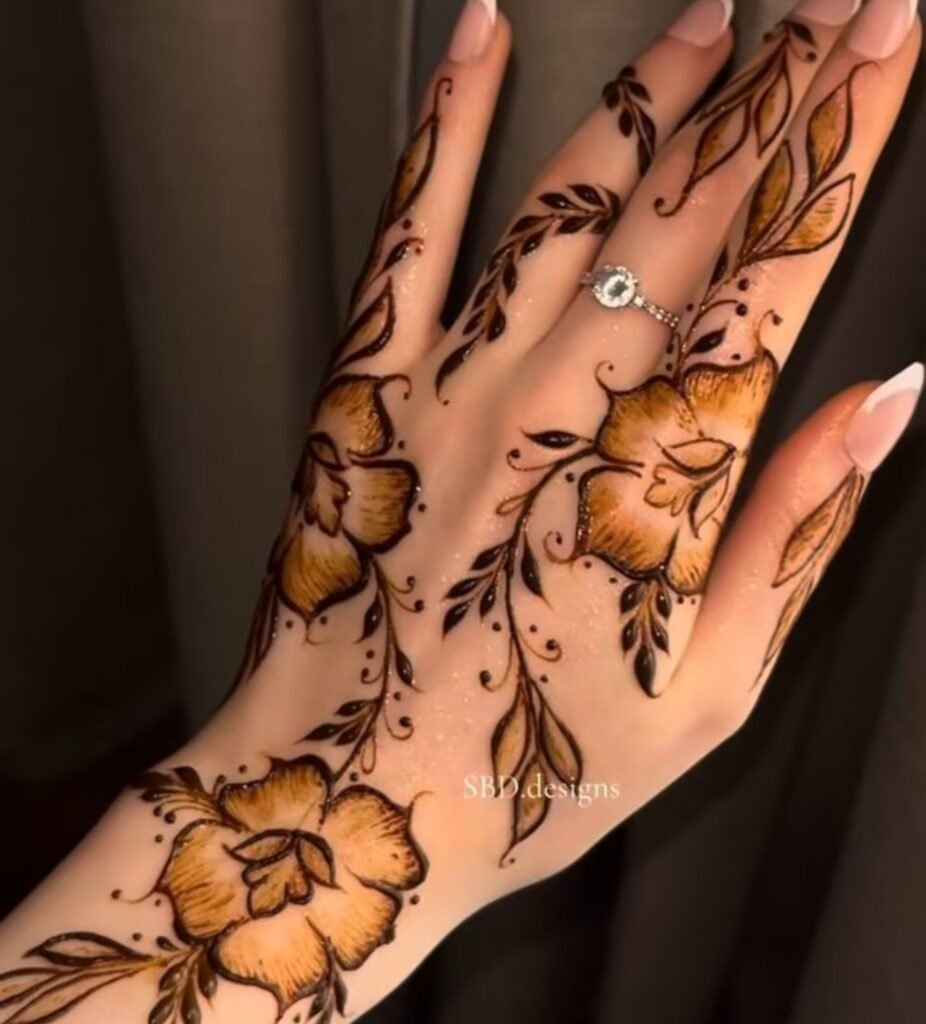
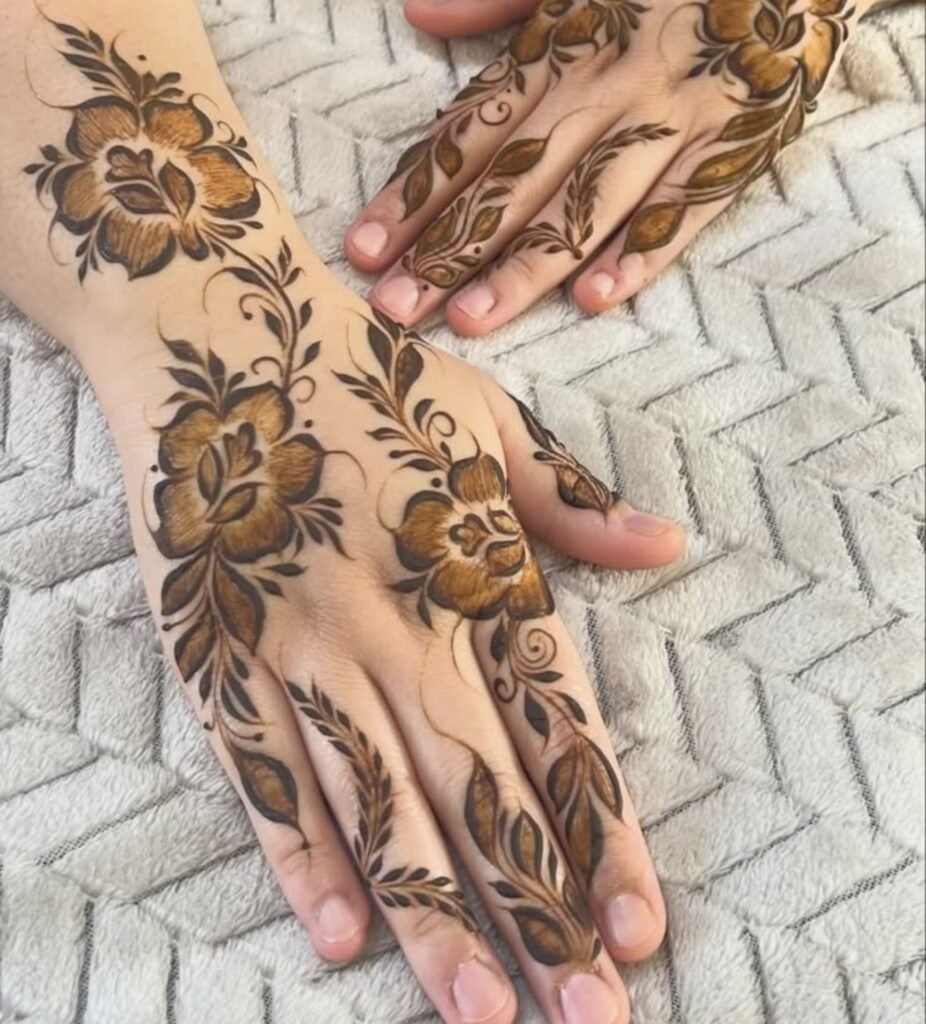
Gul means flower in Dari, but forget everything you know about floral henna. The Afghani Gul is a solid, stamp like shape with thick petals, filled centers, and bold outlines. No feathery lines. No trailing vines.
It looks like someone pressed an antique wax seal onto your hand. These motifs are scattered intentionally across the design, framed by geometric borders, giving the overall look a rhythm without being repetitive.
5. Symmetrical “Mirror” Henna
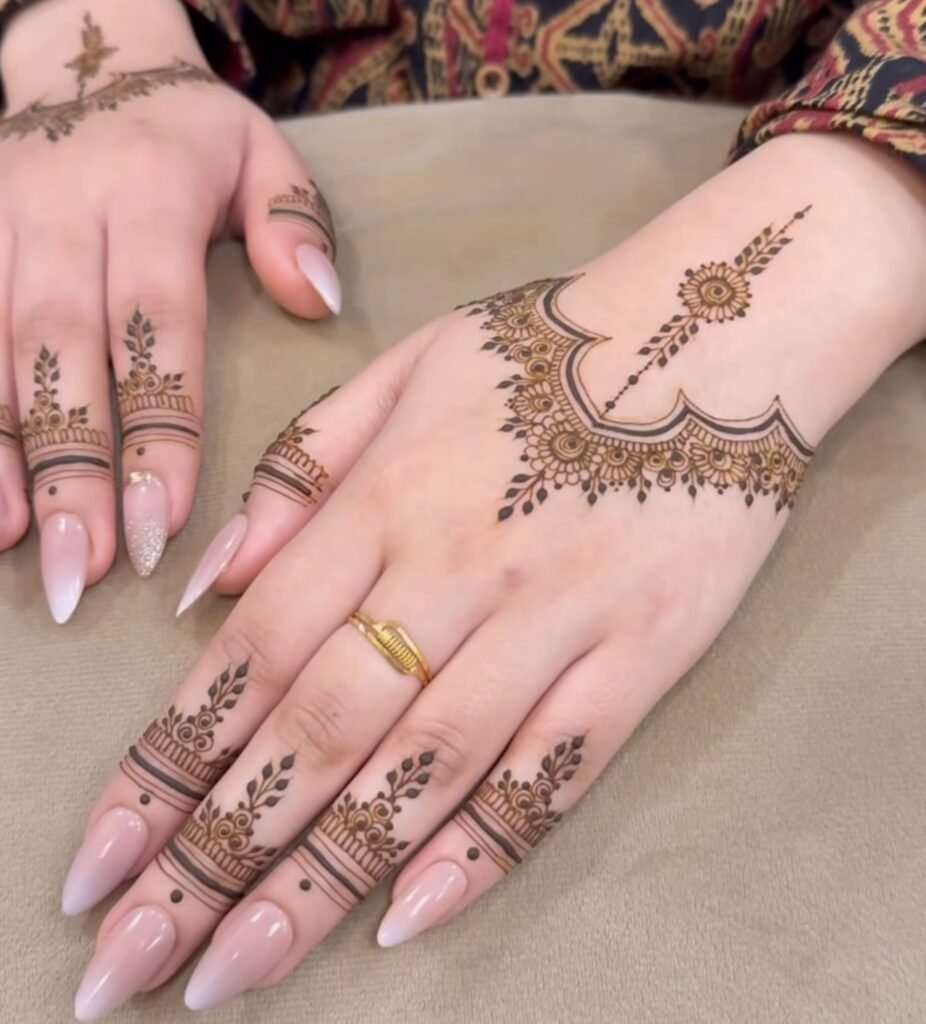
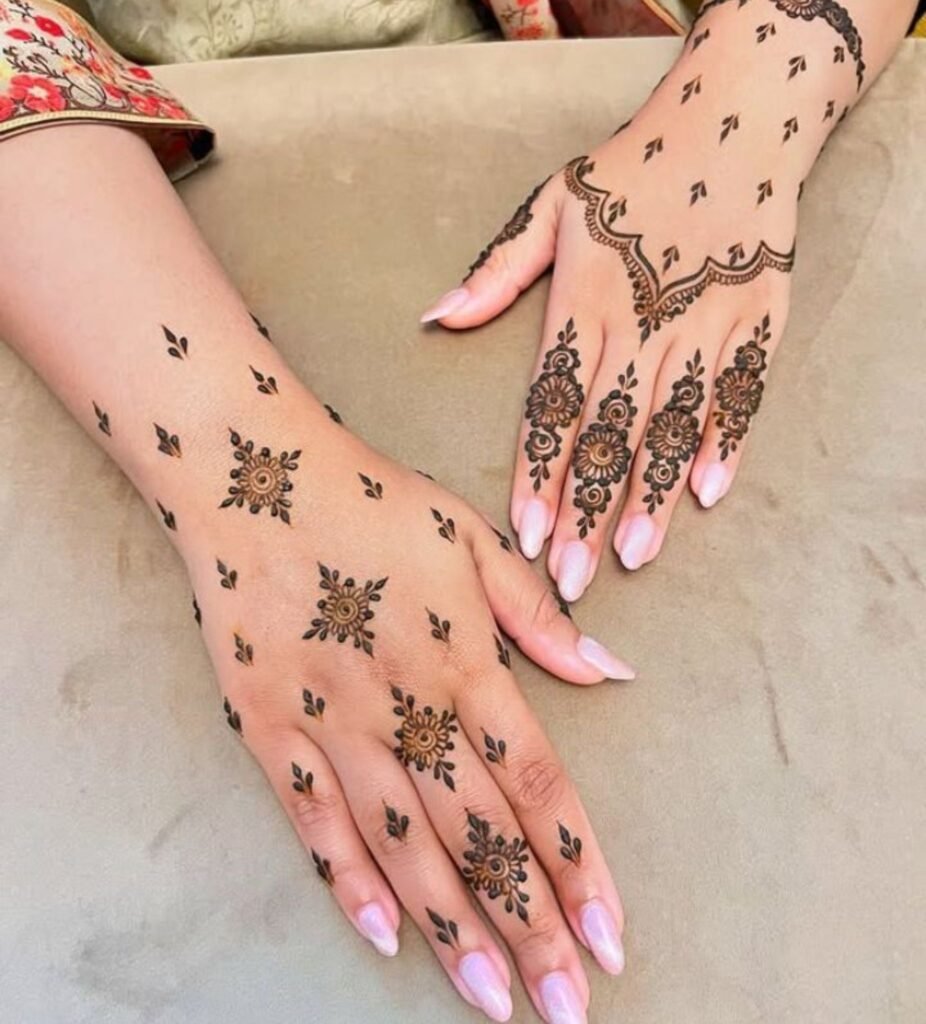
Perfectly identical patterns on both hands mirrored down to the last dot. This style takes serious skill and is one of the most requested Afghani Mehndi Design trends going into 2026.
The symmetry creates a satisfying, almost optical illusion effect when both hands are placed together. Geometric shapes that look ordinary alone become something striking when they reflect each other.
Pro tip: Ask your artist to photograph and plan both hands together before starting. Symmetry requires pre-mapping.
6. The “Lapis” Border Style
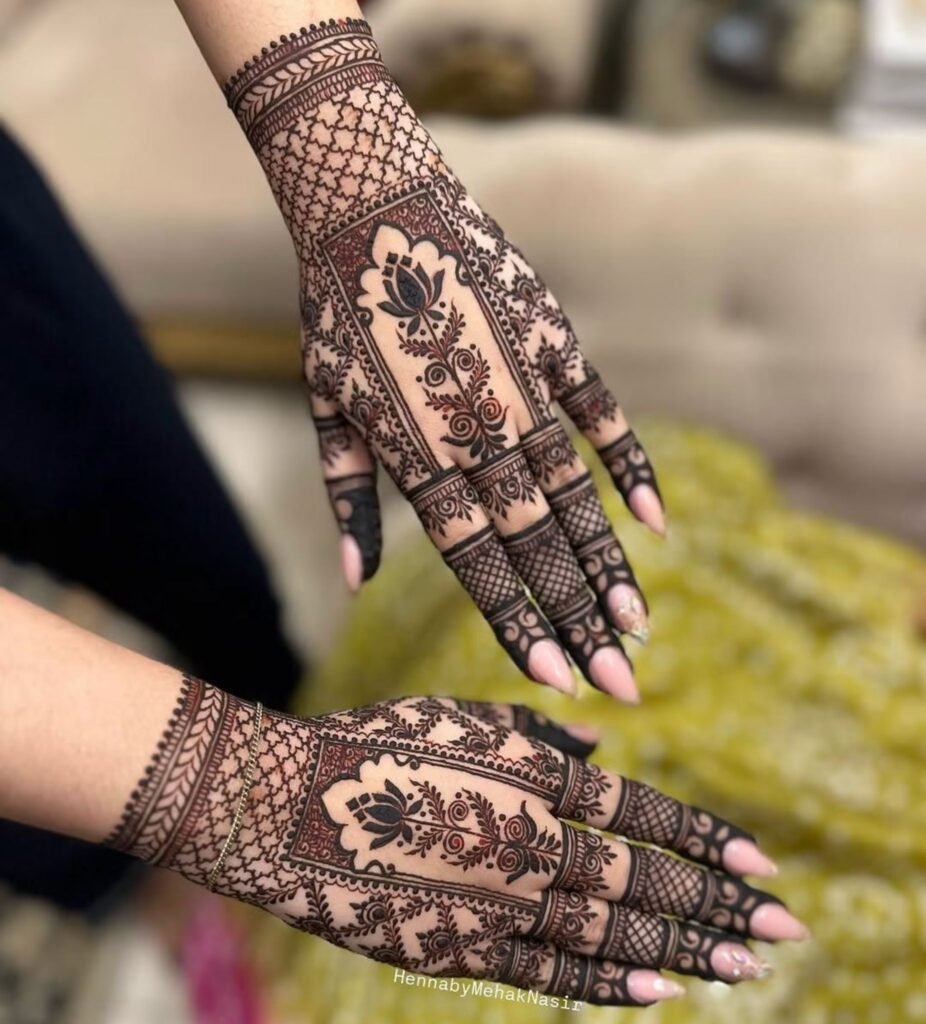
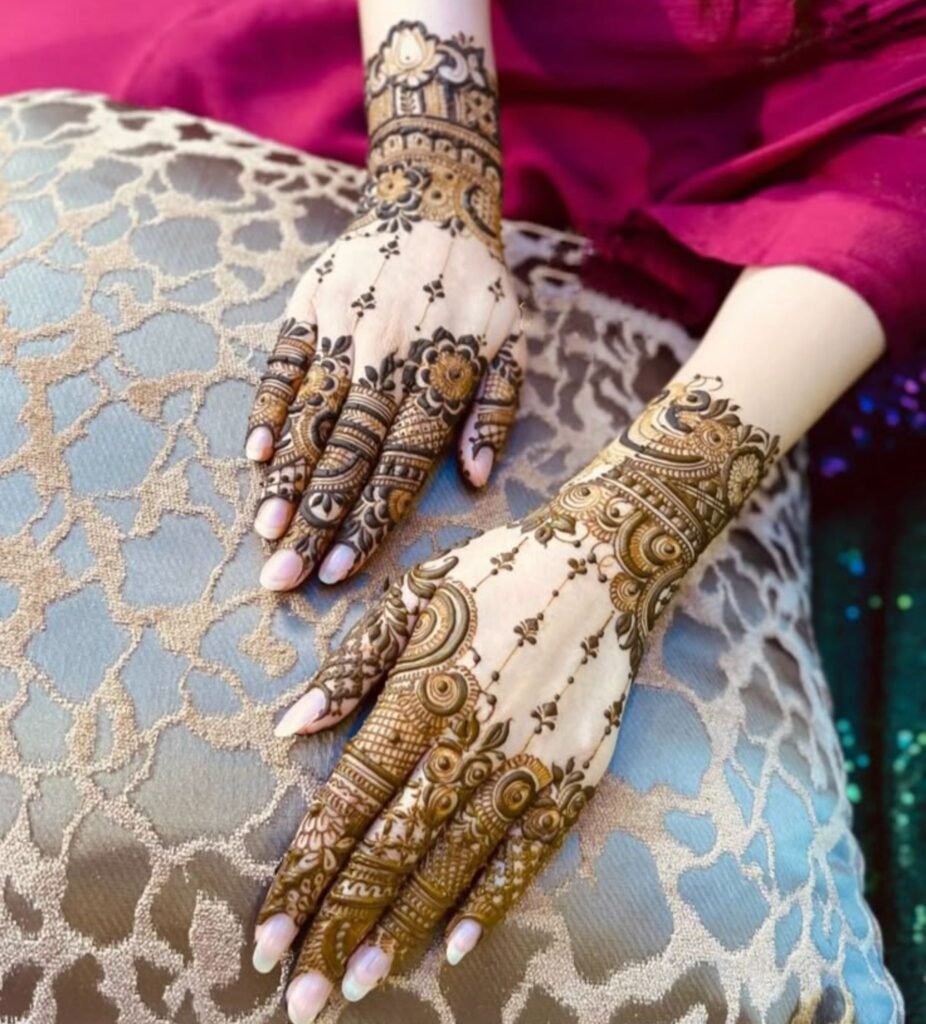
Named after the deep blue lapis lazuli stone, a gem historically mined in Afghanistan, this style runs a strong linear design along the outer edges of the hand. Think of it as a frame for the hand rather than a central design.
A thick geometric border traces from the base of the pinky, along the outer wrist, down to the forearm. The center of the palm and inner wrist stay bare. Bold, structured, minimalist in its own way.
Perfect for: Minimalist brides, photoshoots, anyone who wants impact without full coverage.
2026 Styling Guide: How to Wear Afghani Mehndi
Afghani Mehndi Design was built to pair with jewelry, specifically oxidized silver. Here’s how to style it in 2026:
- Jewelry: Choose chunky oxidized silver rings, layered tribal cuffs, or raw stone pendants. Avoid delicate gold; it competes with the henna’s weight rather than complementing it.
- Outfits: Boho chic coordinates, Afghan inspired embroidered tops, mirror work dupattas, and earthy linen sets all work beautifully. The henna reads as part of the outfit, not an add-on.
- The Negative Space Technique: This is key for 2026. Afghani henna deliberately leaves skin bare. Don’t ask your artist to fill every gap. The breathing room between patterns is what gives the design its modern edge. Resist the urge to add more.
Final Thoughts
There’s something genuinely exciting about wearing a design that carries centuries of nomadic artistry on your skin. Afghani Mehndi Design isn’t just a 2026 trend, it’s a reclaiming of tribal roots through a medium that’s been around for thousands of years.
Whether you go full Kuchi Mandala bridal or just a simple Lapis border for a festival, you’re wearing something with history. And in a world full of identical floral henna photos, that’s exactly what makes it stand out.
Frequently Asked Questions
Q1: How long does Afghani Mehndi Design last compared to Indian henna?
Both use the same natural henna paste, so longevity is similar 1 to 3 weeks depending on your skin type and aftercare. The bold, thick lines of Afghani designs may actually appear to last longer because the color saturation is deeper.
Q2: Is Afghani Mehndi Design suitable for brides?
Absolutely. In fact, it’s gaining popularity among brides who want something distinct from traditional bridal henna. Many modern brides pair it with a Kuchi-inspired necklace or oxidized silver maang tikka for a cohesive tribal-luxury look.
Q3: Can I mix Afghani and Indian henna styles?
Yes, and many artists are doing exactly that. The most common fusion is using an Afghani geometric border or cuff with a softer floral motif in the center. Just make sure the line weights are consistent mixing ultra-thin Indian lines with heavy Afghani borders can look unbalanced.
Q4: How do I find an artist who specializes in Afghani Mehndi Design?
Search specifically for “tribal henna,” “geometric henna,” or “Afghani mehndi” on Instagram or Pinterest. Review their portfolio carefully and look for thick, confident lines and strong geometric shapes. Ask for a consultation before booking, especially for bridal work.