Traditional Mehndi design has always carried this weight of mothers and grandmothers, of wedding nights lit by oil lamps, of cultural codes whispered through patterns that have survived centuries.
In 2026, something extraordinary is unfolding across bridal studios, digital mood boards, and henna conventions worldwide. Brides and artists alike are turning away from stark minimalism and leaning, with deliberate elegance, back toward the ornate.
Here at MehndiChic.com, we have been tracking this renaissance closely. These are the traditional Mehndi design trends defining 2026 and why each one deserves a place in your hands.
The New Language of Traditional Henna Micro Storytelling
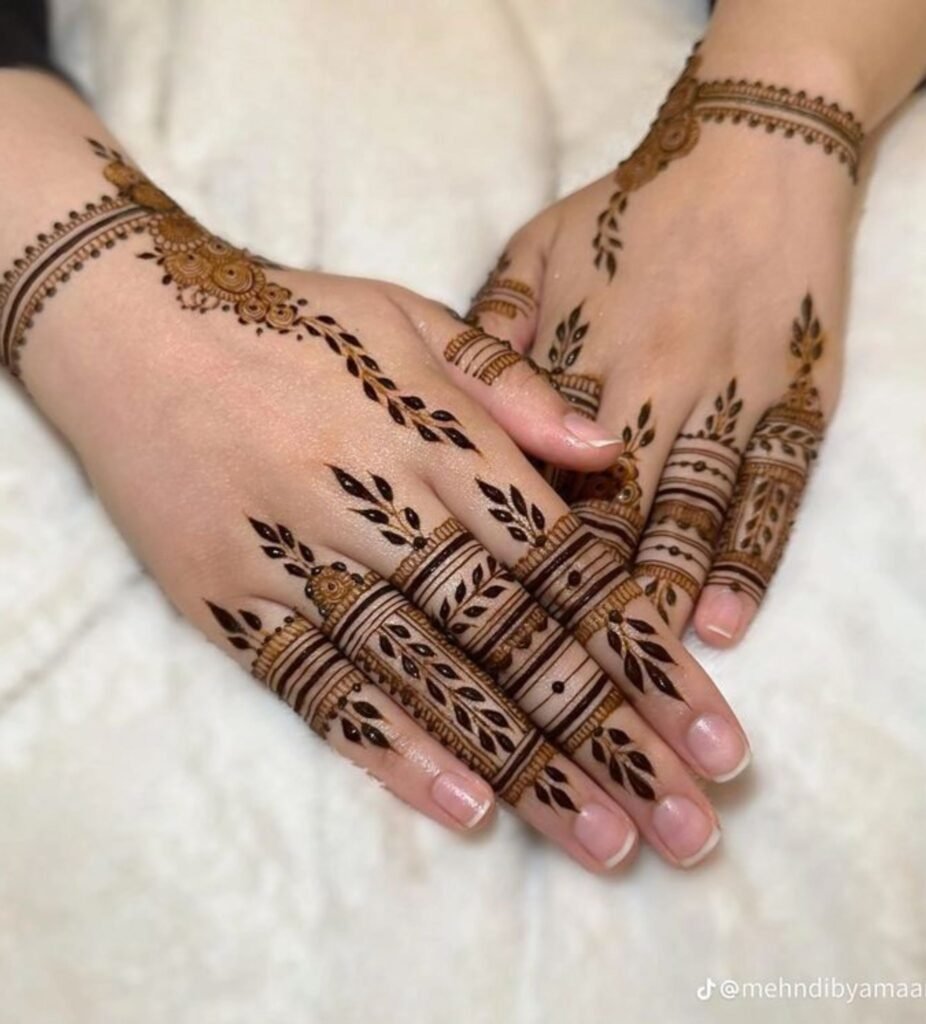
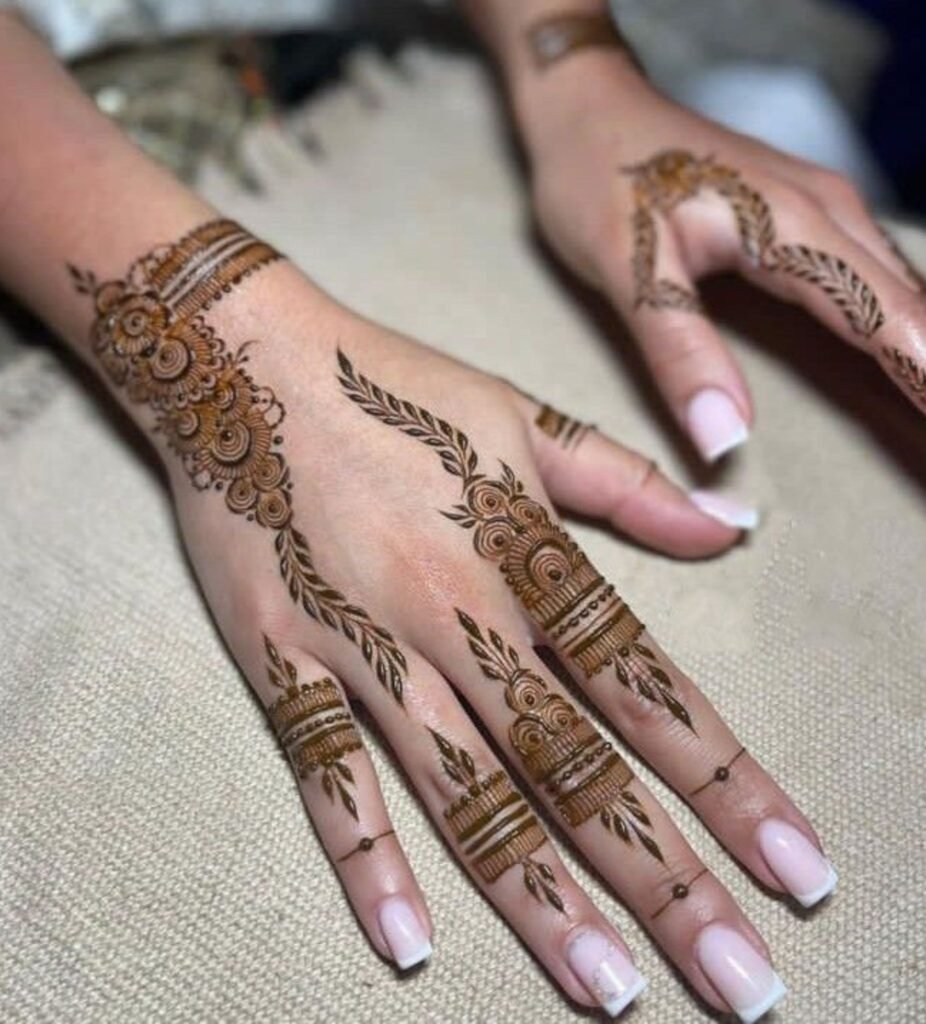
This trend elevates traditional Mehndi design beyond decoration into heirloom. When a bride looks at her hands decades later, she will not just see henna, she will see a date, a name, a love story rendered in earth and leaves.
What to ask your artist for:
- Hidden initials within Rajasthani lattice borders
- Wedding date encoded in petals or geometric segments
- Symbolic motifs representing the couple’s story cities, constellations, or meaningful objects
1. The Royal Darbar: Intricate Rajasthani Full Hand Patterns
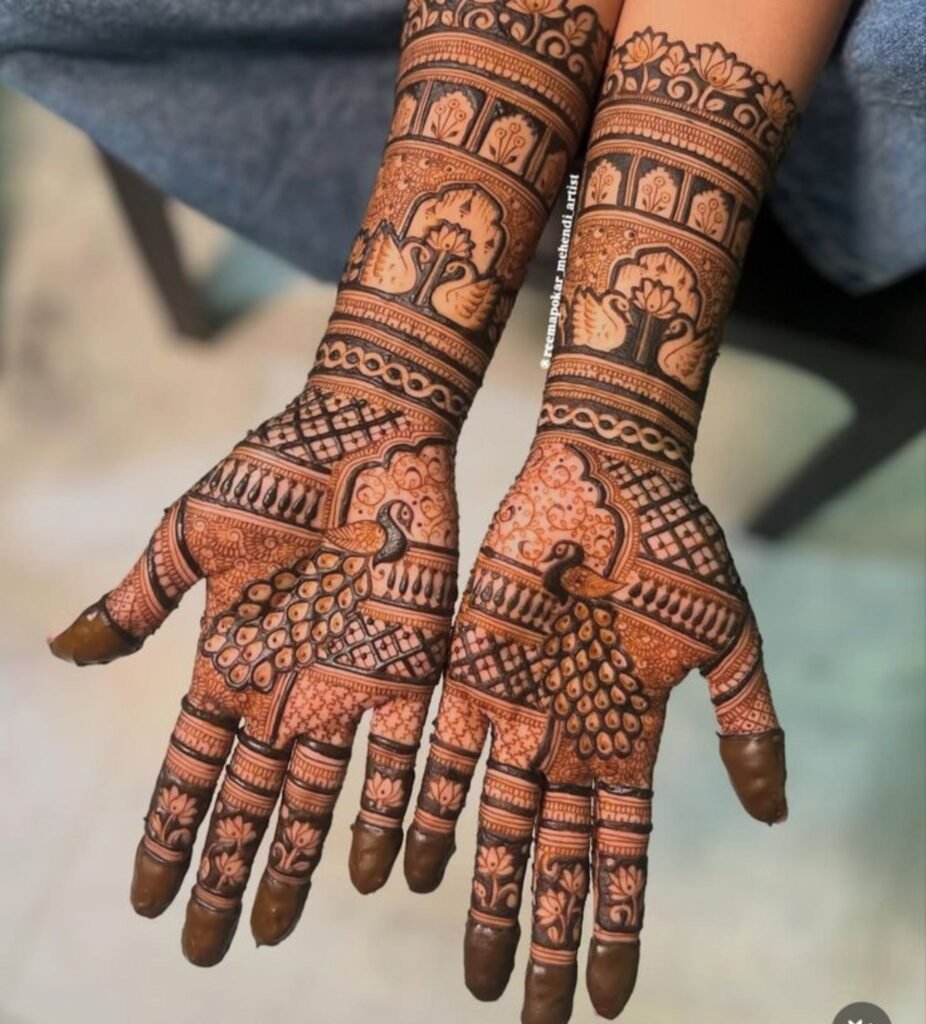
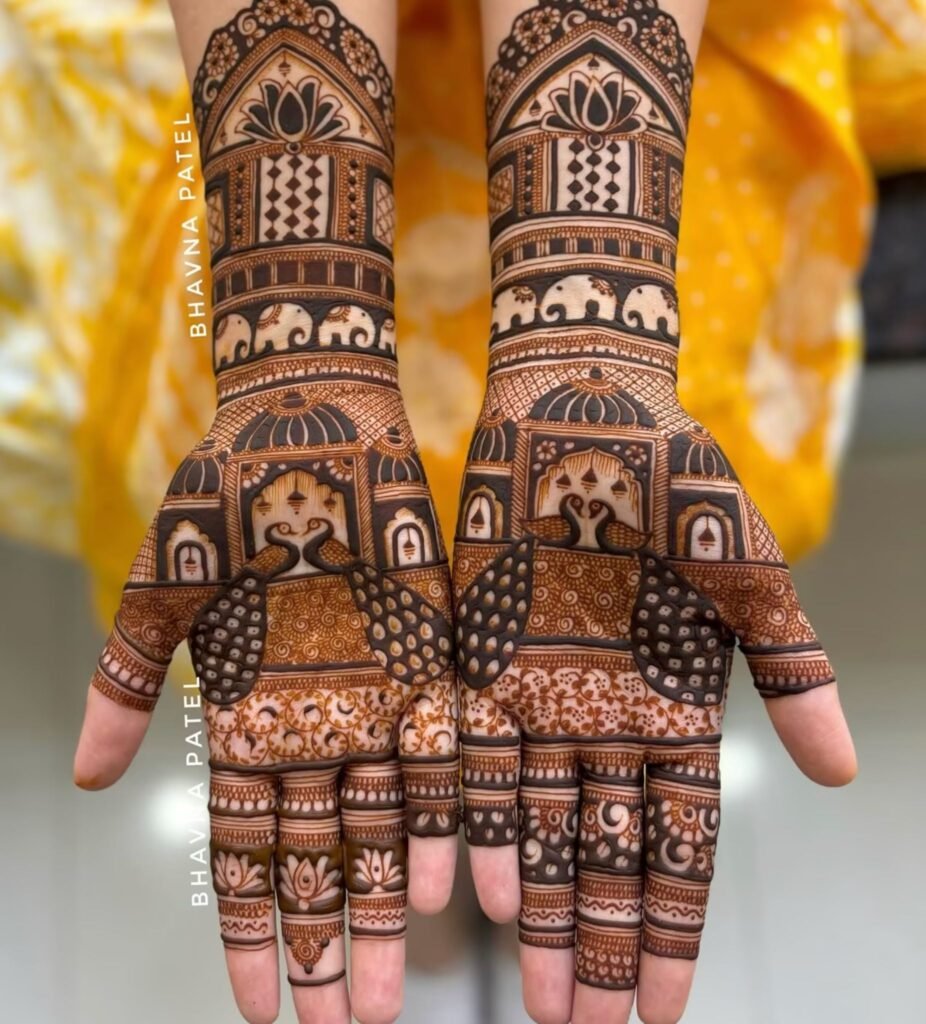
Rajasthani Motifs remain the undisputed royalty of traditional Mehndi design, and 2026 sees them reclaiming their throne with renewed authority. Expect full hand compositions that travel from fingertip to mid forearm dense jharokha (arched window) motifs, keri (mango) paisley clusters, and interlocking elephant processions that honour both craftsmanship and cultural heritage.
2026 signature elements include:
- Double border cuffs inspired by Mughal jewellery bands
- Diwan e Khas inspired finger caps with fine grid shading
- Meenakari style colour accents in saffron and ivory using natural pigments
2. Ethereal Symmetry: The New Age Mandala Designs
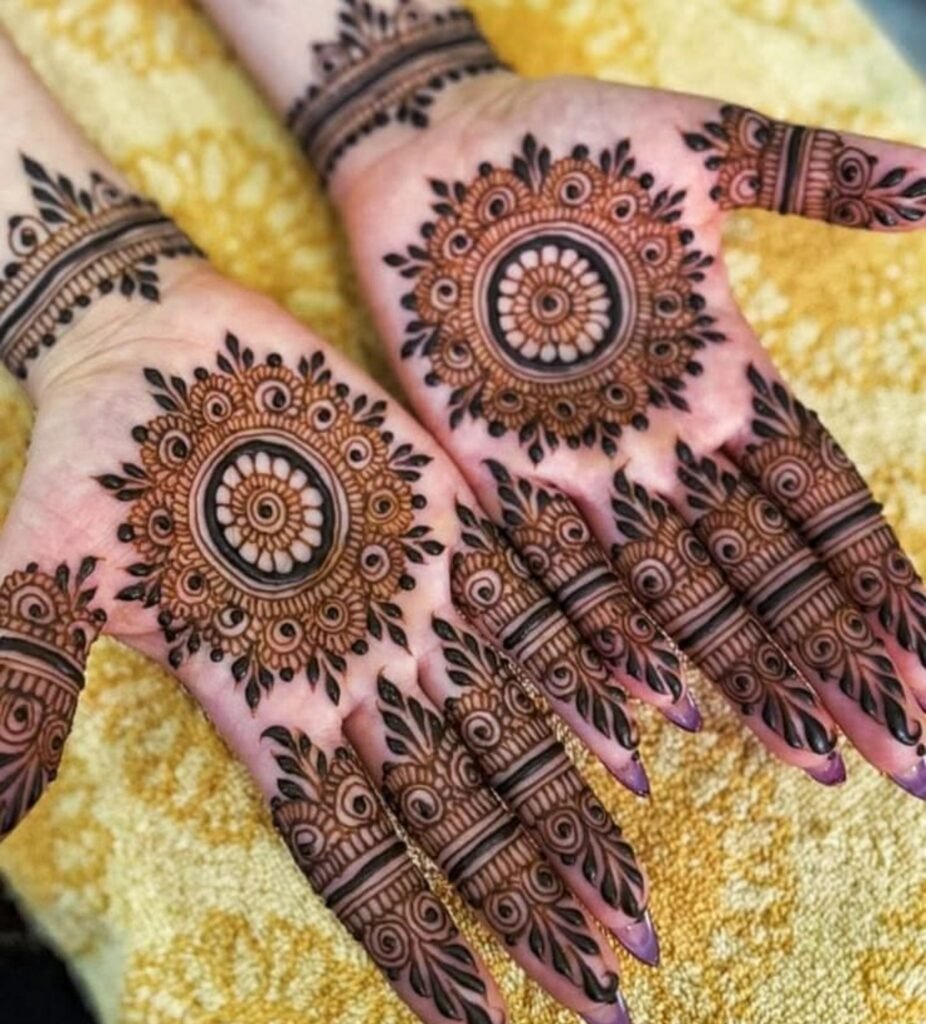
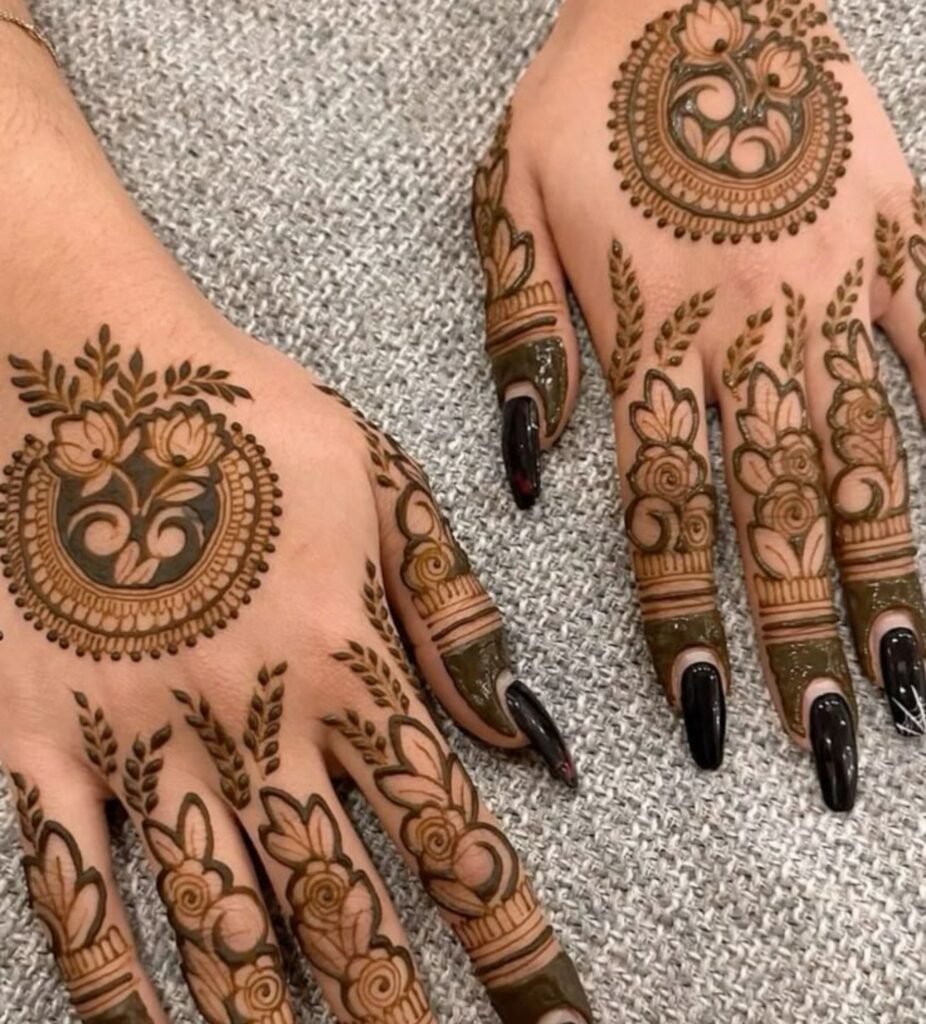
Symmetrical Henna Patterns are experiencing a sophisticated evolution in 2026. The mandala rooted in Hindu and Islamic geometric tradition is being reimagined with mathematical precision and meditative beauty. These are not the rushed circular fills of the early 2010s.
What defines the 2026 mandala:
- Seven layer radial symmetry extending into wrist cuffs
- Negative space used as an intentional design element, not empty area
- Micro dotwork borders that blur the line between mehndi and fine line tattooing
3. Floral Symphony 3D Lotus and Rose Motifs for the Modern Bride
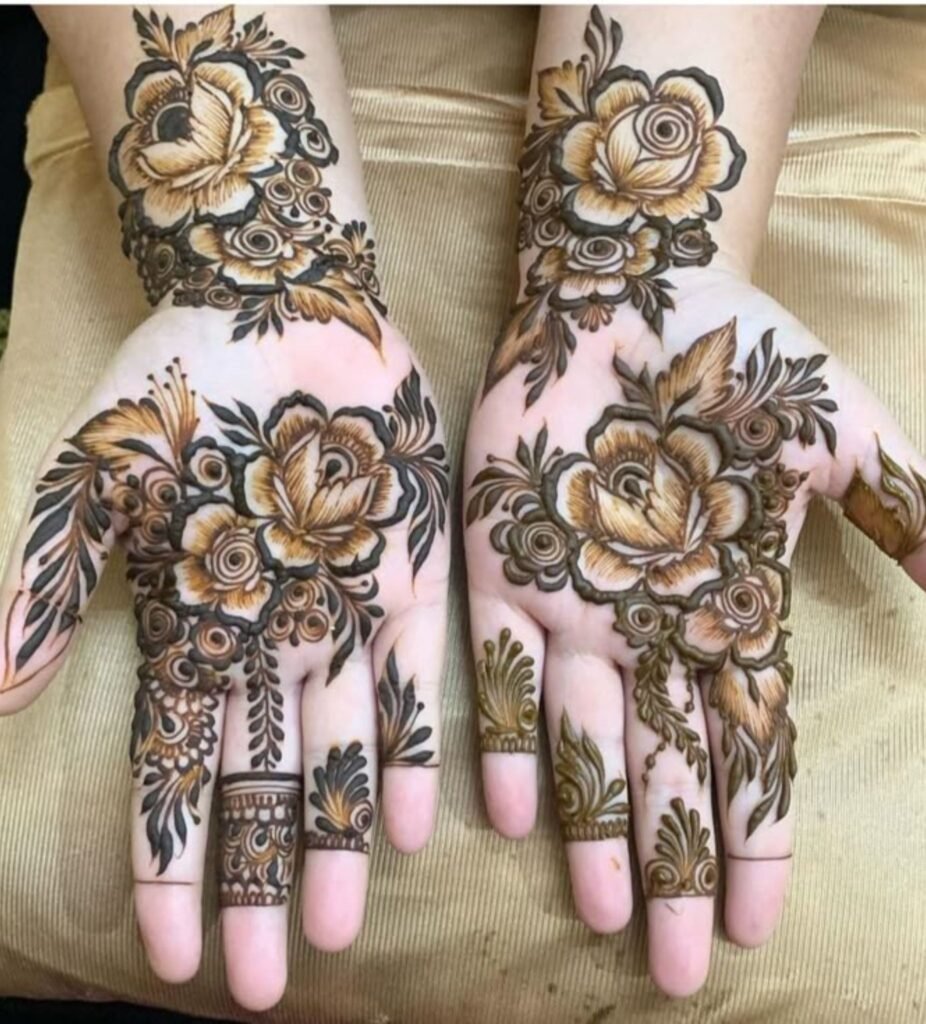
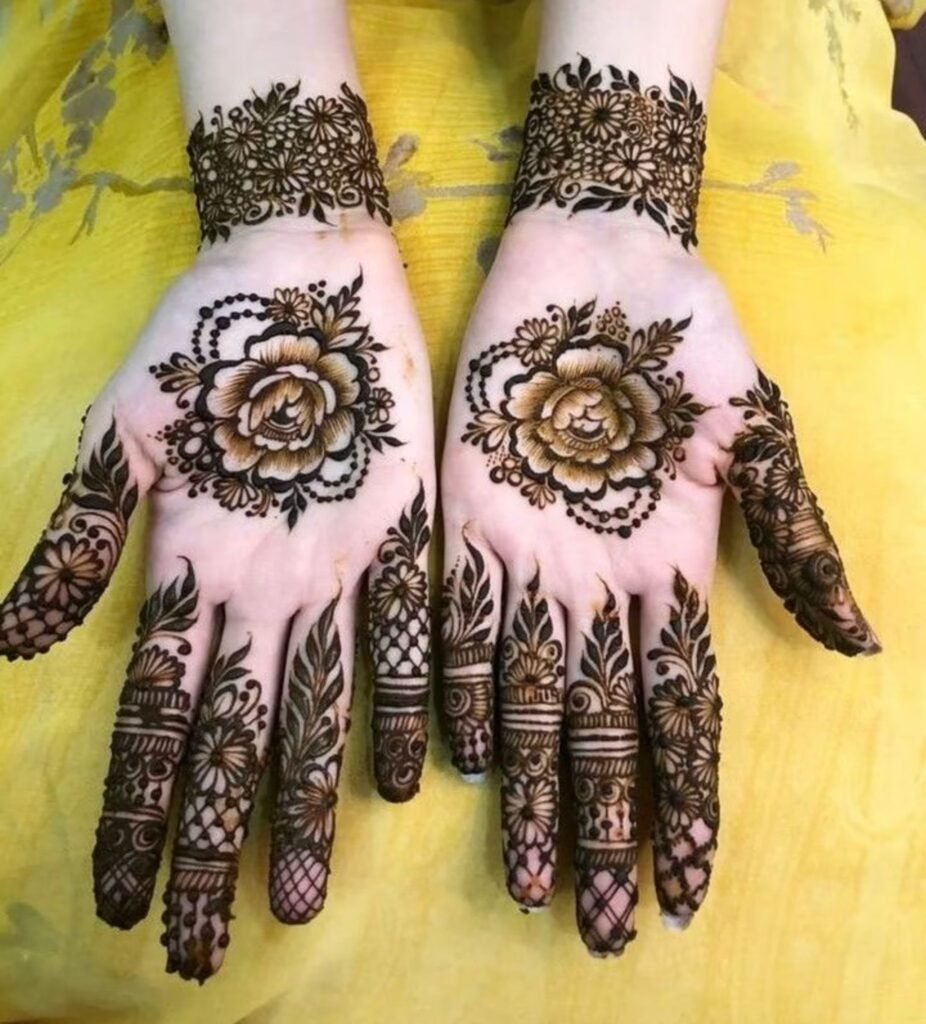
The 3D Peacock Design and sculptural floral work represent the most technically demanding frontier in contemporary traditional Mehndi. Using layered application and strategic 3D shading, master artists are achieving depth that makes lotus blooms appear to rise off the skin.
Most requested 3D motifs in 2026:
- 3D lotus blooms on palm centre with gradient shading
- Sculptural rose clusters along the wrist band
- Feathered peacock tails across the forearm with dimensional eye detailing
4. Minimalist Heritage Traditional Arabic Fusion for Intimate Events
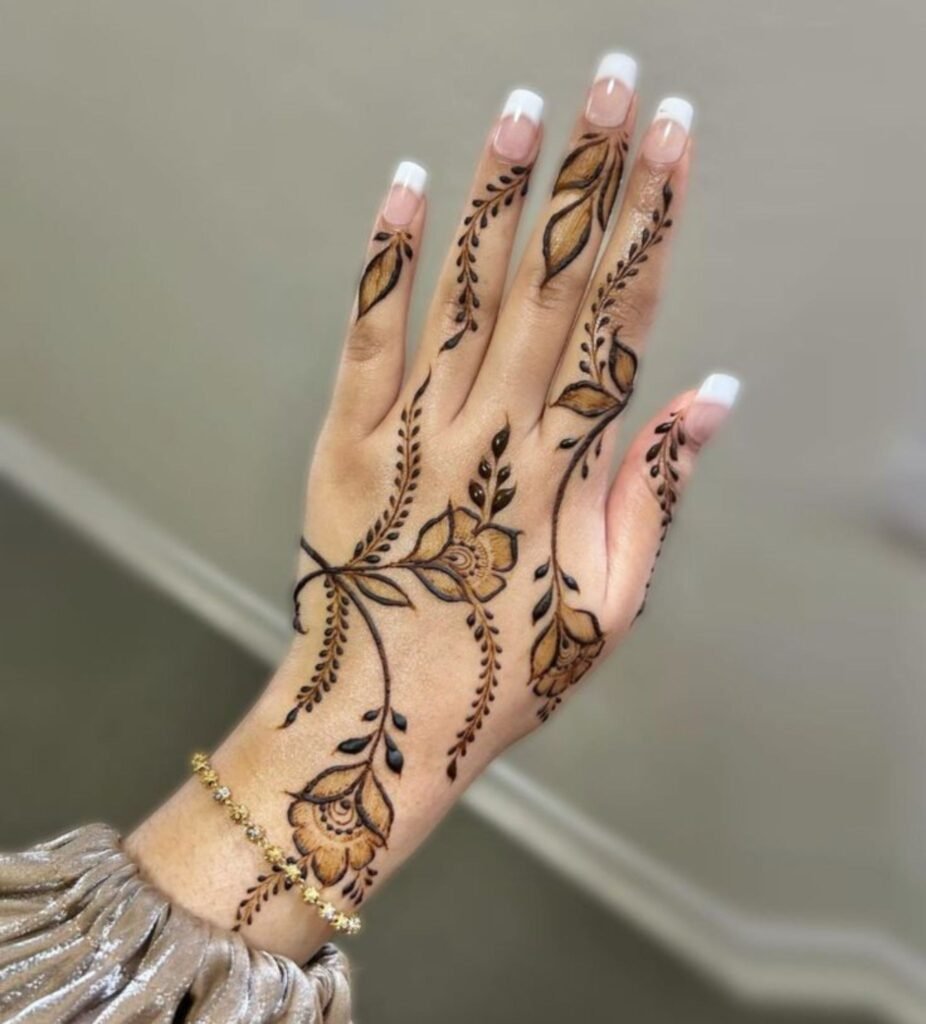
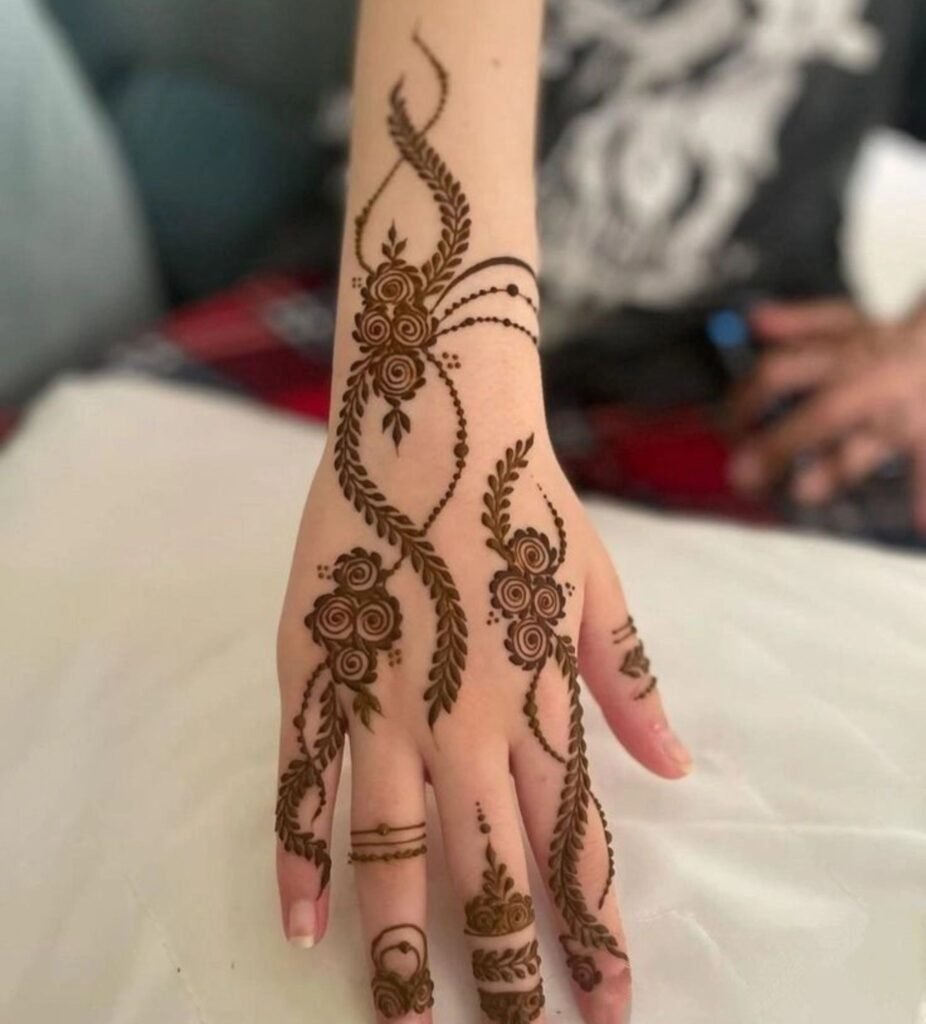
Not every occasion calls for a full royal bridal statement and 2026 acknowledges this beautifully. Traditional Arabic fusion designs offer a sophisticated middle ground: the flowing vine structures and bold floral anchors of classical Arabic henna, elevated with traditional Indo Pakistani motifs as accent points.
Defining characteristics:
- Open palm compositions with deliberate breathing room
- Classic Arabic vines anchored by a single traditional Rajasthani paisley
- Finger detailing that references traditional patterns without overwhelming the hand
Achieving the Deepest Stain in 2026 Natural Aftercare That Works
The depth of your henna stain is determined not just by the quality of the paste, but by what happens in the critical 24 hours after application. The dye molecule in henna Lawsone must migrate from the paste into the keratin layers of your skin. Give it every advantage:
- Leave the paste on for a minimum of 6–8 hours; overnight is ideal for bridal applications
- Apply a warm lemon and sugar sealant over dry paste to keep it moist and encourage deeper oxidation
- Wrap hands loosely in medical tape or breathable cloth warmth accelerates dye transfer
- Remove paste by scraping, never washing. Water disrupts the initial oxidation process
- Seal with a thin layer of mustard oil, coconut oil, or shea butter immediately after removal
- Avoid water contact for at least 12 hours post paste removal
Your Roots Are Your Most Powerful Statement
In a world that often mistakes newness for progress, the resurgence of traditional Mehndi design in 2026 carries a quiet but profound message: some things do not need reinventing. They need honouring. The Rajasthani lattice, the symmetrical mandala, the 3D peacock are not relics. They are living visual languages that grow more expressive with every generation that chooses to speak them.
The Vintage Modern Fusion of 2026 invites you to do exactly that: take the wisdom of the ancient and render it in your own voice. Hide your story in a lotus. Let a peacock carry your joy. Ask for henna that was grown in soil, not manufactured in a lab.
Because the most powerful ornament you will ever wear on your wedding day is one that knows where it comes from.