There is something undeniably captivating about a beautifully crafted leg mehndi design. Once considered a subtle accent to bridal looks, leg mehndi has evolved into a breathtaking art form that commands attention on its own.
Whether you are preparing for a wedding celebration, an Eid gathering, or simply want to adorn yourself with traditional patterns, this guide will walk you through the most sought after styles of the year along with expert tips to make your henna stain deeper and last longer.
Simple and Minimalist Leg Mehndi Designs
Not every beautiful leg mehndi design needs to be dense with detail. In fact, some of the most striking looks in 2026 are rooted in restraint.
Popular minimalist styles to explore:
- Vine and tendril patterns: A single trailing vine along the shin or calf creates a natural, organic feel. The beauty lies in its asymmetry no two vines look alike, which makes the design feel personal and handcrafted.
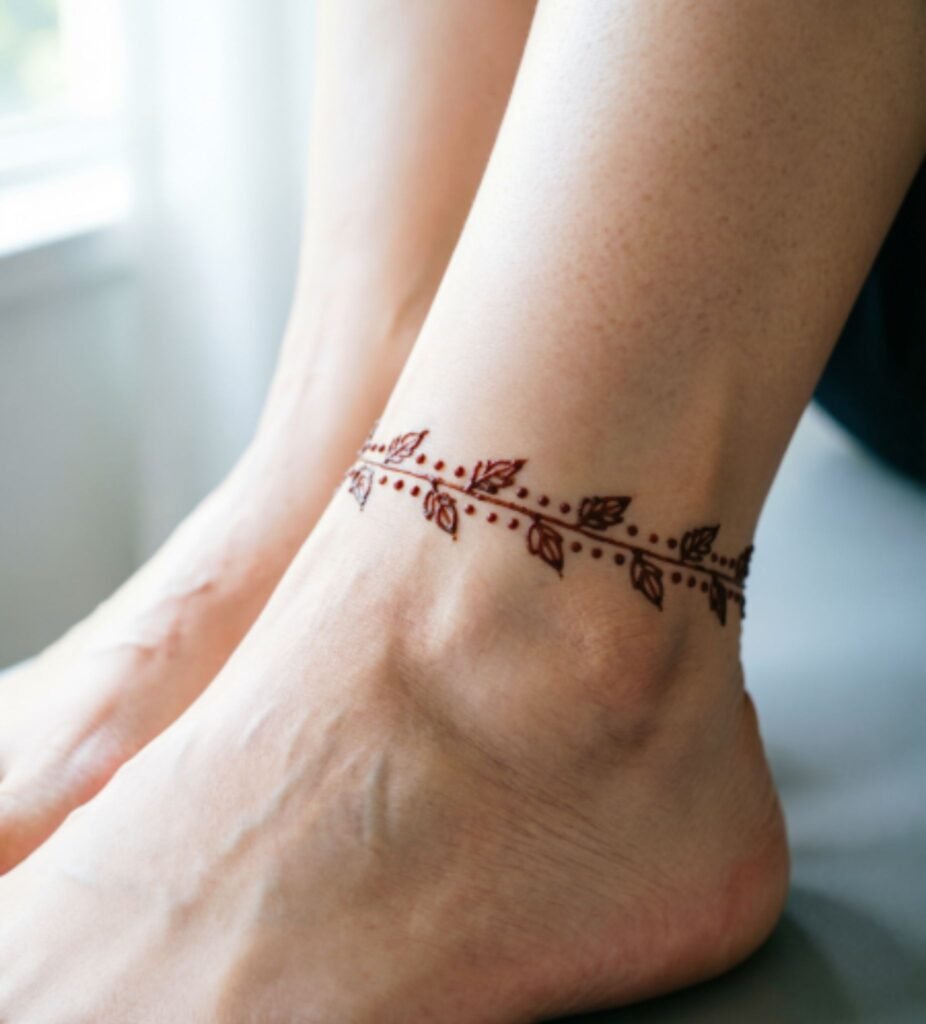
- Anklet-style foot henna: Delicate chains of dots, tiny florals, or geometric links wrap around the ankle like living jewelry. This anklet style is especially popular for sangeet nights where the look needs to be festive but not overwhelming.
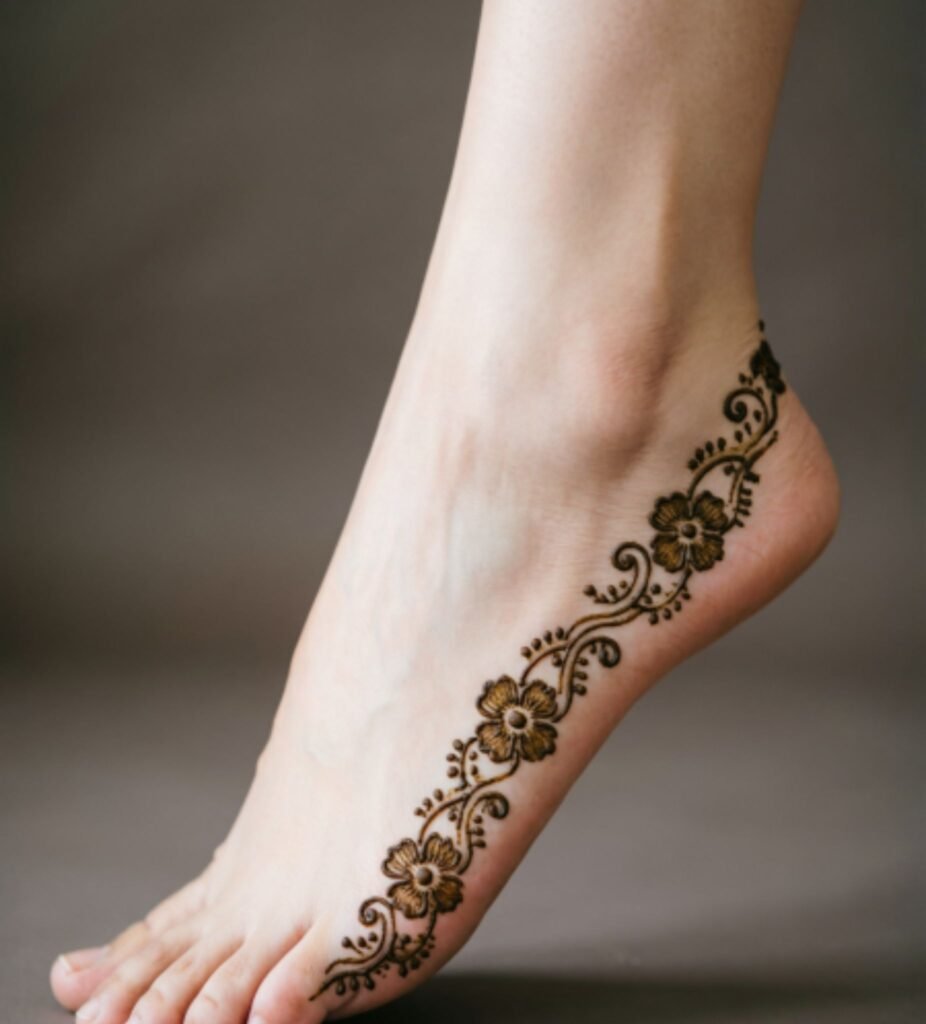
- Small isolated flower clusters: Placed at the top of the foot or behind the ankle, small floral motifs add a soft, feminine touch without demanding the eye. They pair exceptionally well with strappy heels.
- Single stem with leaves: A clean stem running along the side of the foot, dotted with teardrop leaves, echoes the grace of traditional patterns while feeling refreshingly contemporary.
Intricate Bridal Leg Mehndi Patterns
For brides, the leg mehndi design is not just decoration it is a ritual, a memory, and a work of art.
The most sought after bridal leg mehndi patterns this season include:
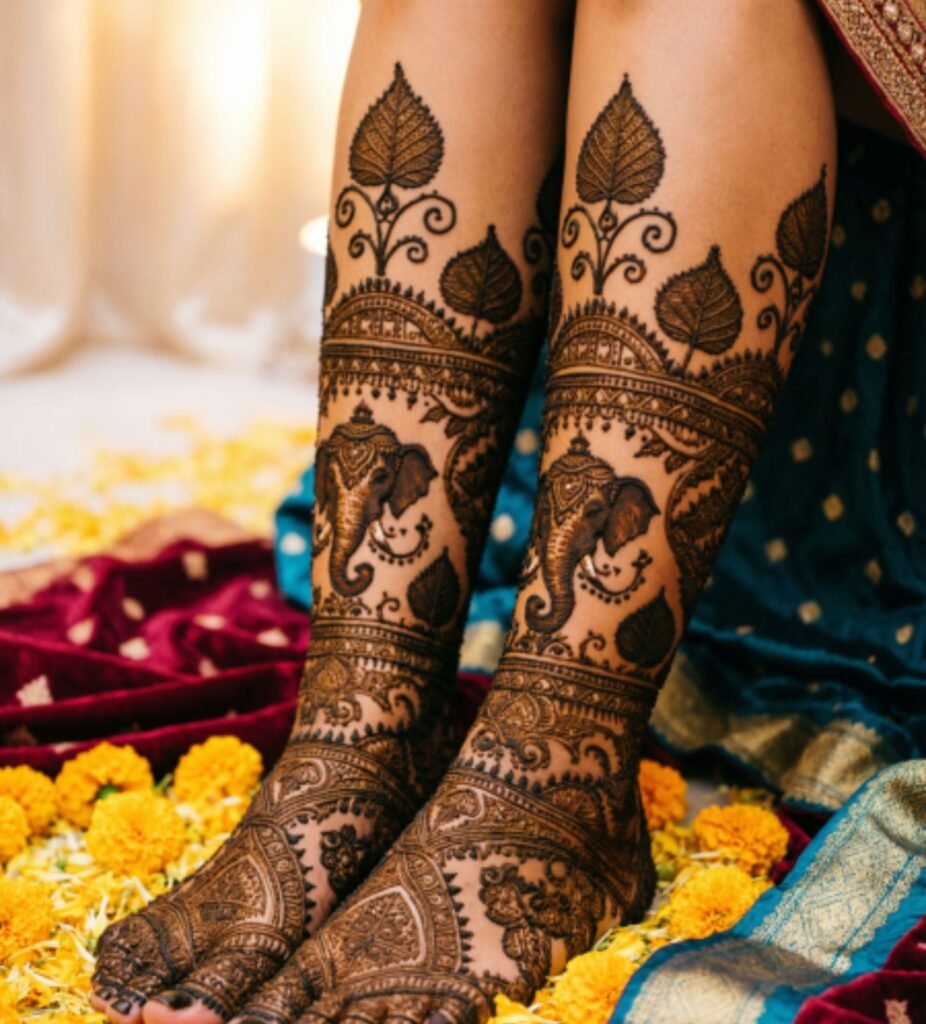
- Full leg coverage: This dramatic style blankets the leg from thigh to toe in layered motifs mandalas, paisleys, and fine latticework interweave to create a tapestry of tradition. The density of design reflects joy and abundance, making it a favourite for brides.
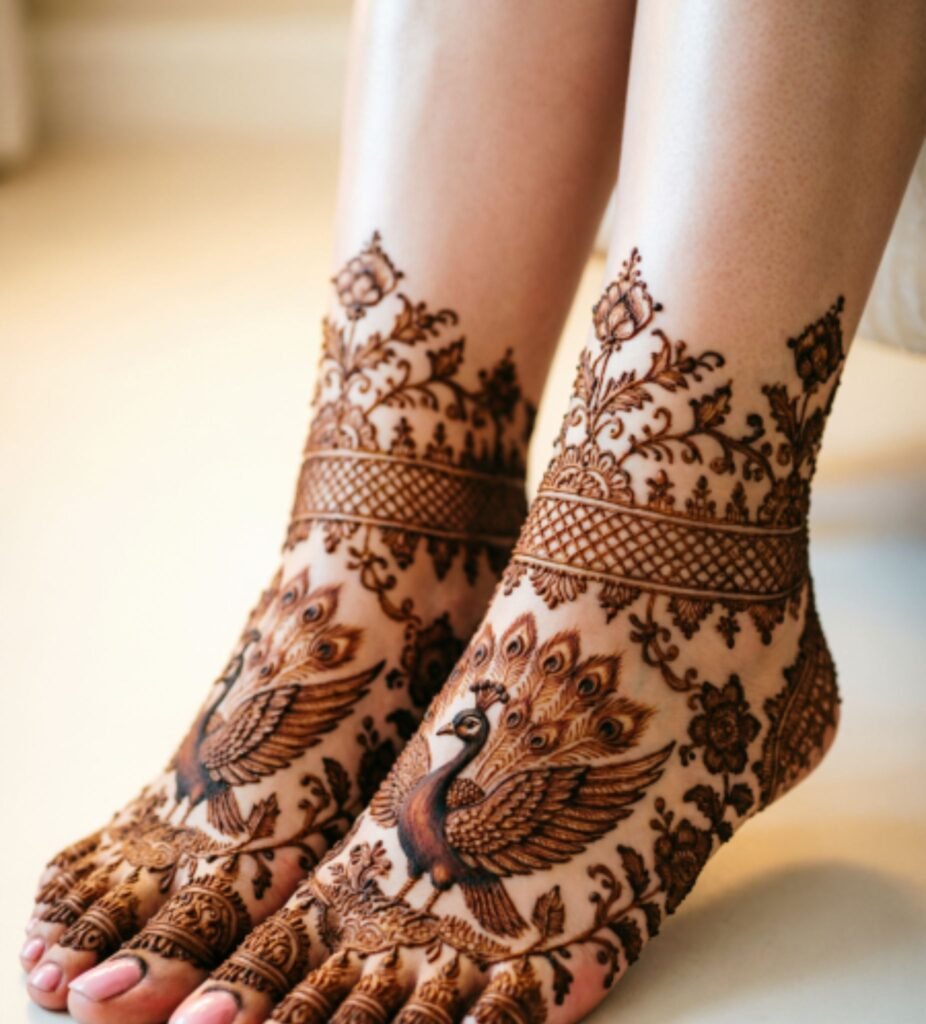
- Peacock motifs: The peacock remains the undisputed royalty of bridal mehendi. Positioned along the calf or sweeping up the shin, the bird’s elaborate tail feathers allow the artist to fill space beautifully while fine detailing showcases true craftsmanship.
- Royal doli (palanquin) patterns: These narrative designs depict the bride’s journey doli scenes, elephants, and floral processions tell a story along the leg. They are deeply rooted in Mughal era artistry and continue to captivate modern brides who want a deeply personal design.
- Jaal (net) patterns with floral borders: A fine jaal base overlaid with blooming roses or lotus flowers creates richness without feeling chaotic. The contrast between the tight net and open florals gives the design visual breathing room.
Modern Arabic and Geometric Styles
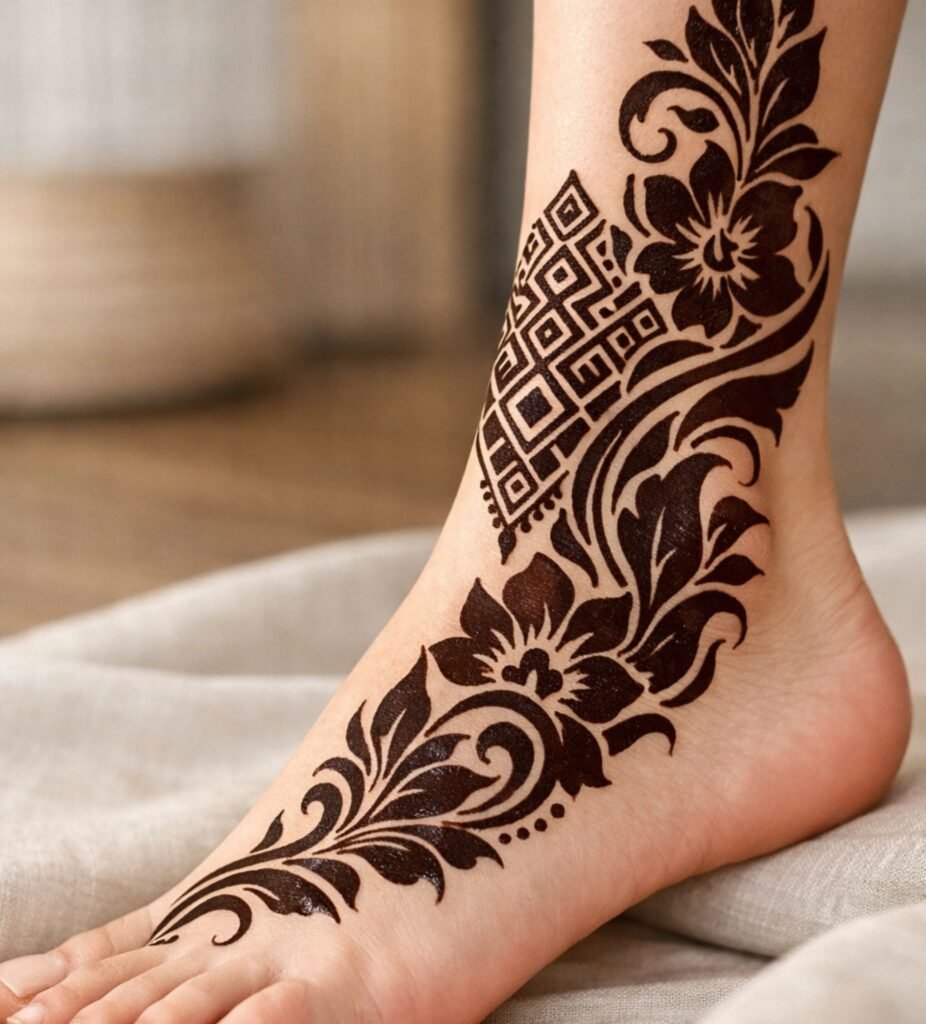
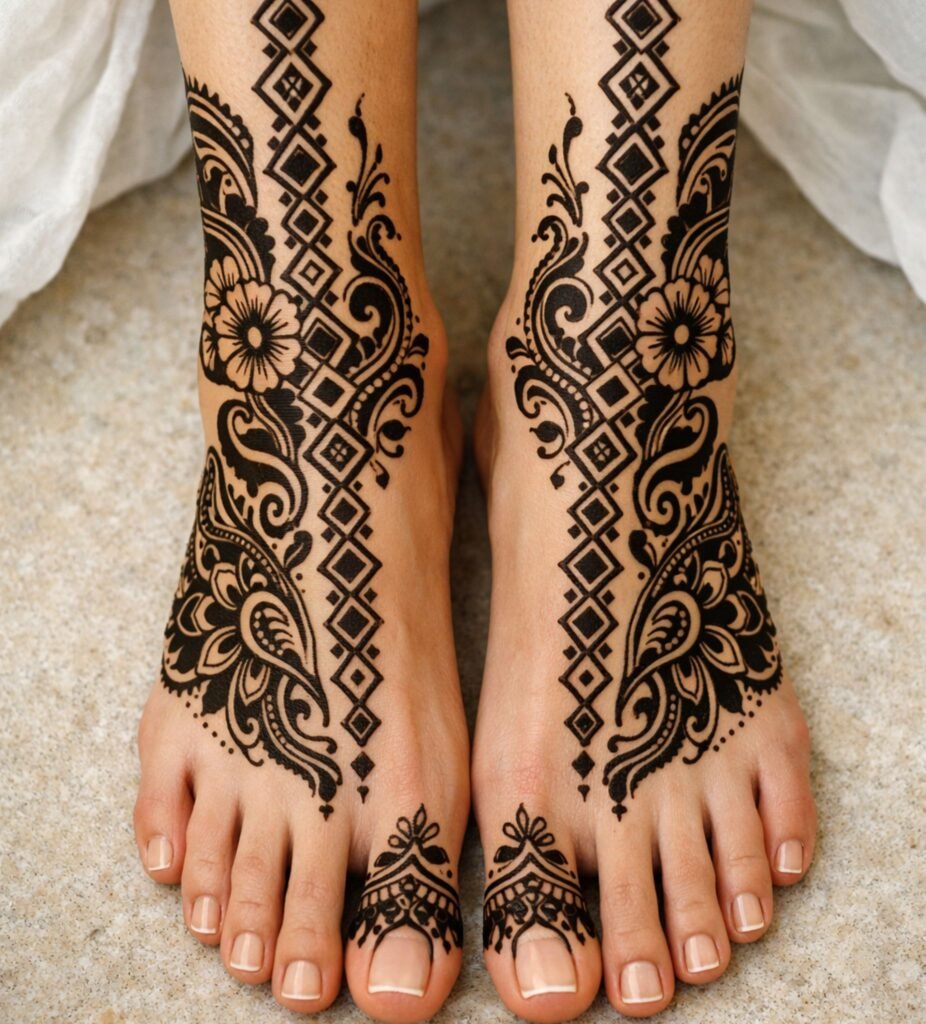
Arabic mehndi has long been celebrated for its flowing, free form boldness and in 2026, it is merging with geometric precision to create a truly modern aesthetic.
What defines this modern movement:
- Negative space as a design tool: Rather than filling every inch of skin, modern Arabic designs intentionally leave skin bare as part of the composition. The contrast between the dark henna and untouched skin creates a striking, graphic effect that photographs like fine art.
- Bold, clean outlines: Thick strokes form the skeleton of flowers, leaves, and vines. This bold approach ensures the design remains visible even from a distance ideal for stage settings or large wedding gatherings.
- Geometric lattice overlays: Triangles, diamonds, and hexagons are woven into organic shapes, blurring the line between mehndi and contemporary body art. This style particularly resonates with younger brides and festival attendees.
- Fusion of Arabic florals with Indian paisley: Combining the expansive florals of Arabic tradition with the intricate, curving paisley of Indian mehndi produces a hybrid style that is uniquely versatile rooted in both worlds, limited by neither.
Pro Tips for a Long Lasting Dark Henna Stain
- Prep the skin properly: Clean, exfoliated skin absorbs henna more deeply. Avoid applying any oil, lotion, or moisturiser before your mehndi session; these create a barrier that prevents the dye from penetrating the skin.
- Keep the paste on as long as possible: For legs, aim for a minimum of 6–8 hours. Overnight application yields the darkest results. Wrap the dried paste with medical tape or plastic wrap to prevent cracking and lock in moisture.
- Use lemon-sugar water to seal the paste: Once the mehndi begins to dry, gently dab a mixture of lemon juice and sugar over the design using a cotton ball. This keeps the paste moist, pushes the dye deeper, and dramatically improves colour intensity.
- Avoid water for the first 24 hours: This is the most critical rule. Water interrupts the oxidation process, the chemical reaction that darkens the stain over time. Keep the legs dry for at least a full day after removal.
Your Next Leg Mehndi Design Awaits
Leg mehndi is no longer just a beautiful tradition, it is a powerful form of self expression that bridges the ancient and the contemporary. Whether you are drawn to the quiet elegance of minimalist vines, the grandeur of full bridal coverage, or the bold confidence of modern geometric Arabic fusion, there has never been a more exciting time to explore what a leg mehndi design can be.
The right design does more than decorate it, tells your story, honours your heritage, and elevates your look for the most special moments in life.