Something shifted quietly in the world of henna this year. The ornate, wrist to elbow bridal coverage that once defined Mehndi culture is giving way to something far more intentional and far more personal. In 2026, aesthetic minimalism has become the dominant design philosophy, and easy mehndi designs are leading that charge.
This isn’t a rejection of tradition. It’s an evolution of it. Mehndi is no longer reserved exclusively for weddings or religious festivals. It’s being worn to gallery openings, rooftop brunches, and beach holidays. It functions as a temporary tattoo, an accessory considered as a gold cuff or a signet ring chosen to complement an outfit, express a mood, or simply mark a moment.
The 2026 Trend Report: Negative Space & Skin Breathing Designs
The technique defining this moment in henna is negative space and if you’ve spent any time on Pinterest or Instagram recently, you’ve already seen it flooding your feed. Negative space design is the deliberate art of leaving skin bare.
Rather than filling every inch of a motif with dense hatching or crosshatching, 2026’s most viral easy mehndi designs use bold outlines to frame shapes, then let the skin inside breathe completely empty.
The 5 Hero Designs of 2026
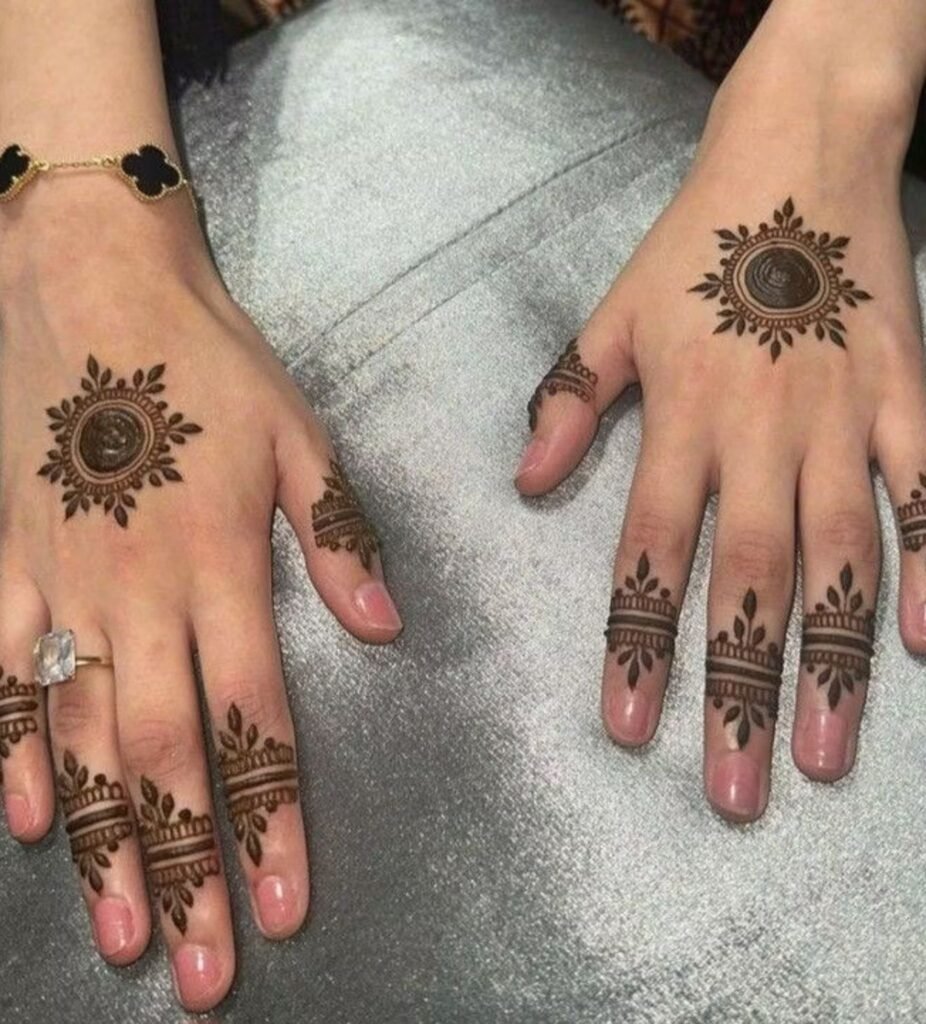
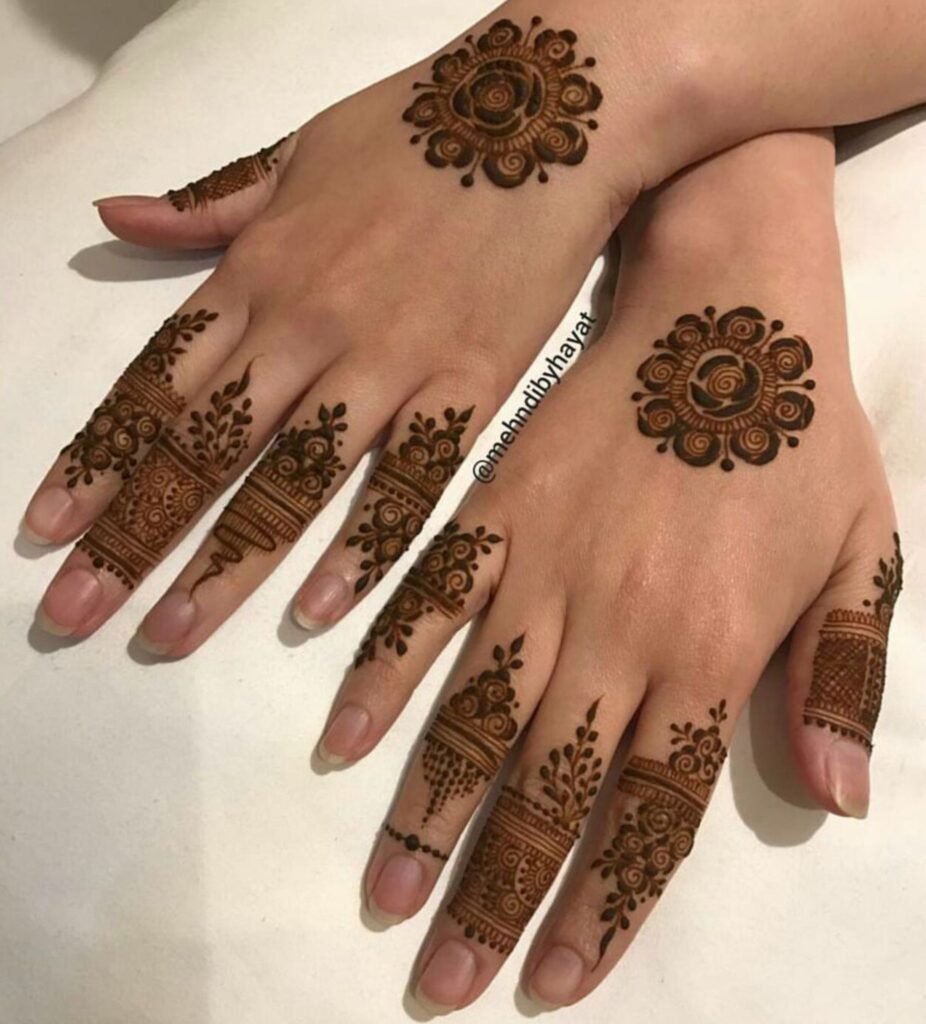
1. The Micro Mandala
Coin sized and exquisitely precise, the micro mandala is placed at the dead centre of the backhand and left completely alone. Built from a tiny central dot surrounded by rings of teardrop petals, the design works outward through concentric geometric frames, thin diamond borders, rows of pinprick dots, and delicate chevron lines before ending cleanly at about the diameter of a two pound coin. The surrounding hand stays entirely bare. That restraint is everything.
2. Geometric Cuff Trails
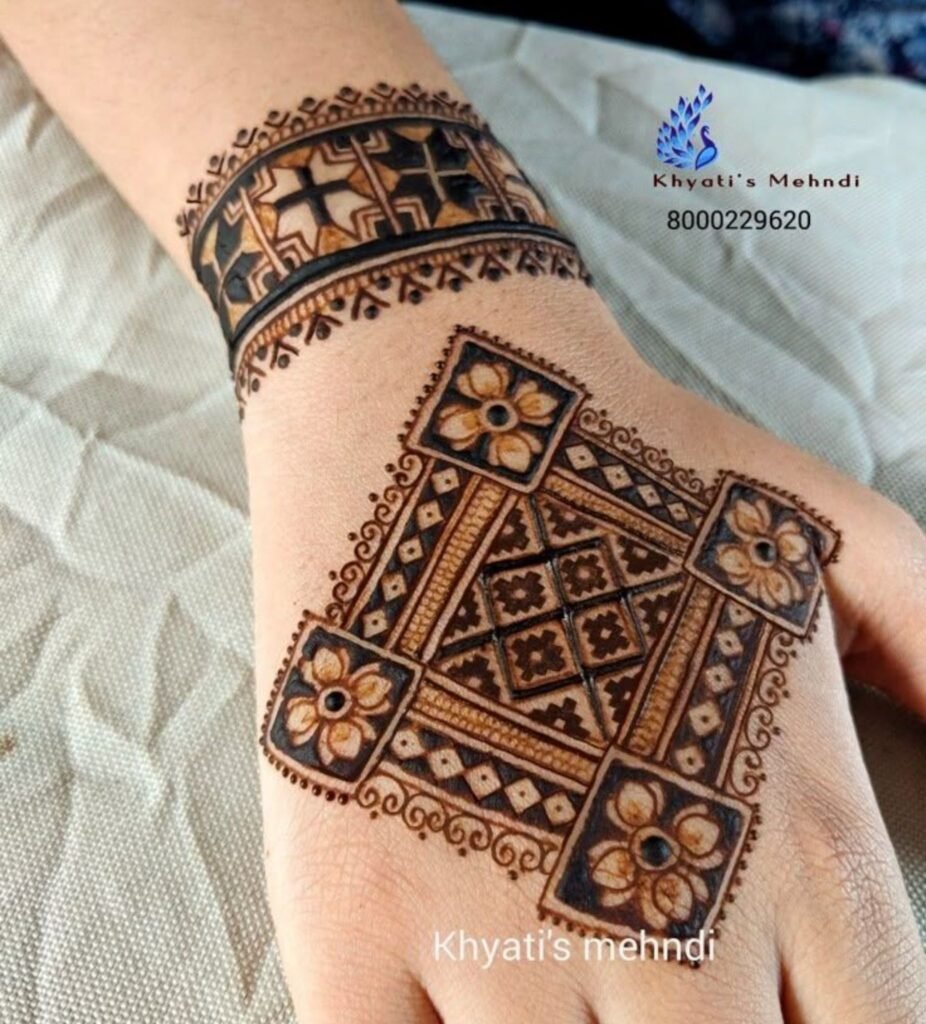
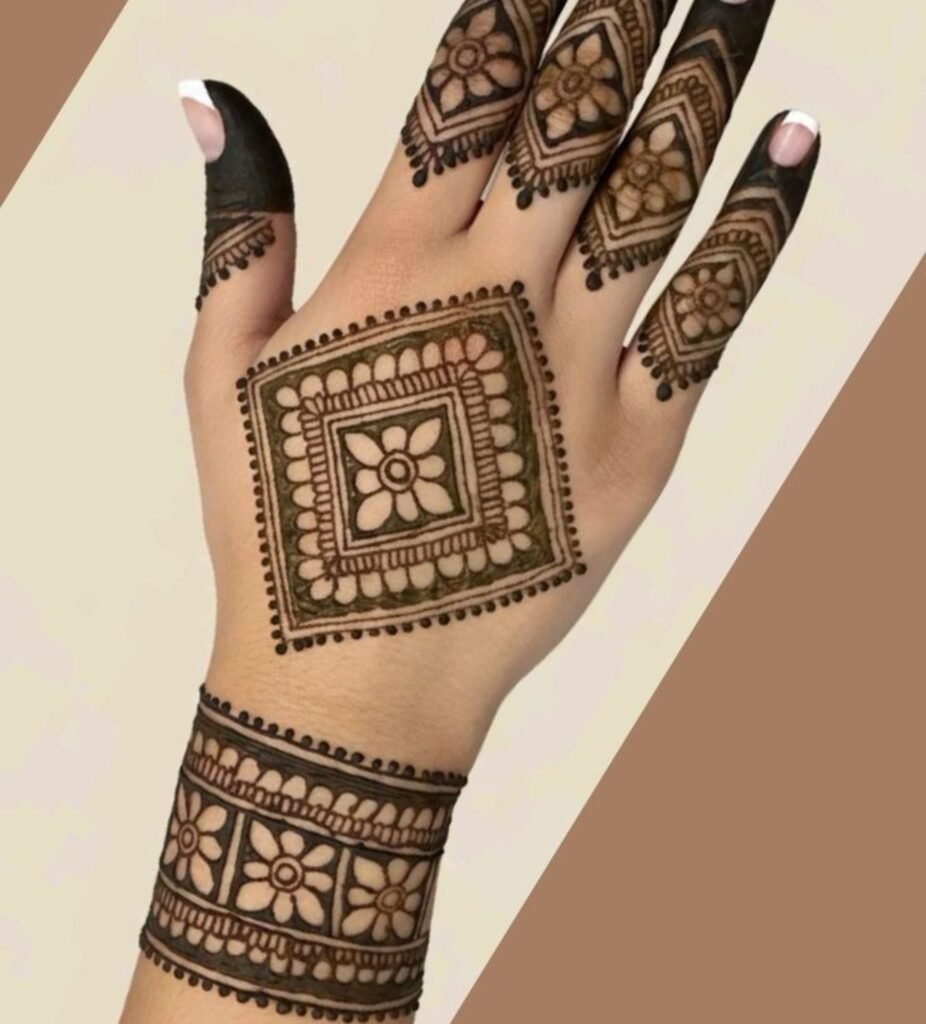
Where traditional henna placed flowers at the wrist, geometric cuff trails replace them with pure line work. Think two or three parallel bands circling the wrist, each carrying a different linear motif interlocking triangles, repeating arrow heads, stepped ladder patterns. No curves, no petals, no paisley. Just clean, angular precision that reads like architectural drawing rendered on skin.
3. The ‘Floating Petal’ Finger Art
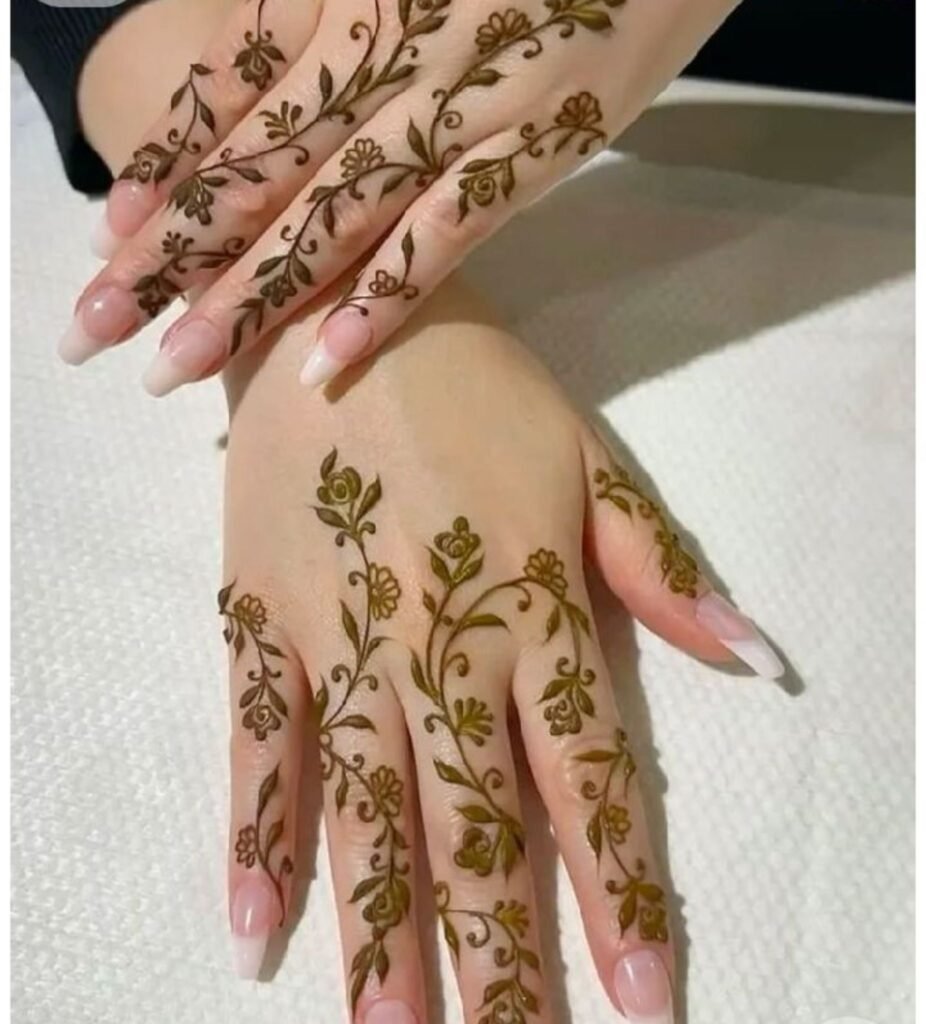
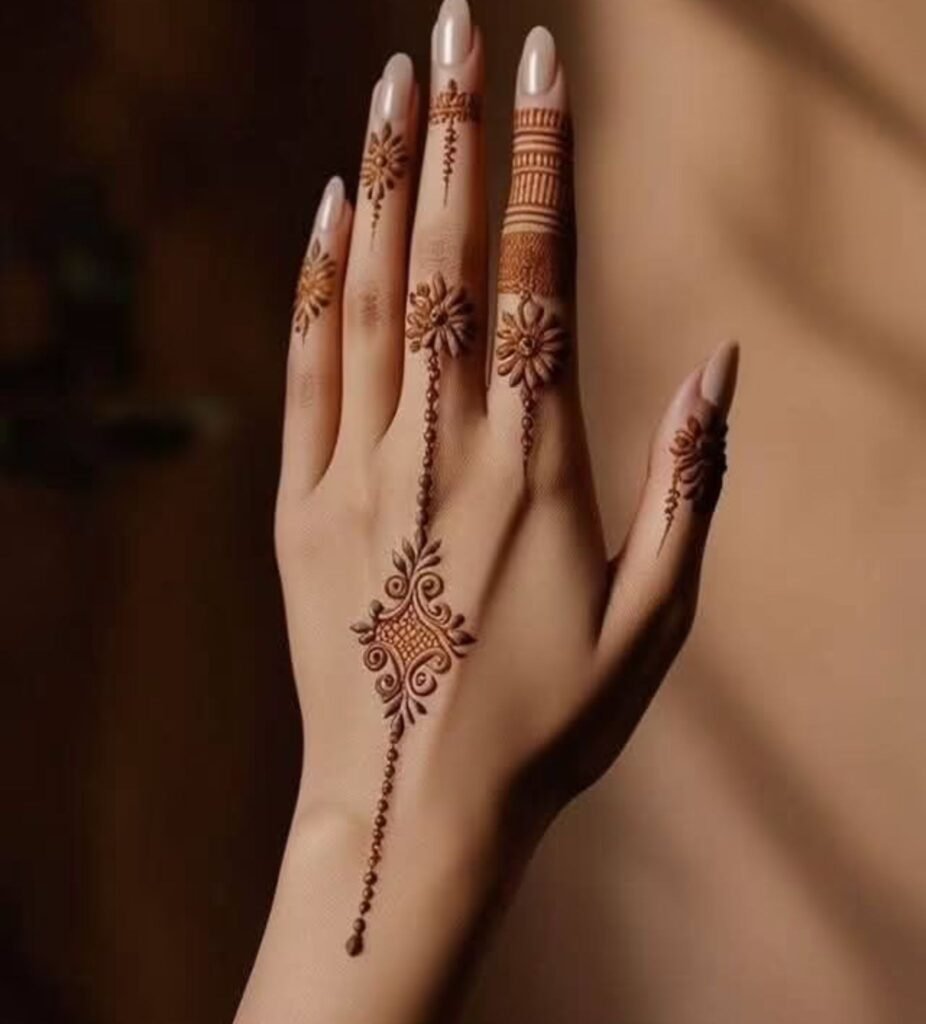
Individual motifs are placed on each finger with no connective tissue between them. A rose bud on the index. A crescent on the ring finger. Three scattered dots trailing the middle. The palm was left completely untouched. Heavy, detailed fingers against an empty palm is one of 2026’s most photographed easy mehndi design combinations and its visual impact comes entirely from that contrast.
4. Minimalist Jewelry Strings
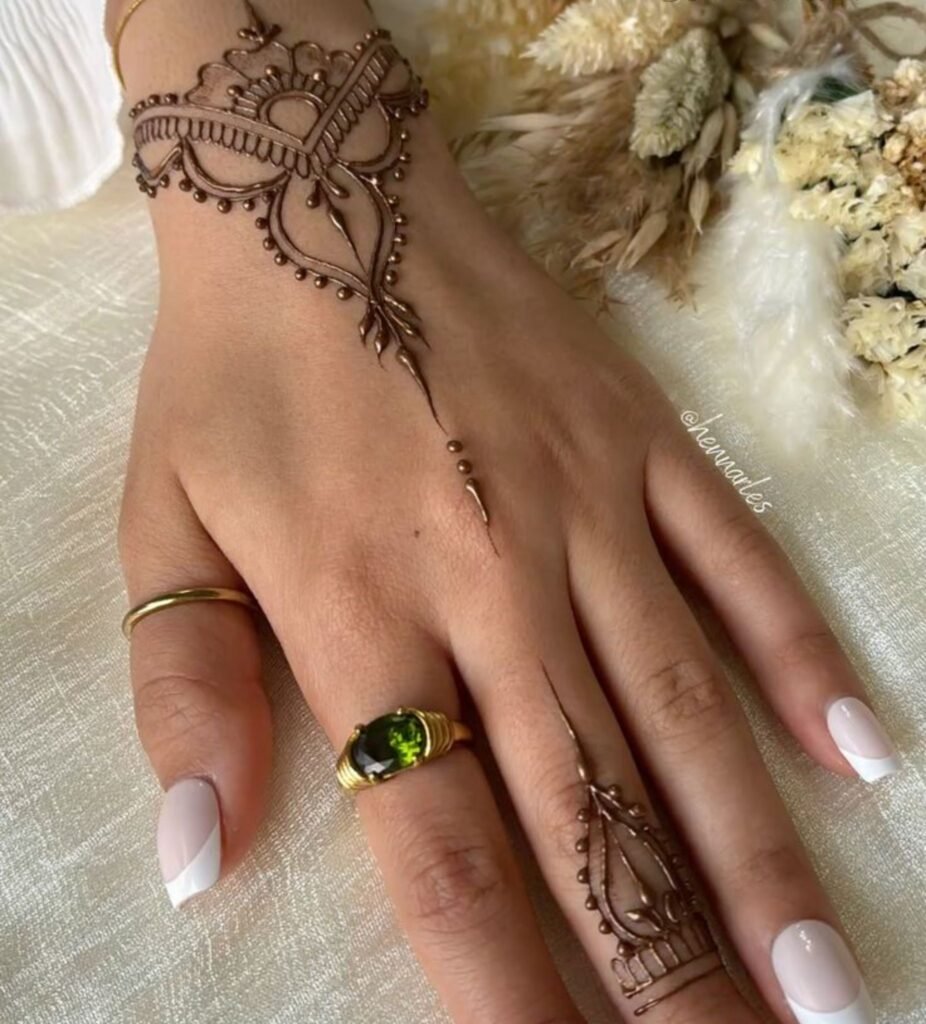
Henna rendered so fine it reads as jewellery. A single thread thin line looping the wrist with a tiny teardrop pendant hanging from it. A delicate chain pattern circling each finger knuckle like a stacking ring. These designs require a steady hand and a sharp cone, but the payoff is henna that doesn’t look like henna at all; it looks like you’re wearing the finest gold chain against your skin.
5. Botanical Ferns
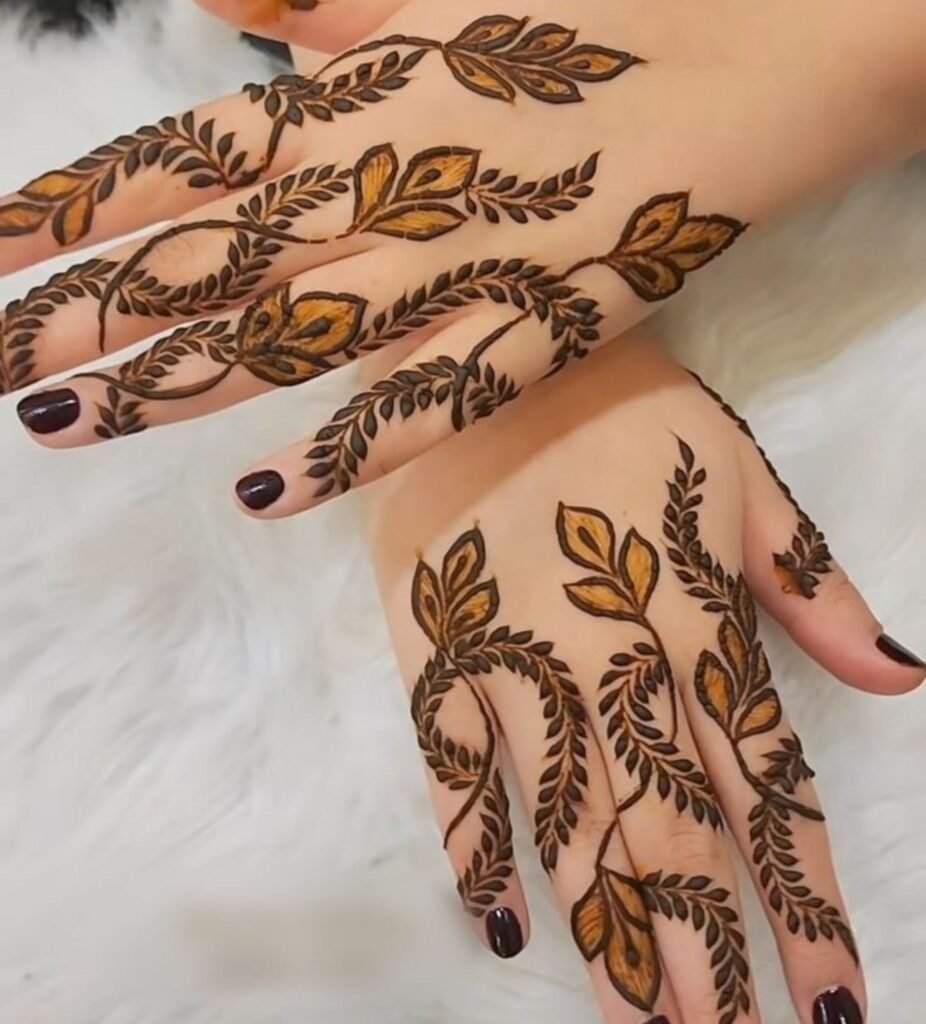
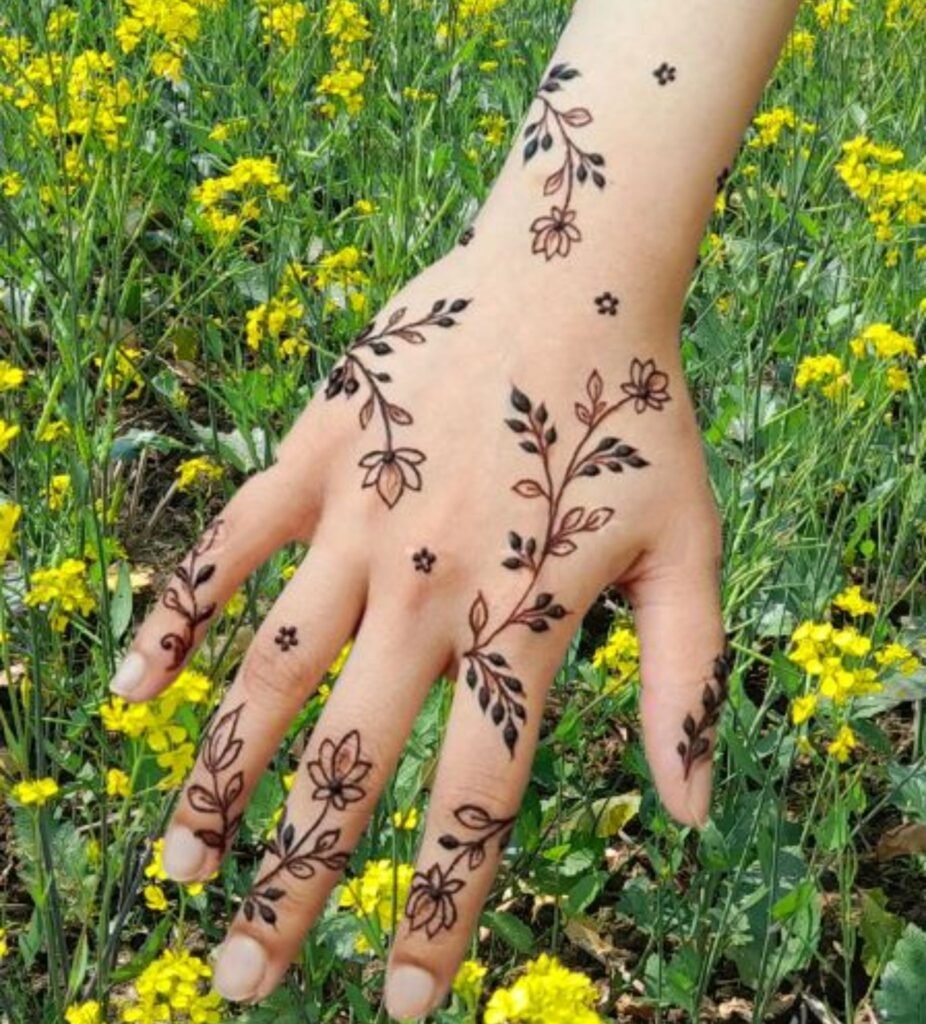
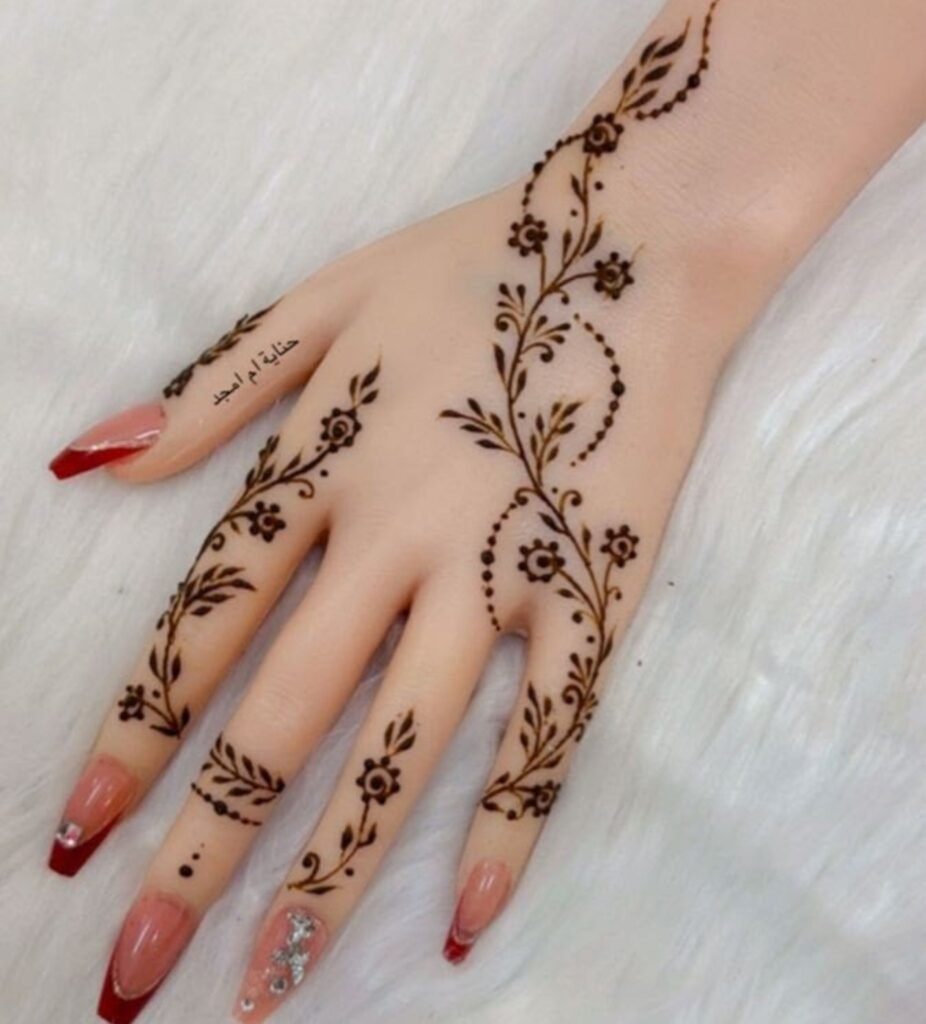
Nature inspired and effortlessly chic, botanical fern trails mimic the aesthetic of fine-line tattoos. Thin, branching stems carry rows of tiny opposite leaves drawn with a single confident stroke each cascading from the wrist toward the forearm or down toward the fingers. There are no mandalas here, no paisleys, no florals. Just the clean, honest geometry of a plant, translated into henna with the lightness of a pencil sketch.
The MehndiChic Application Guide: Key Points
- Essential Requirement: Cone control is the most critical factor for achieving these designs.
- Cone Setup: Use a fresh cone with a very fine tip (no wider than a pin).
- Application Pressure: Maintain consistent, gentle pressure throughout; never squeeze hard.
- Best Suited Patterns: This technique is particularly effective for micro mandala and geometric cuff patterns.
- Best Practices: Prior to skin application, practice on paper. Ensure your workspace is well lit with natural daylight for optimal results.”
2026 Stain Secrets: Modern Aftercare
The colour your henna develops depends almost entirely on what happens after application. Once the paste has dried to a firm crust typically 35 to 45 minutes mist it with a eucalyptus or clove essential oil spray. These oils penetrate the dried paste, reactivating the dye release without causing the paste to crack and flake prematurely. After removal, keep the design completely dry for a minimum of 12 hours. No handwashing, no dish water, no rain.
In the 24 hours that follow, apply a thin layer of coconut or jojoba oil twice daily to keep the stained skin moisturised. Your colour will deepen from orange to a rich, dark mahogany exactly the depth these minimalist designs deserve.
.