Let’s be real, mehndi has a reputation for being the most gorgeous and the most intimidating part of a bridal or festive look. But here’s the secret: the pros know simplicity is the ultimate sophistication. Whether you’re a complete beginner picking up a cone for the first time, or a bride who wants elegant without overwhelming.
Delicate motifs, negative space, and clean lines can outshine the most elaborate patterns and they take a fraction of the time. Foot mehndi design Here are ten designs to inspire you, each one proof that less truly is more.
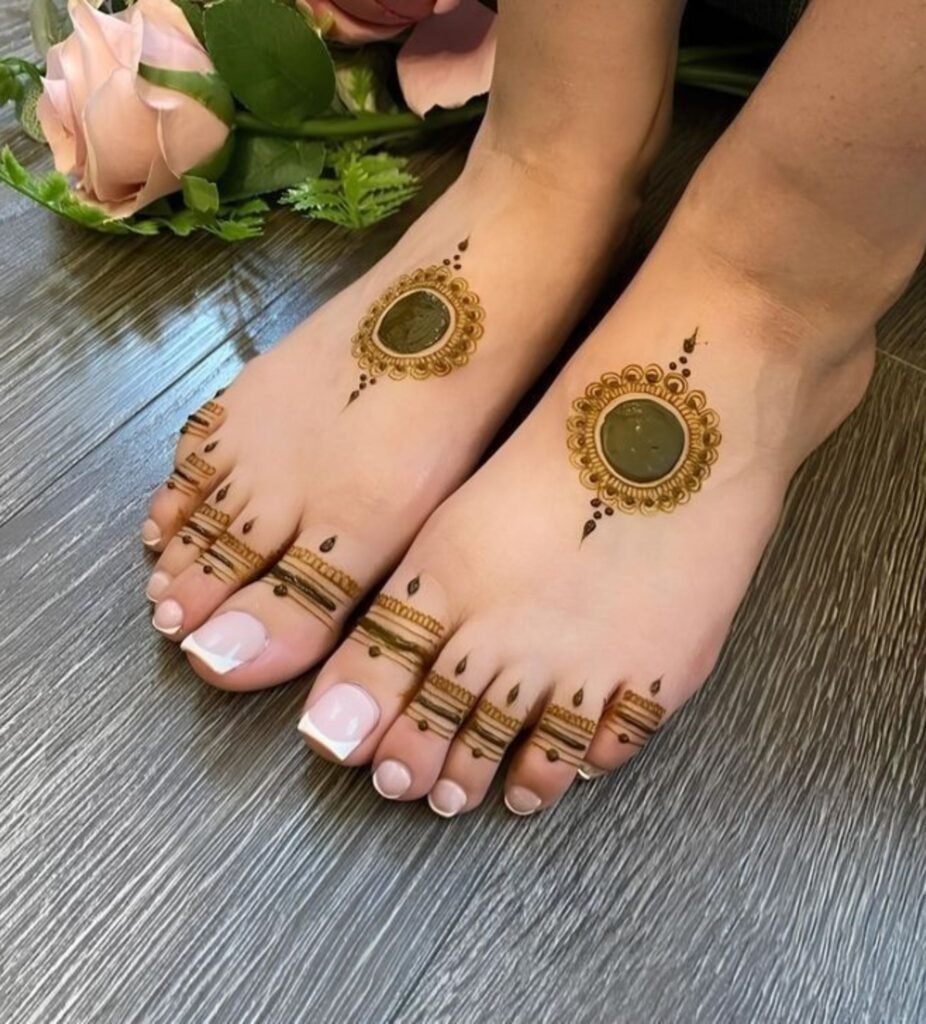
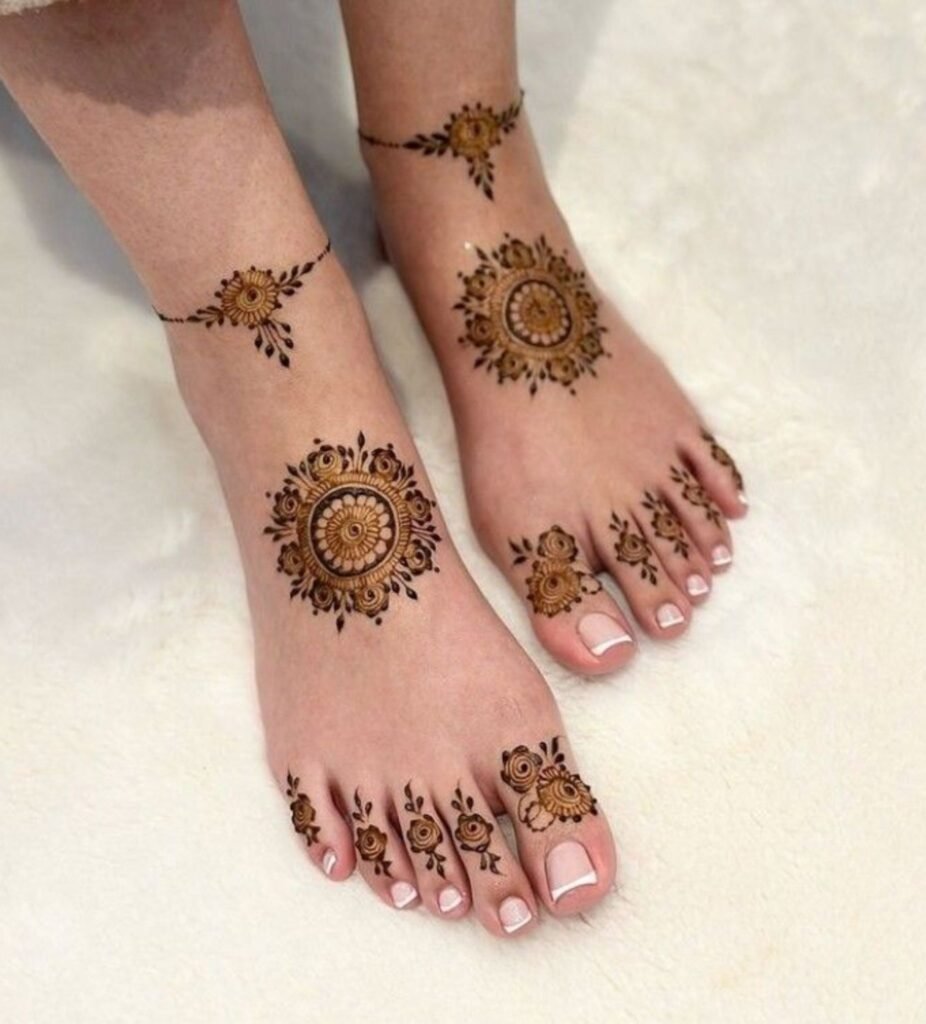
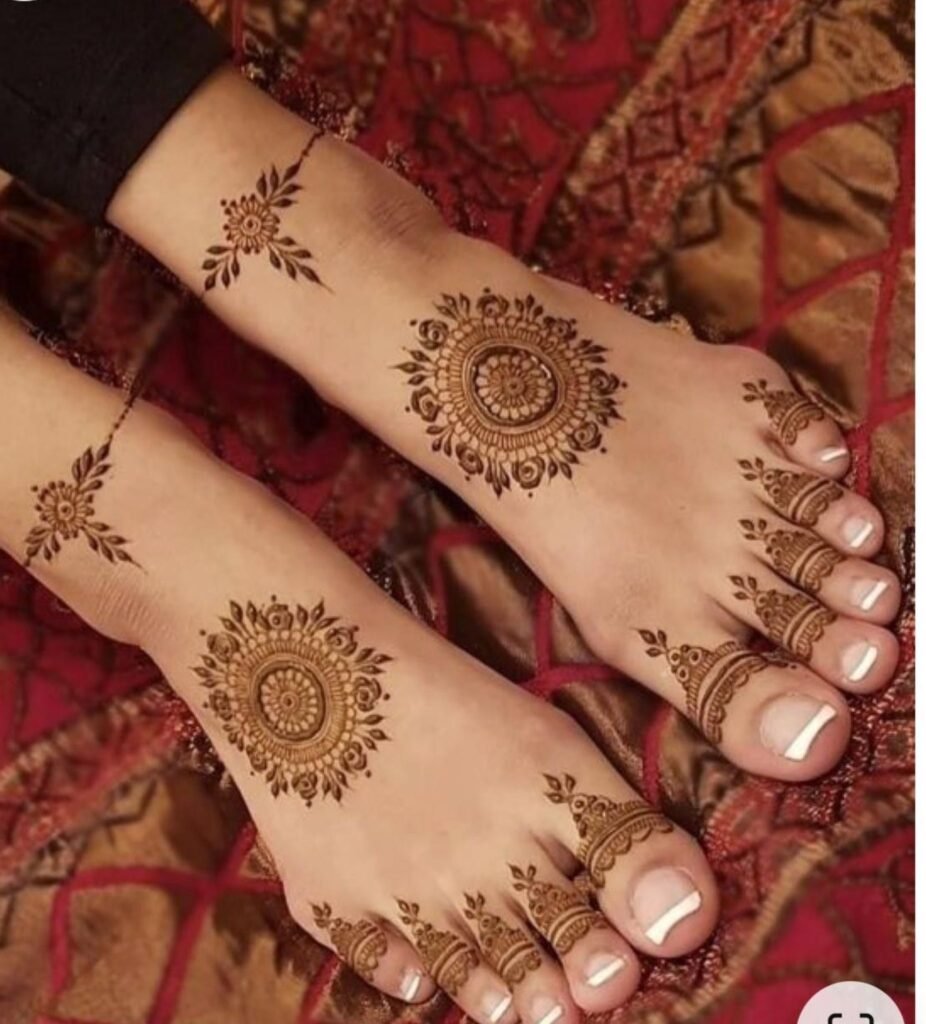
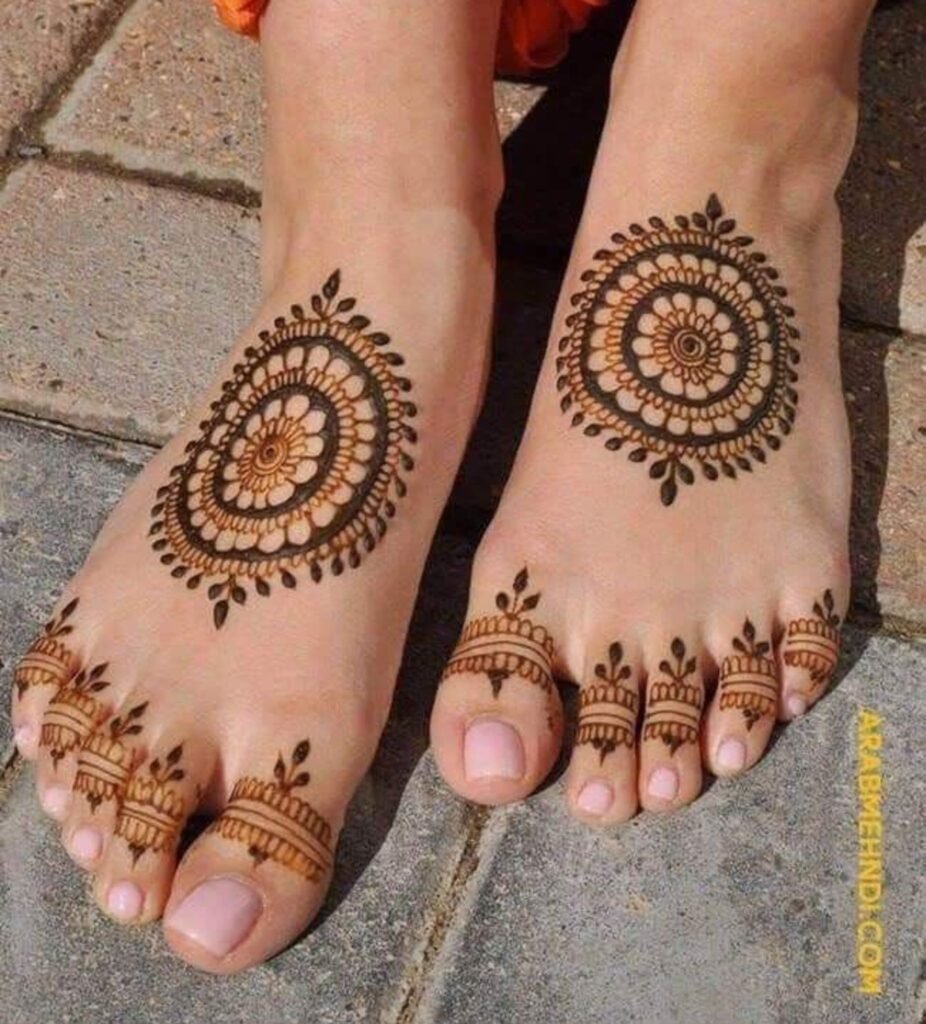
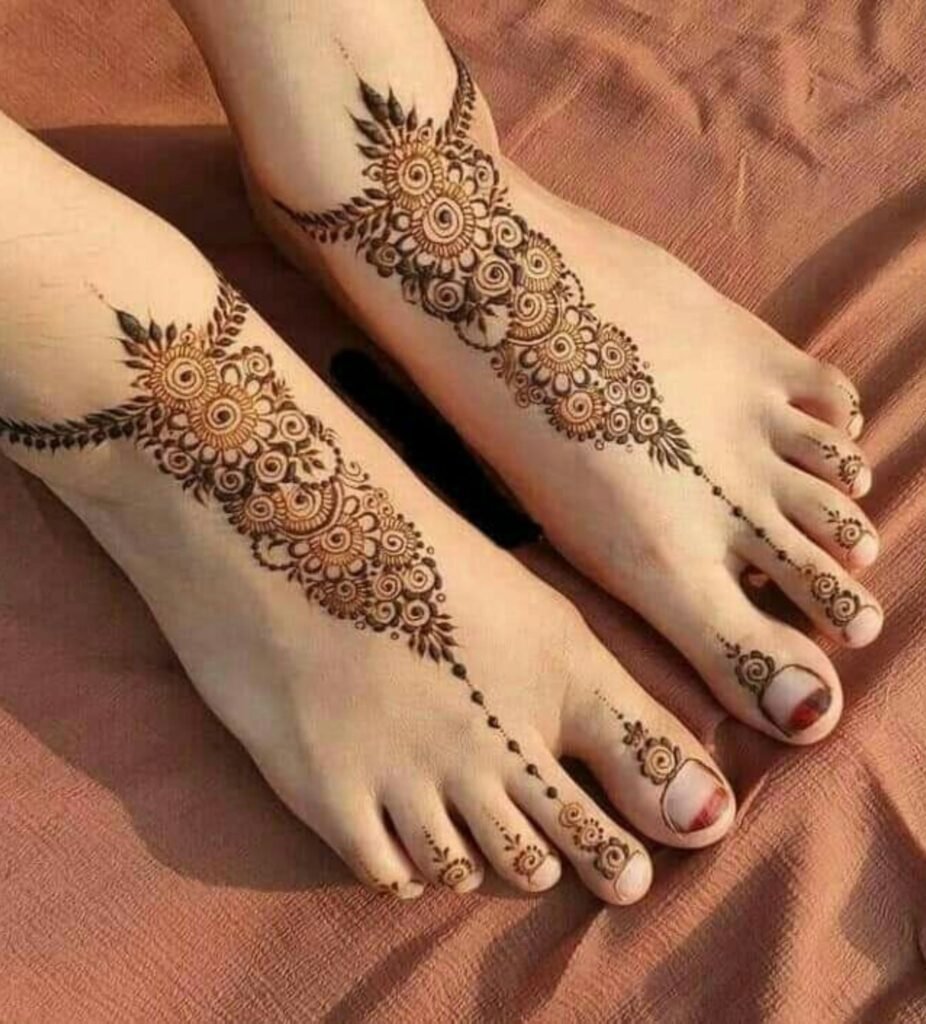
1. Minimalist Mandala Mehndi Foot Designs Simple & Striking
A single mandala placed at the center of the foot or just below the toes is one of those designs that looks like it took hours but with practice, it can be done in under twenty minutes.
- Drawing a small central circle with evenly spaced petal shapes radiating outward six petals is the sweet spot for a clean, symmetrical look.
- Add a second ring of tiny teardrop or leaf motifs outside the petals to build depth without clutter.
- Leaving deliberate negative space between the rings this technique is what gives minimalist mandala designs their modern, editorial feel.
- Finish with a few scattered dots around the outer edge for a star dusted effect that photographs beautifully.
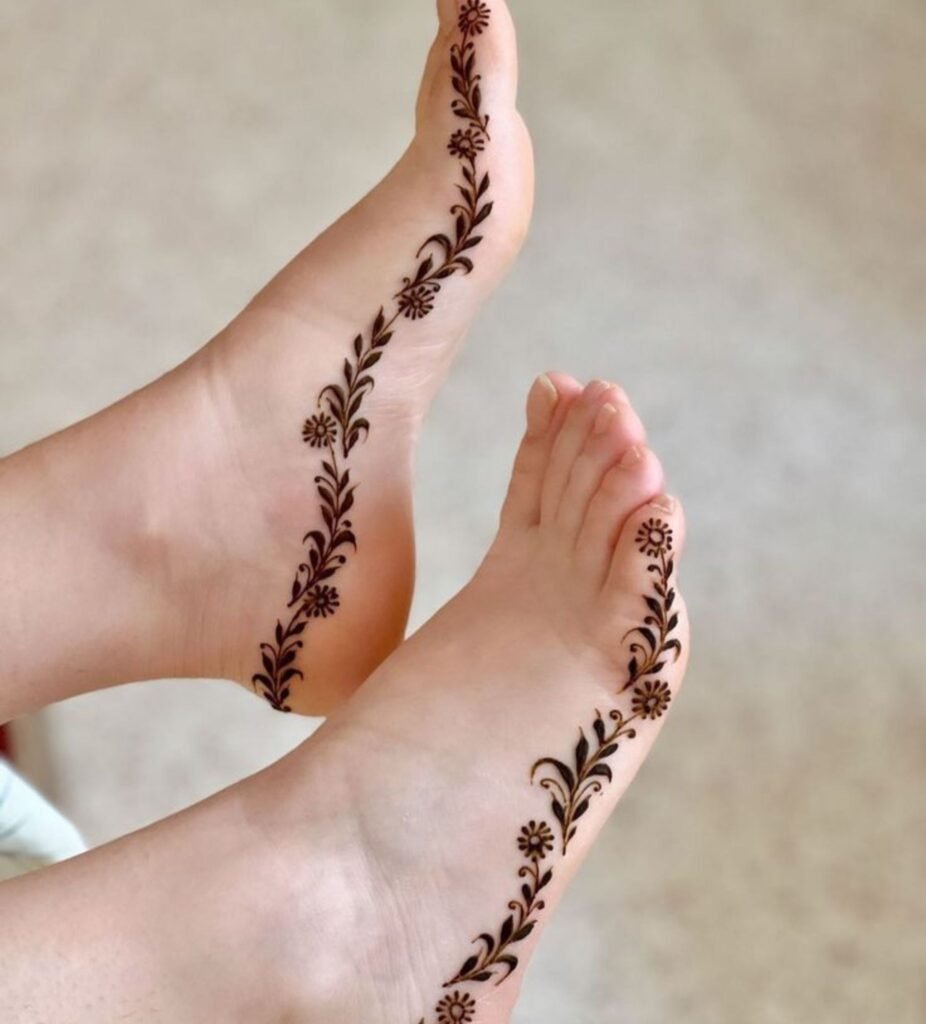
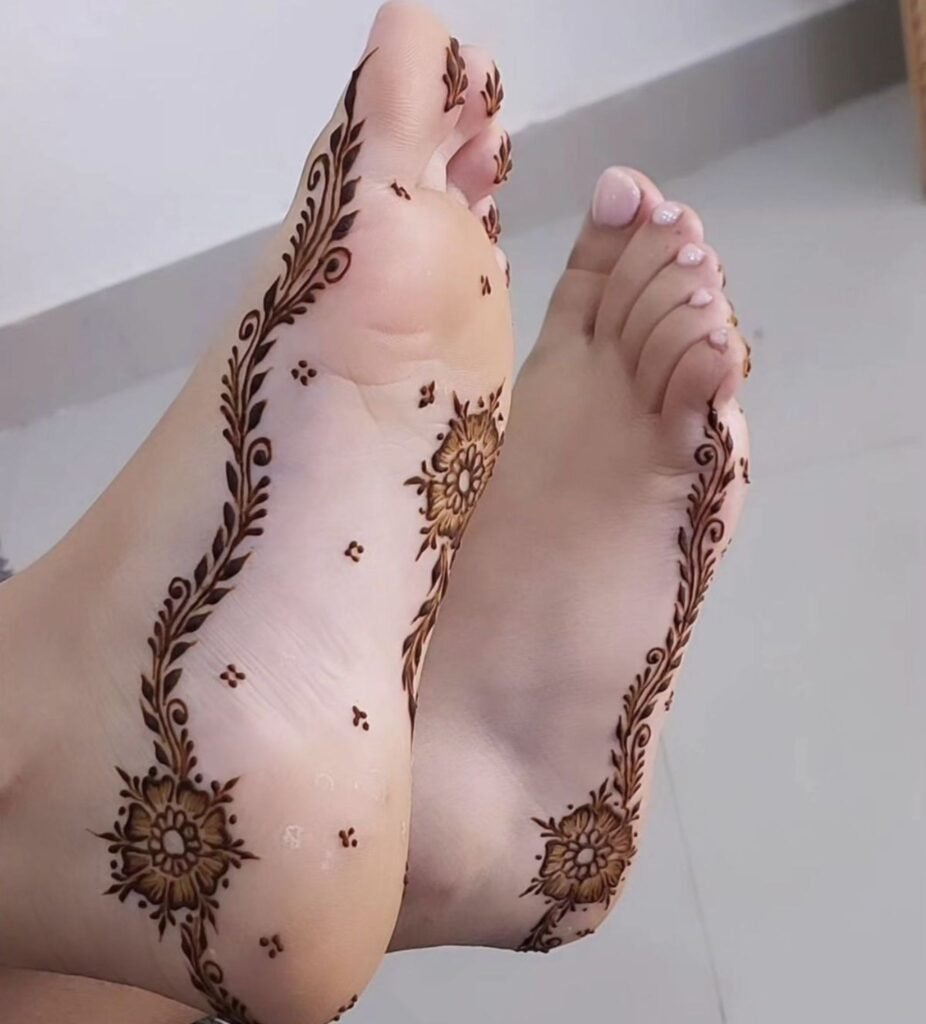
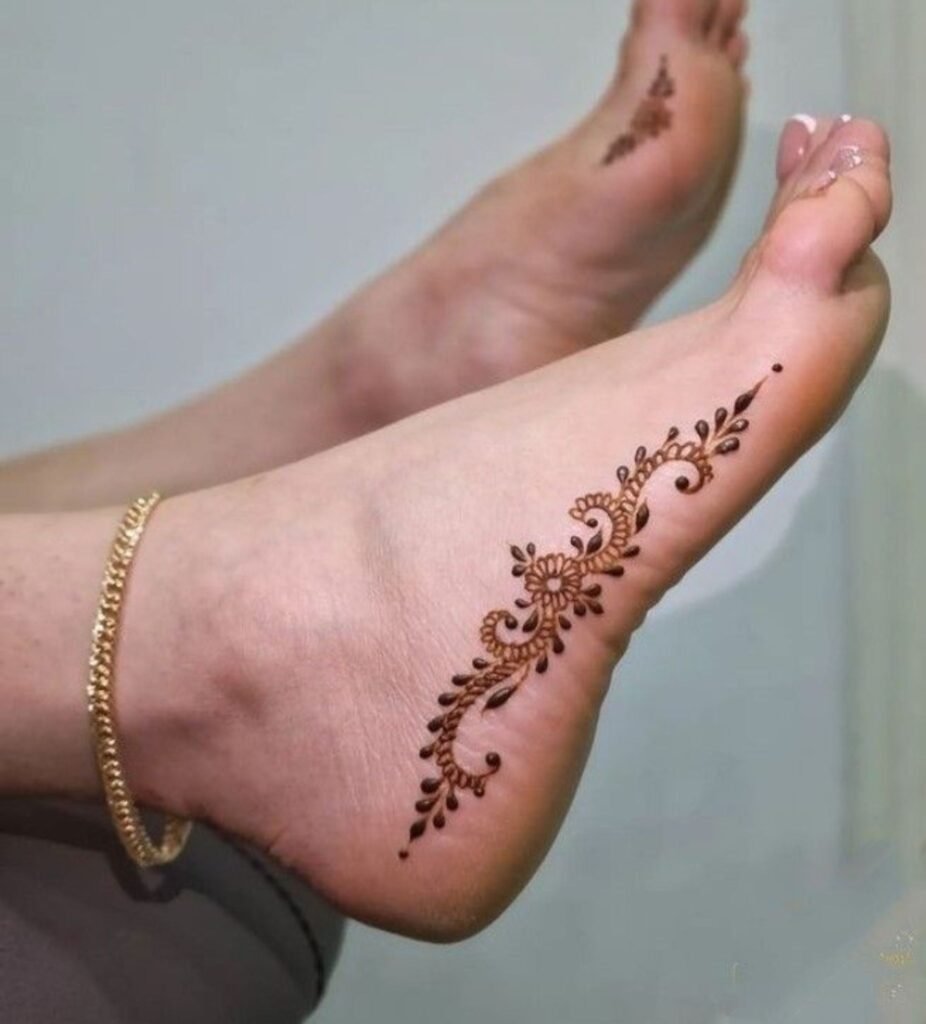
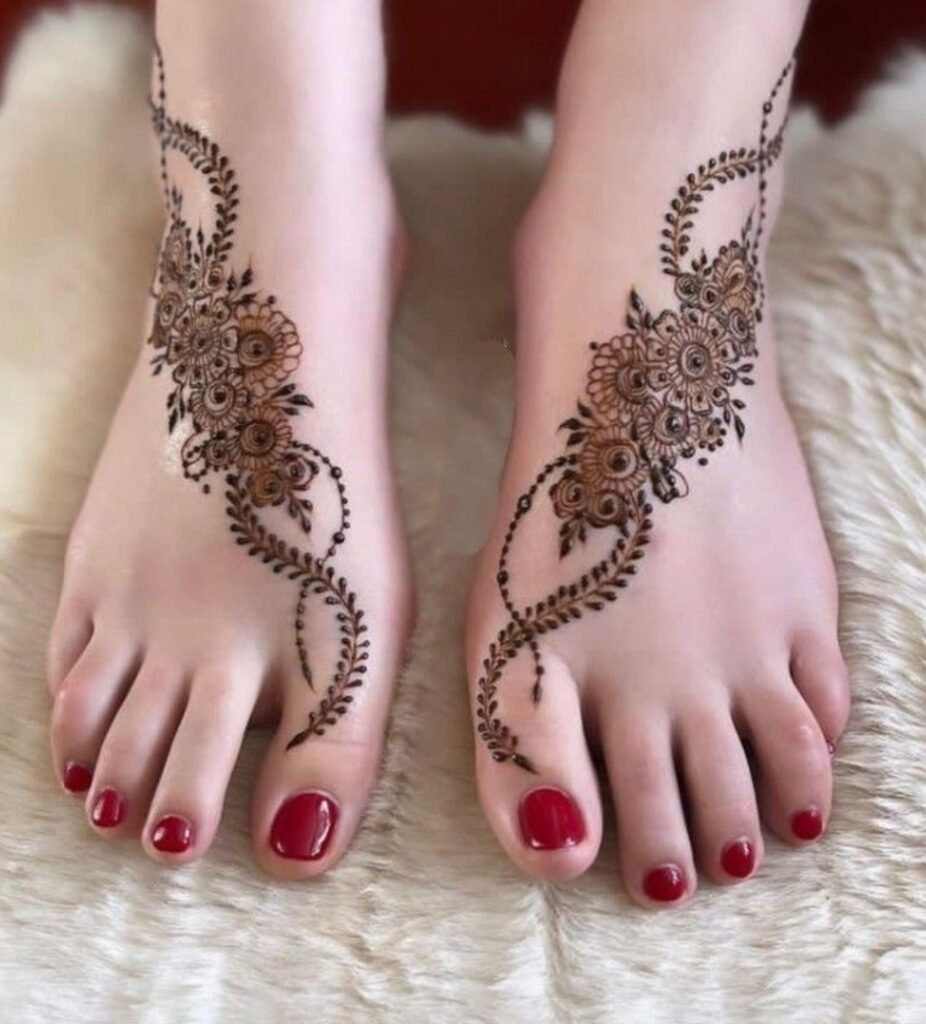
2. Side Foot Trailing Vine The Mehndi Foot Design Simple Girls Swear By
Running a delicate vine along the outer or inner edge of the foot is one of the most flattering designs you can choose. Foot mehndi design, It elongates the look of the foot and peeks out perfectly from sandals or heels.
- Start your vine from the ankle or heel, letting the stem curve organically toward the little toe. Nature’s lines are never perfectly straight, and neither should yours be.
- Branch off with tiny paired leaves or micro florals every inch or so to keep the eye travelling down the design.
- Accent with a single slightly larger bloom at the widest point of the foot this creates a focal moment that anchors the whole composition.
- Keep the stem line thin (use the fine tip of your cone) to maintain that weightless, bohemian vibe that makes this style so endlessly wearable.
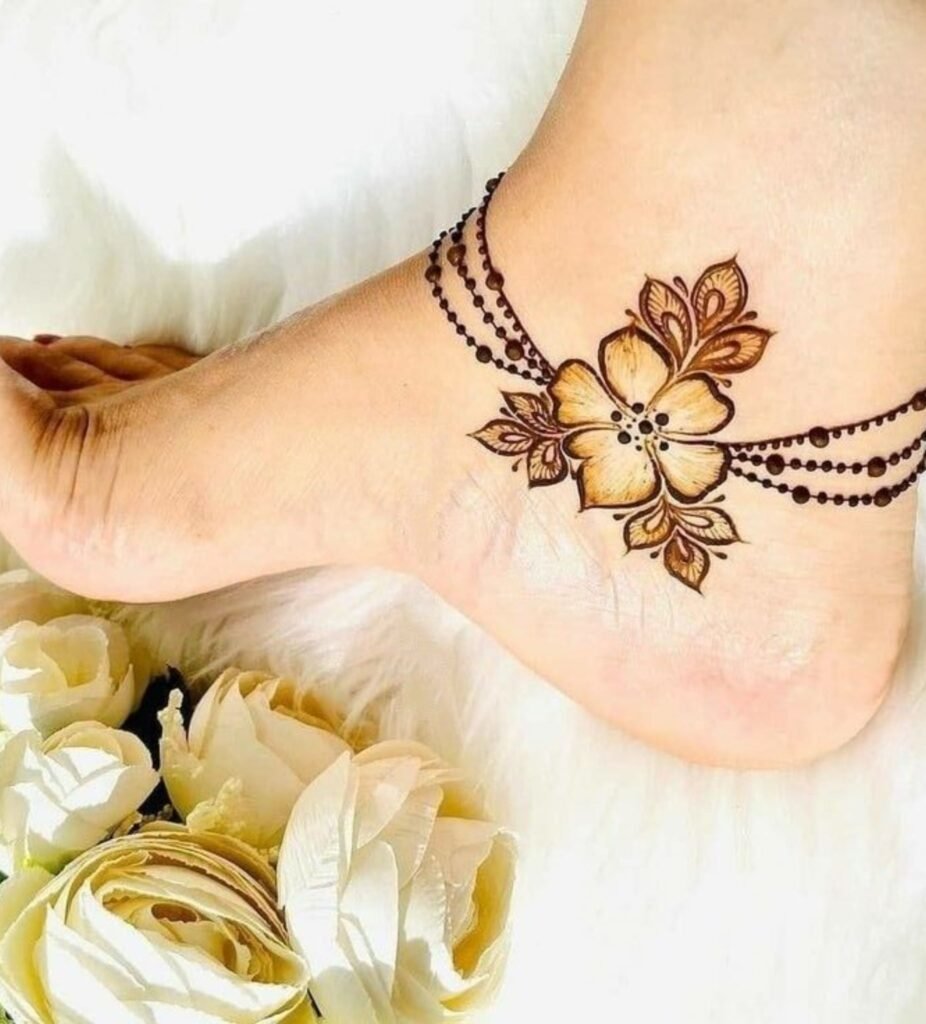
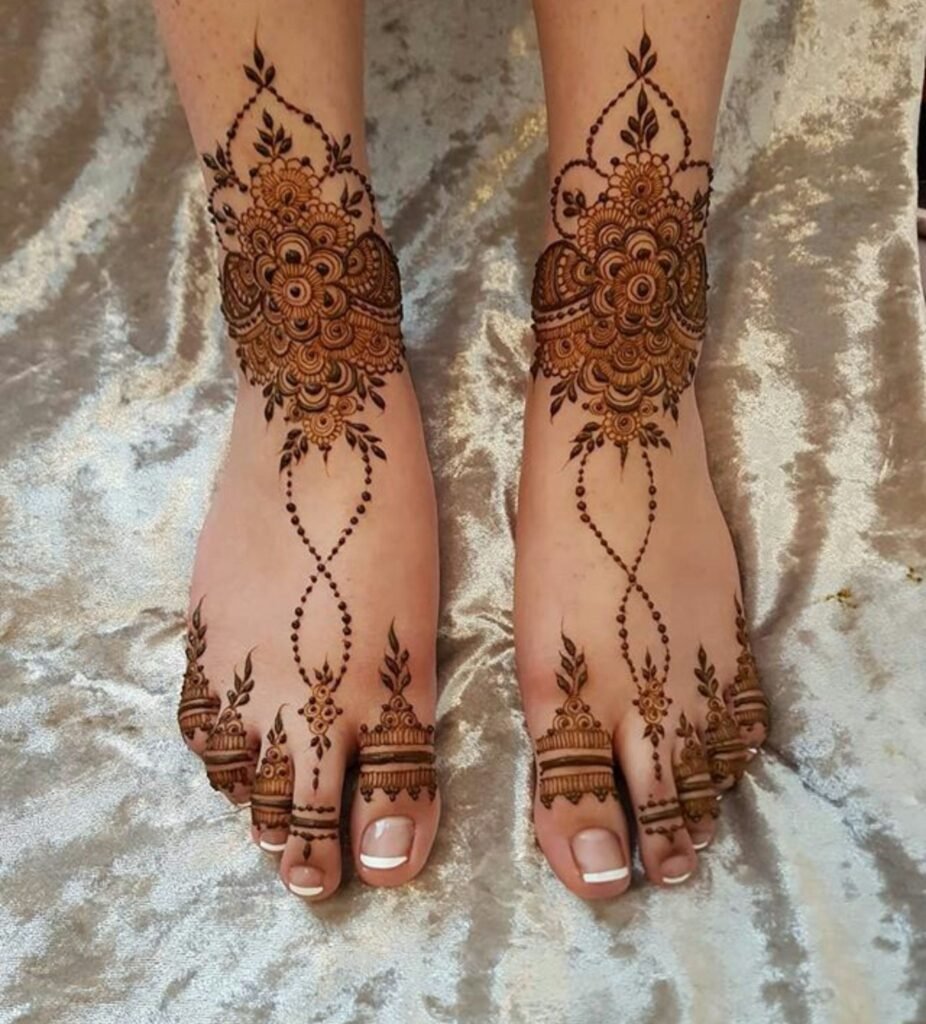
3. Anklet Style Mehndi The Design That Doubles as Jewelry
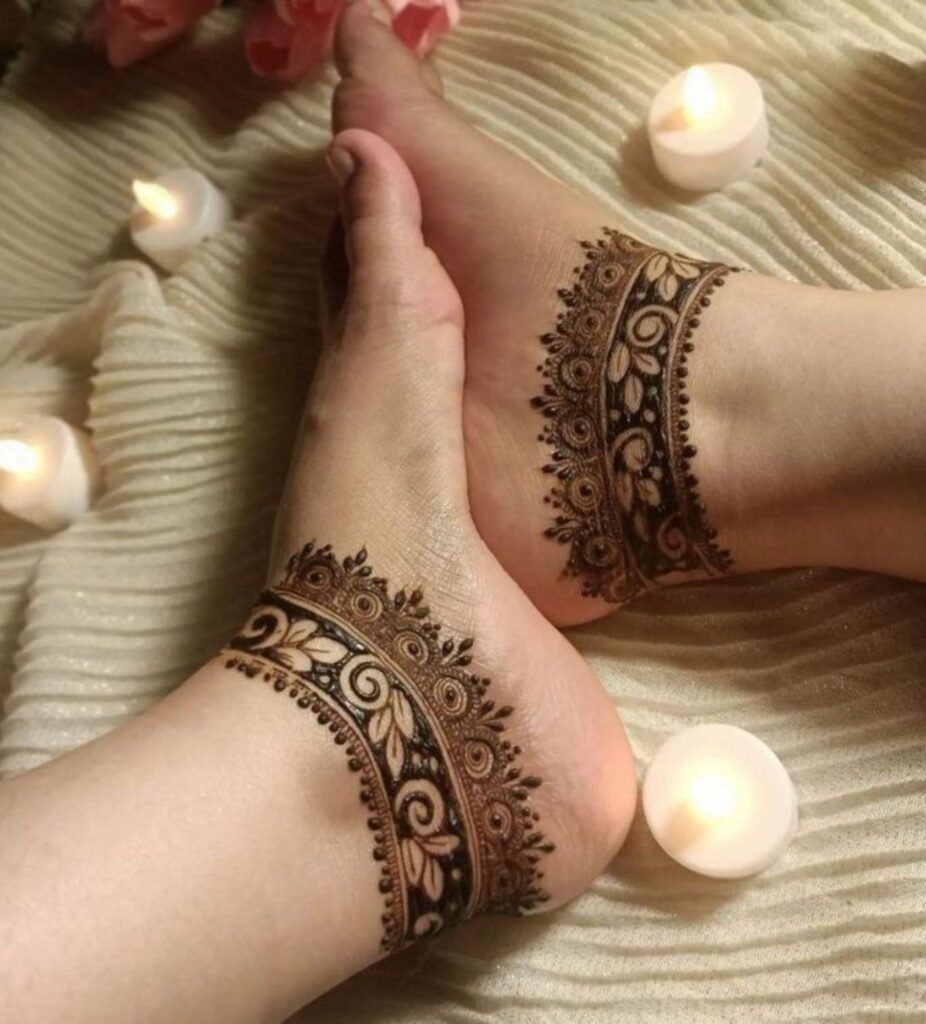
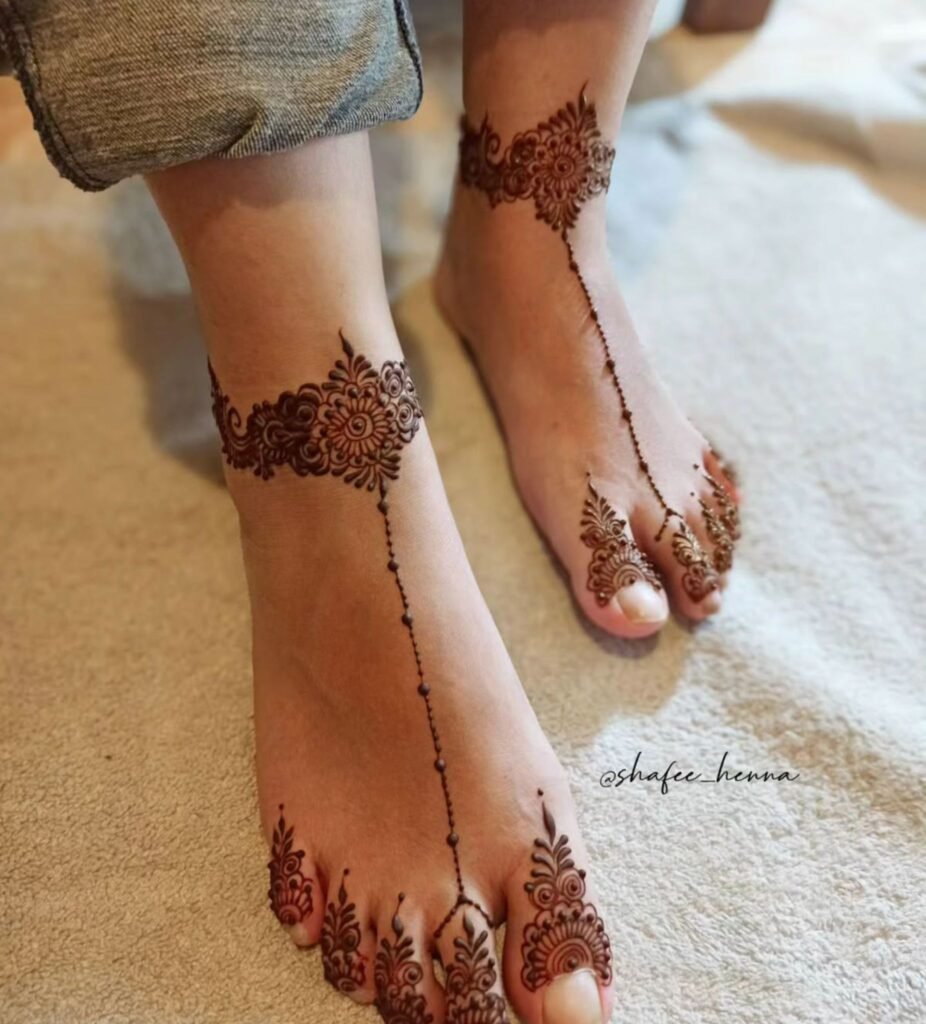
Forget silver chains, a mehndi anklet is the most romantic accessory you can wear, and it costs nothing but a little time. Wrapping a decorative band around the ankle mimics the look of traditional payal and works just as well with jeans as it does with a lehenga.
- Create the band using a repeating chain of small geometric shapes: diamonds, chevrons, or interlocking crescents all work beautifully at this scale.
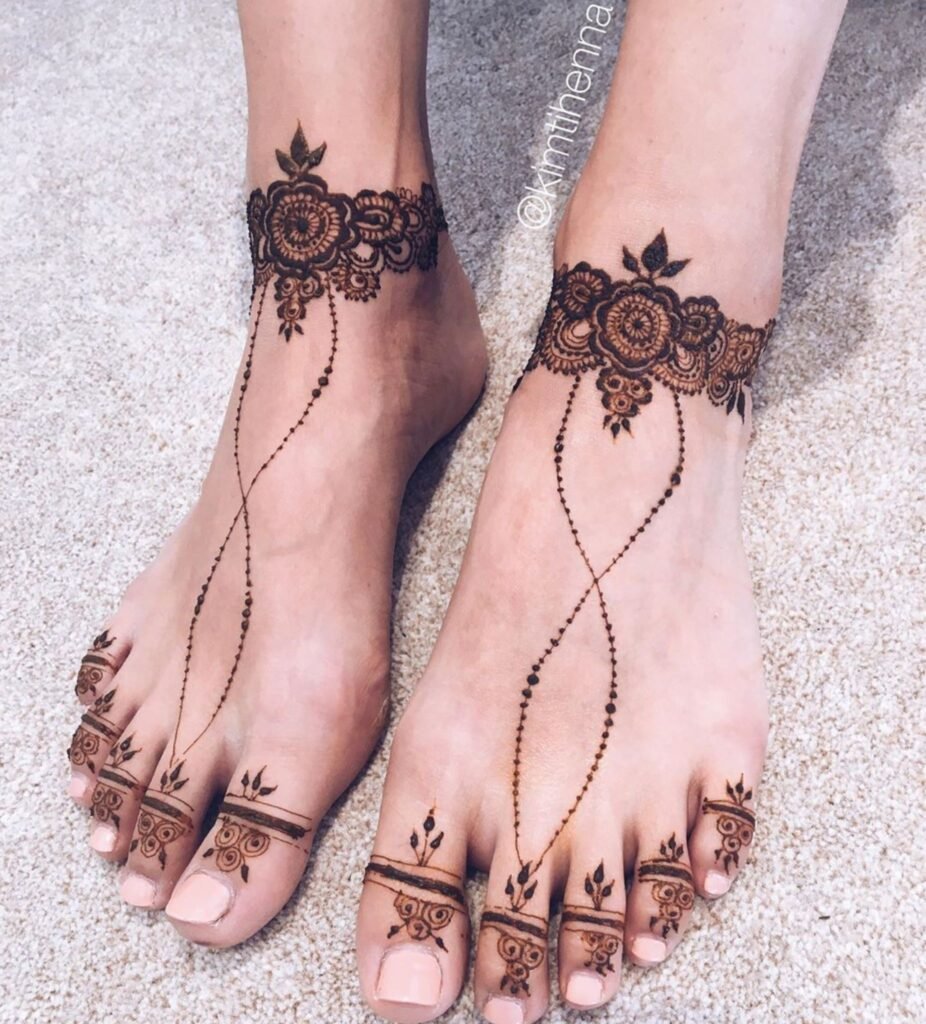
- Add one or two drop pendants hanging from the base of the band onto the top of the foot, mimicking the look of a real charm anklet.
- Keep the band width between half an inch and one inch narrow enough to read as jewelry, wide enough to show off the pattern detail.
- For extra drama, let the pendant drop extend to a small floral motif on the middle toe that creates the look of a toe ring connected to an anklet, without any actual metal.
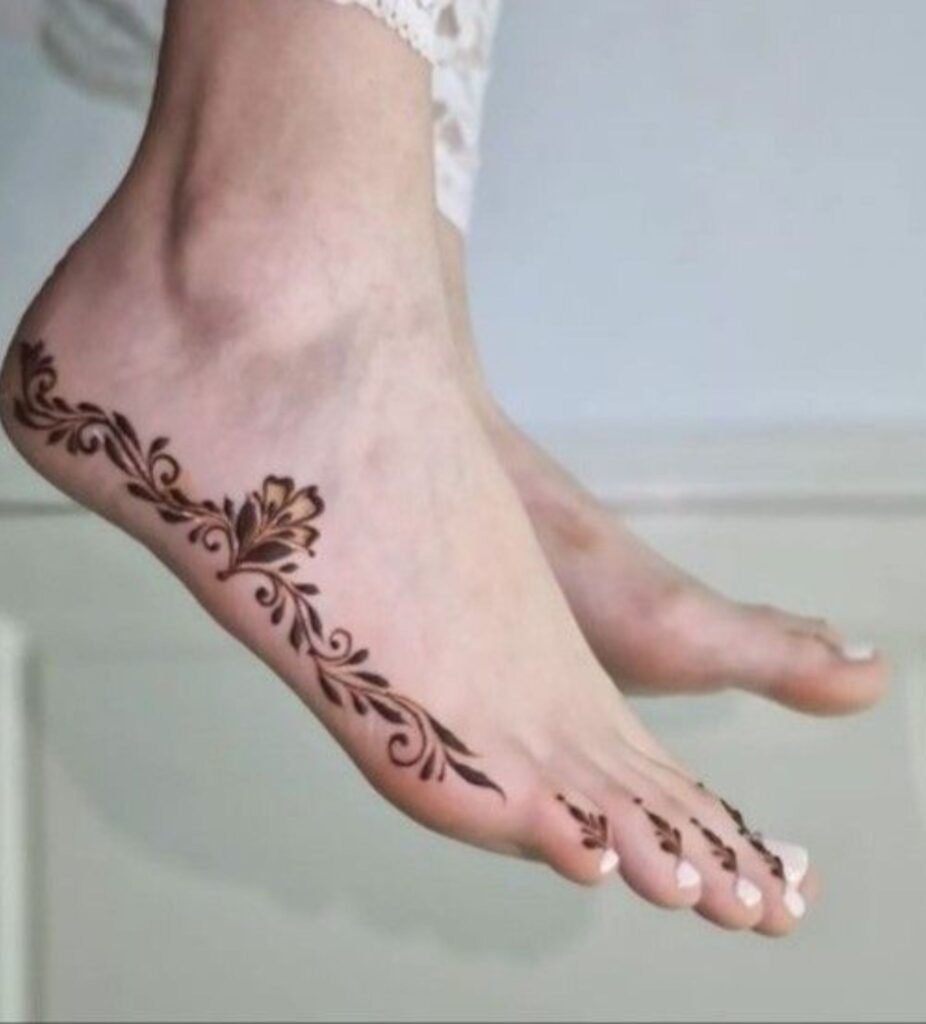
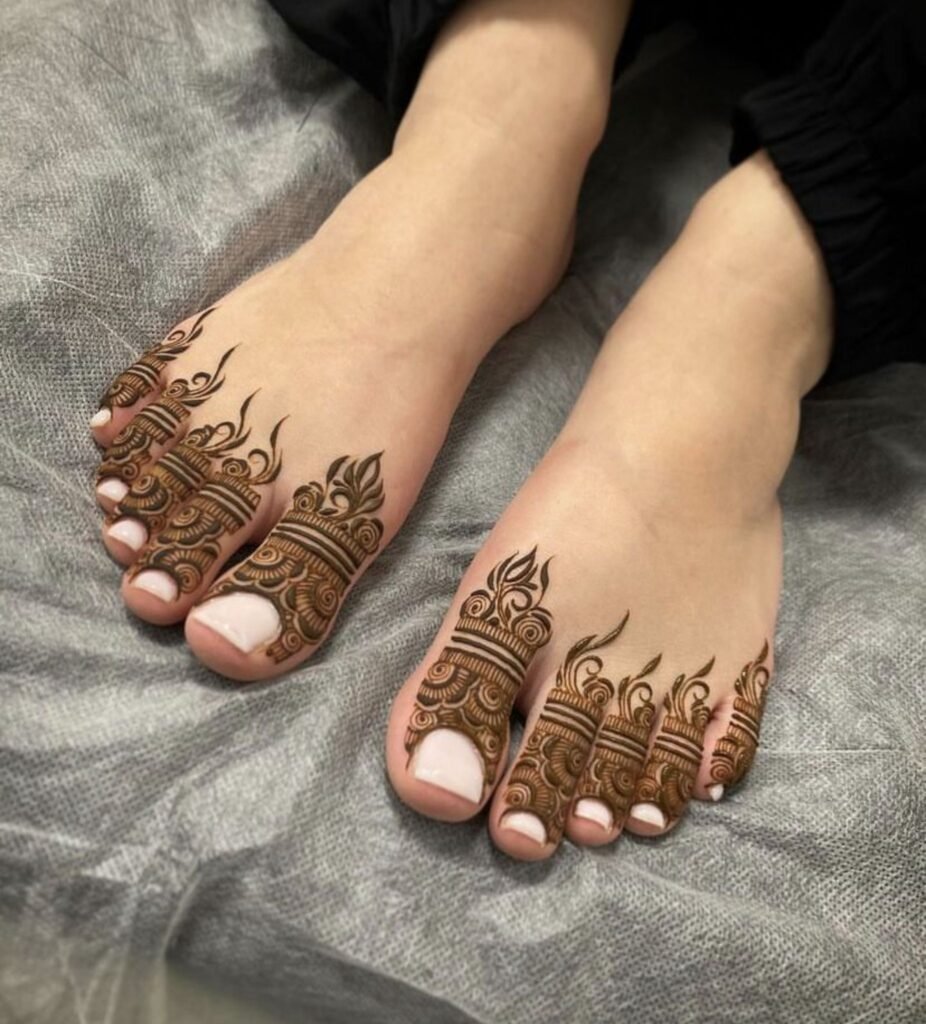
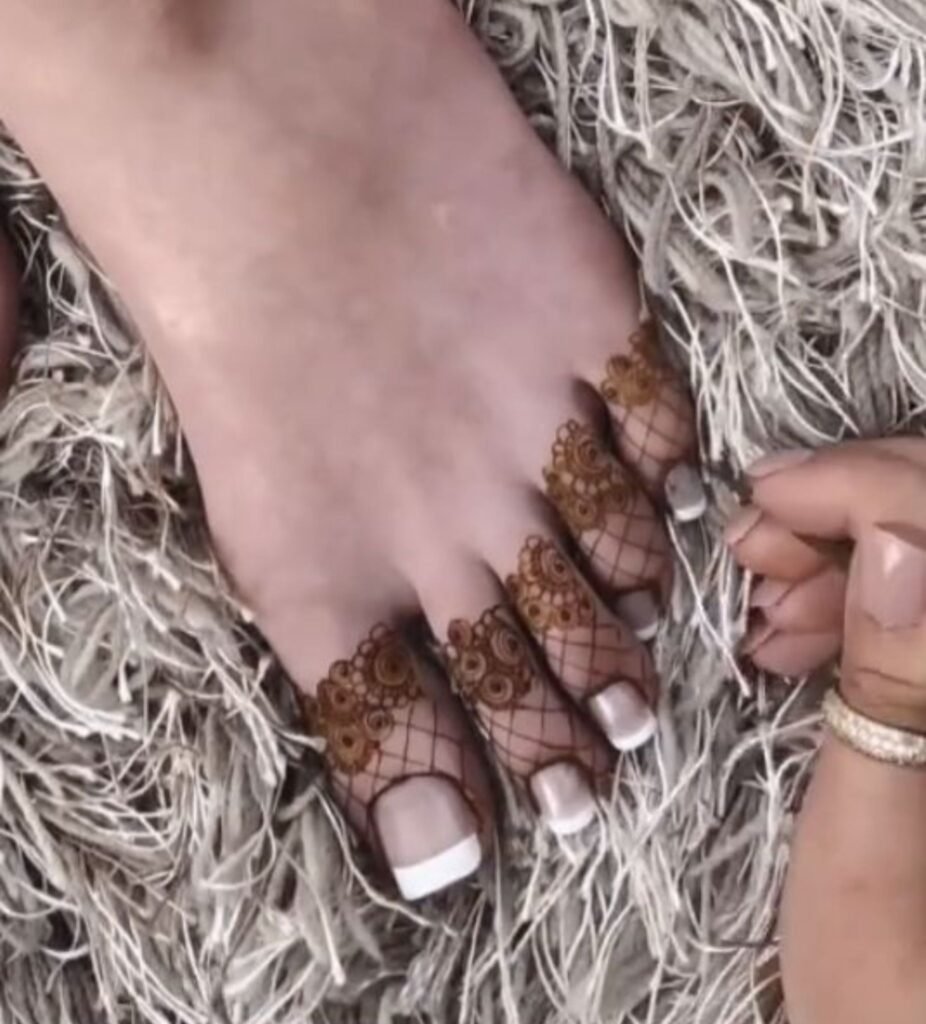
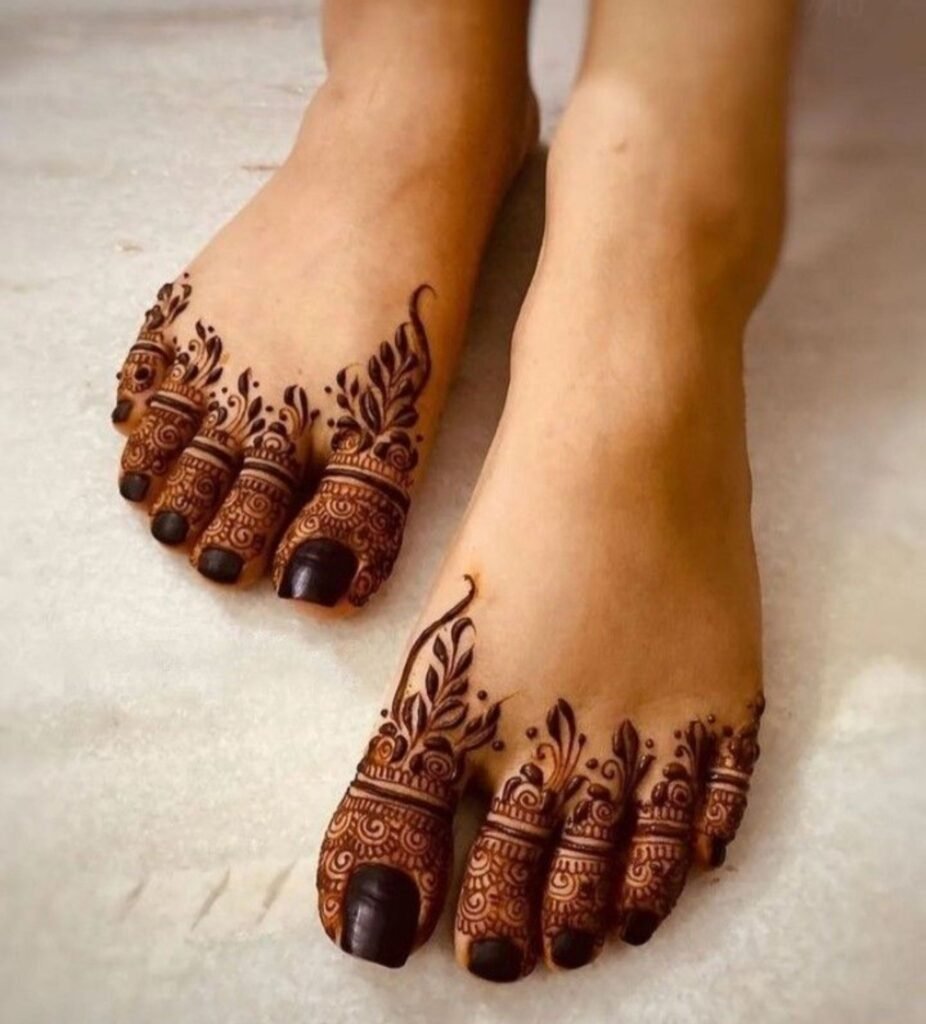
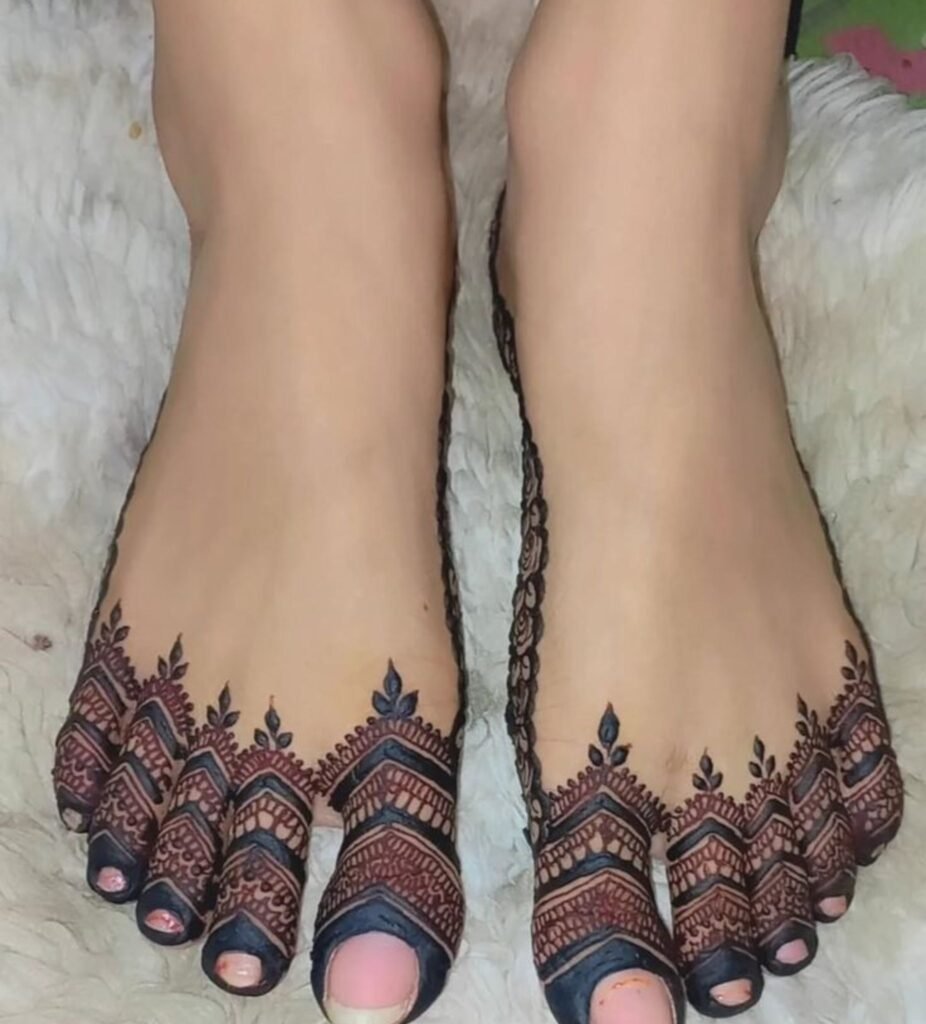
4. Modern Toe Accent Mehndi with Elegant Negative Space Details
Negative space mehndi is having a serious moment, and the toes are the perfect canvas for it. Instead of filling in every inch, you draw the outline and let the bare skin become part of the design.
- Applying a bold filled band or half moon shape at the base of each toe, leaving the tip bare, this reversal of expectation is what makes the design look so intentional and editorial.
- Try a single solid geometric triangle pointing downward on the big toe, with bare outlines of smaller triangles on the remaining toes for visual cohesion.
- Use the outline only technique on a floral motif to draw the petals but leave the interior skin showing, filling only the centre dot. The contrast is striking.
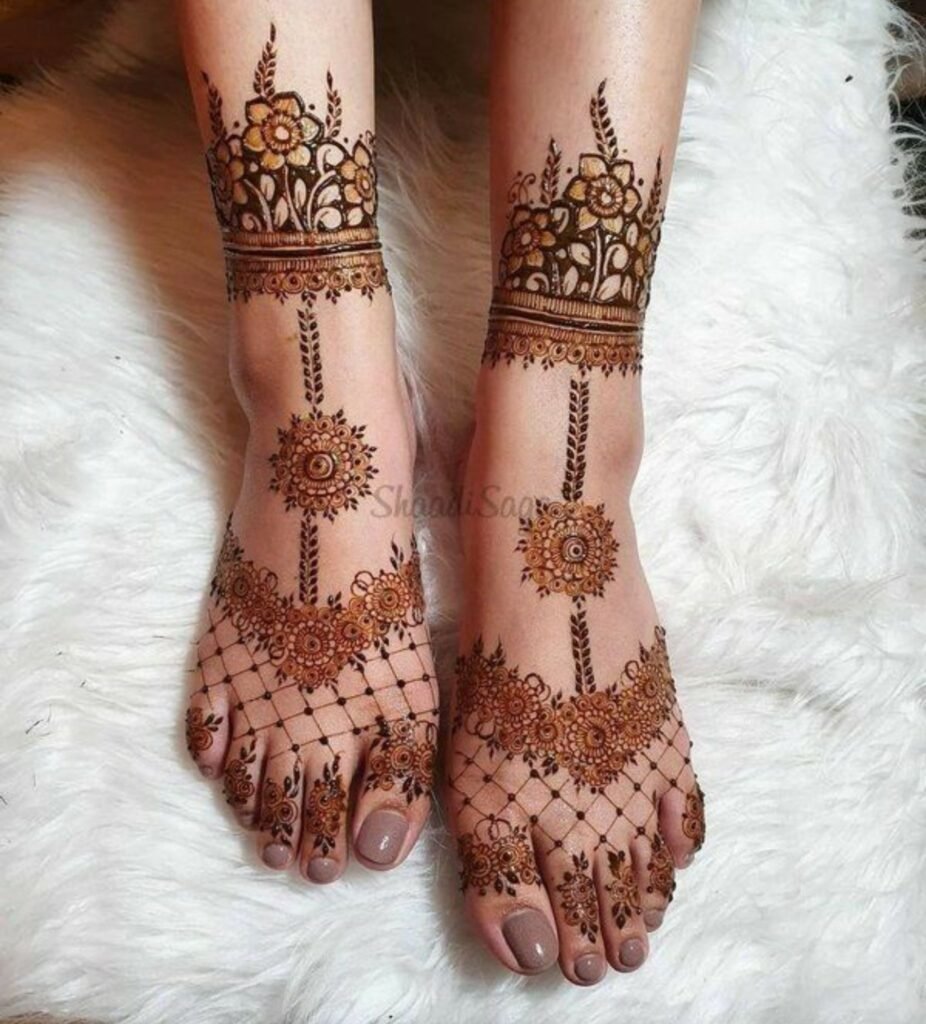
5. Delicate Floral Chain Across the Foot Feminine, Flowing, Foolproof
A delicate floral chain sweeping across the top of the foot from one side to the other in a gentle arc is the design equivalent of a flower crown for your feet. It’s romantic, flattering from every angle, and because the individual flowers are small, even imperfections become part of the charm.
- Build the chain using a simple four petal flower repeated every half inch, connected by the thinnest possible curved stem line; this is the backbone of the design, so take your time with it.
- Vary the flower size slightly as the chain progresses slightly larger at the centre of the foot, tapering to smaller blooms toward the sides to mimic how flowers actually grow.
- Add a single elongated leaf between each flower using a simple stroke and pull technique: press your cone tip down, drag toward you, and lift that’s it, one perfect leaf.
Foot Mehndi Secrets How to Achieve a Dark, Long Lasting Stain
The design is only half the story. How you apply and care for your mehndi determines whether you end up with a rich, long lasting stain or a faint ghost of what could have been.
- Avoid applying moisturizer or oil on the day of application. A clean, slightly dry surface gives henna the best grip.
- Ensure your henna paste has rested after mixing (ideally 8–12 hours in the fridge) so the dye release is at its peak.
- The feet stain the darkest because the skin is thicker. Lean into this by leaving the paste on for a full 6–8 hours, or overnight if possible.
- Once the paste begins to dry (usually after 30–45 minutes), dab a mixture of sugar and lemon juice over the design using a cotton ball that seals the paste and dramatically deepens the final stain colour.
- Applying gentle heat by holding the design over a warm source a clove smoke tray is the traditional method, but a hair dryer on its lowest setting works too.
Beauty Lives in the Simple Lines
There’s something almost meditative about mehndi foot designs simple enough to execute with steady hands and a calm mind. You don’t need a decade of practice or a professional grade toolkit, you need intention, patience, and the confidence to let a few beautiful lines speak for themselves.
Whether you gravitate toward the structured symmetry of a mandala, the free spirited flow of a trailing vine, or the modern graphic punch of negative space, there is a design in this list that is absolutely made for you.